

- About Us
- Information
-

The Author ensures that the research has been conducted responsibly and ethically with adherence to all relevant regulations. read more..
- For Authors
- For Reviewer
- Manuscript Guidelines
- Membership
- Publication Ethics
-
- Journals
- Reprints
- e-Books
- Videos
- Policies
- Contact Us
 COVID-19
- Submissions



Full Text
Aspects in Mining & Mineral Science
Peculiarities of the Titanium-Containing Inclusions Influence on the Weld Metal Microstructure Formation
Viktor Holovko*
The E O Paton Welding institute, Ukraine
*Corresponding author:Viktor Holovko, The E O Paton Welding institute, Kazimyr Malevich str. 11, 01150, Kyiv, Ukraine
Submission: May 15, 2026: Published: May 26, 2026
ISSN 2578-0255Volume15 Issue 1
Abstract
The peculiarities of the nn-metallic inclusions containing titanium influence on the low-alloy steels weld metal microstructure formation were studied. It was shown that ferrotitanium and titanium oxides inoculation into the welding bath promotes the amorphous manganese silicate inclusions formation with a layer of crystalline (Ti,Mn) oxides on the surface. In the case of titanium carbide inoculation, the content of multiphase morphology inclusions in the weld metal increases, which have an external layer with a high carbon content on the surface. It was shown that the mechanism of AF nucleation may be different depending on the nature of the titanium-containing phase located on the inclusions surface. The zone depleted in manganese content formation mechanism is triggered in the case of Ti2 O3 inclusions dominance, and a low level of interfacial energy is triggered in the case when a layer of (Ti,Mn) oxides is retained on the inclusions surface.
Keywords:Metallurgy; Welding; Metallography; Non-Metallic Inclusions; Microstructure; Inoculants
Introduction
It is known that non-metallic inclusions play a significant role in the weld metal microstructure evolution due to their ability to serve as centers of acicular ferrite nucleation process activation. The certain number of inclusions presence, however, does not yet guarantee the formation of a microstructure with an acicular ferrite high content, because their ability to form a new phase during the gα transformation depends on the chemical composition and morphology of the inclusions. From the chemical composition point of view, the most attention in scientific research has been paid to inclusions containing titanium compounds [1-5]. It has been noted that refractory inclusions inoculated into the metal melt play a certain role in these processes [6,7]. The experiments results [8,9] have shown the weld pool inoculation effectiveness on the low-alloy steels weld metal microstructure formation.
The aim of the work was to obtain a new of scientific knowledge base regarding the peculiarities of the non-metallic inclusions based on titanium compounds influence on the acicular ferrite formation process in the low-alloy steels weld metal. To achieve this goal, studies were conducted to establish the type of inclusions in the weld metal, which include titanium, and to clarify the mechanism of their influence on the new phase nucleation during the gα transformation.
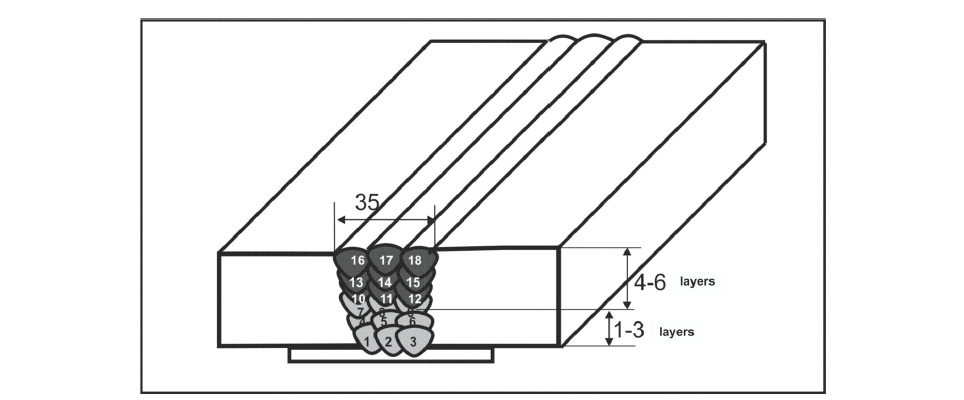
In order to study the non-metallic inclusions containing titanium compounds influence on the weld metal structure formation and mechanical properties, butt welds of low-alloy steel strength category σB ≥690MPa with a thickness of 20mm were made in accordance with the ISO 14171 requirements at a reverse polarity direct current 240…250A at an arc voltage 31…32V. The input welding energy was 26…28kJ/cm. Arc welding was performed in an environment of protective gas M1 (82%Ar+18%CO2) using a flux-cored wire with a diameter of 1.6mm, which meets the AWS A5.20 E71T-1 EN 758 T42 2 PC 1H10 requirements. Figure 1 shows a scheme for filling the edges of butt joints, according to which the passes from the first to the ninth were performed with a fluxcored wire, and the passes from the tenth to the eighteenth with additional inoculation into the weld pool of refractory titanium compounds dispersed particles through a flux-cored wire core with a 1.6mm diameter, which was fed to the tail portion of the weld pool. Particles of ferrotitanium (25% Ti), titanium oxide (TiO2) and titanium carbide (TiC) with a size no more than 200μm were used as inoculants.
Figure 1:Scheme of applying rollers when filling the butt joint (1..3 layers - without inoculants, 4…6 - layers with inoculants).
Structural analysis of the samples was carried out using a NEOPHOT-30 light microscope at magnifications from x200 to x1000. The digital image was recorded using an Olympus digital camera. To identify the features of the microstructure, a JSM-840 scanning electron microscope (JEOL) was used, equipped with a MicroCapture image capture system with its registration on the monitor screen. The microstructure of the samples was detected by chemical etching in a 4% alcoholic solution of nitric acid. Samples for research were prepared according to standard methods using diamond pastes of different dispersion. The structure and chemical composition of the weld metal structural components were studied on scanning electron microscopes JSM-840 and JSM 35CF, which contained microanalyzers Link 860/500 (Link Analytical) and INCA 450 (Oxford Instruments) with operating parameters: U=20kV, I=10–10 ...10–7 A. To study the characteristic elements of the structure at a magnification of x20,000, a JAMP 9500F Auger microprobe with an INCA 350 microanalysis system was used.
Results of Analyses
Chemical compositions and mechanical properties are shown in Table 1 & 2, respectively.
Table 1:Chemical composition of the welds metal.

Note: Innoculant type.
Table 2:Chemical composition of the welds metal.

Note: Innoculant type.
Secondary microstructure of weld metal
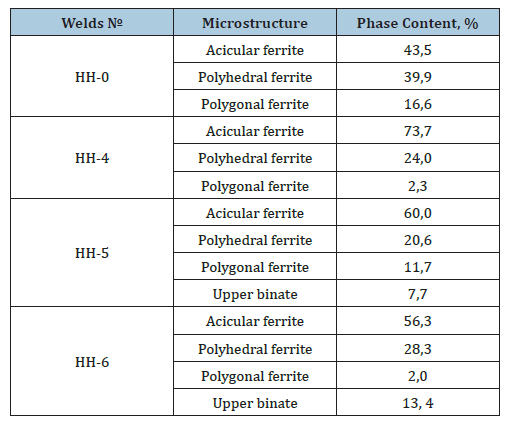
The results of the weld metals microstructure study, which were obtained using an optical and scanning electron microscope, are shown in Figure 2. It is noted that the change in the titanium content in the weld metal from 0.003 to 0.019% is accompanied by an increase in the proportion of Acicular Ferrite (AF) in the microstructure from 43.5% to 73.7% due to a decrease in the ferrite content with the second phase (Figure 2, Table 3). Such changes in the microstructure correspond to the results of determining the mechanical properties of the weld metal, in particular the level of impact toughness (Table 2).
Figure 2:Microstructure of weld metal: a), b), c), d) - x320, f), e), k), l) - x1000 a), f) - without inoculation; b), e) - FeTi inoculant; c), k) - TiO2 inoculant; d), l) - TiC inoculant.
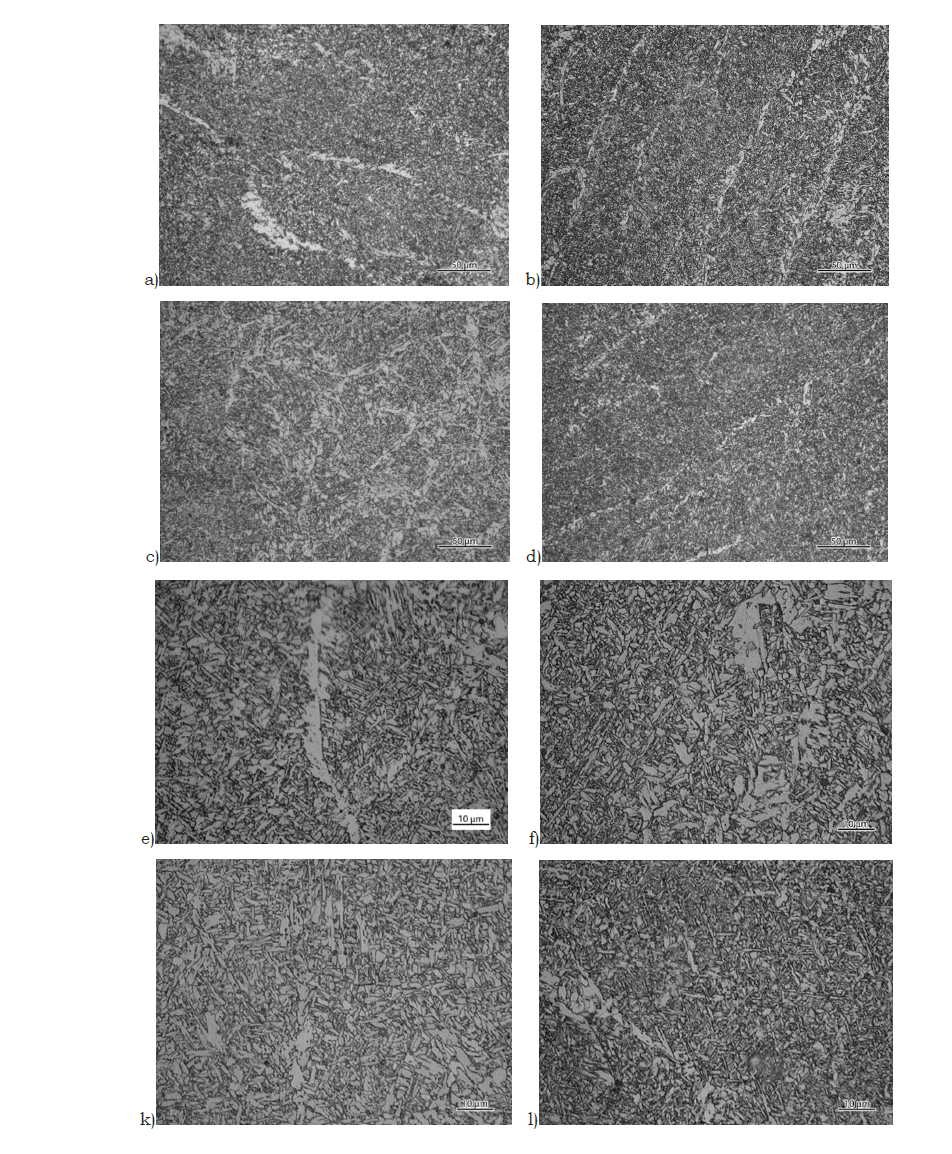
Table 3:Composition of the microstructure of the weld metal.
Non-metallic inclusions
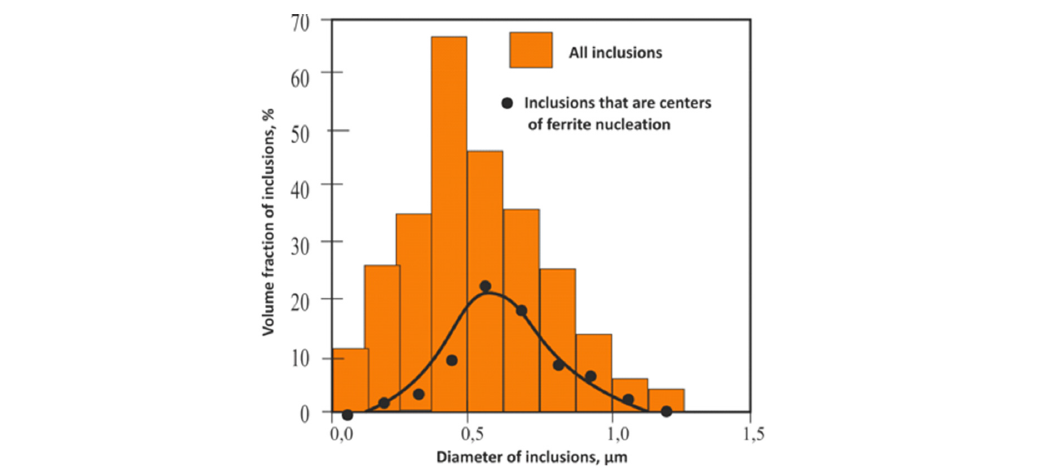
The study of the non-metallic inclusions size, distribution density and morphology was carried out on polished weld metal samples using optical and electron microscopy methods. The studies result is given in Table 4 & Figure 3. Based on the above, we can conclude that the introduction of refractory inoculants into the weld pool leads to the formation of a non-metallic inclusions complex in the weld metal, the size distribution density of which contributes to the microstructure formation with an AF and bainite high content. As the analysis result of metallographic images, it was found that not all non-metallic inclusions are nucleation centers of the ferrite phase (Figure 4). Such analysis results, which are summarized in Figure 5, indicate that the most effective in this regard are inclusions with a size of 0.3 to 1.0μm, which have a specific morphology.
Table 4:Results of non-metallic inclusions the size distribution and oxygen content in the weld metal determination.

Figure 3:The nature of the non-metallic inclusions size distribution in the weld metal.
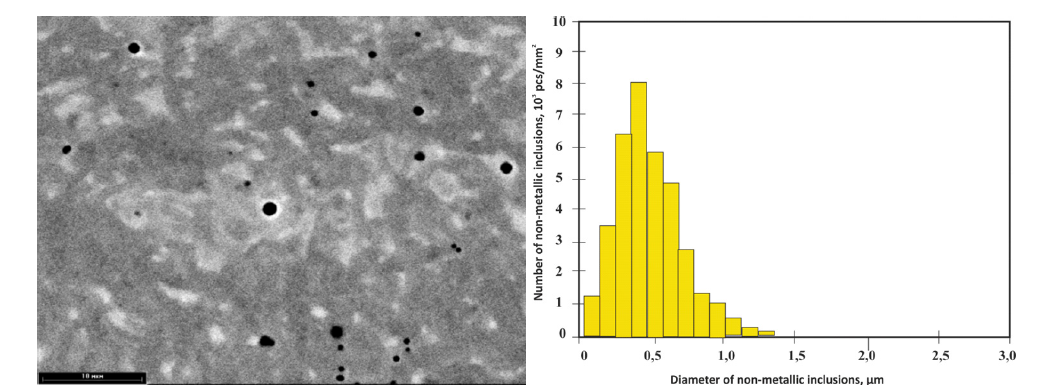
Figure 4:Microstructure of the weld metal obtained on a JSM-35 scanning electron microscope at a magnification of 1000. Light arrows indicate non-metallic inclusions that were centers of ferrite nucleation during the recrystallization process. Dark arrows indicate inclusions that did not participate in ferrite nucleation.
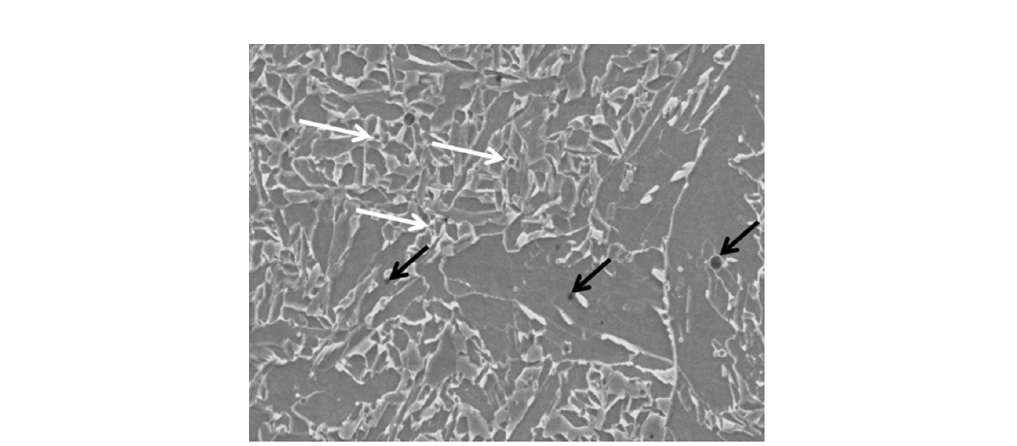
Figure 5:Histogram of the inclusions size distribution in the weld metal, as well as inclusions that serve as an acicular ferrite nucleation centers.
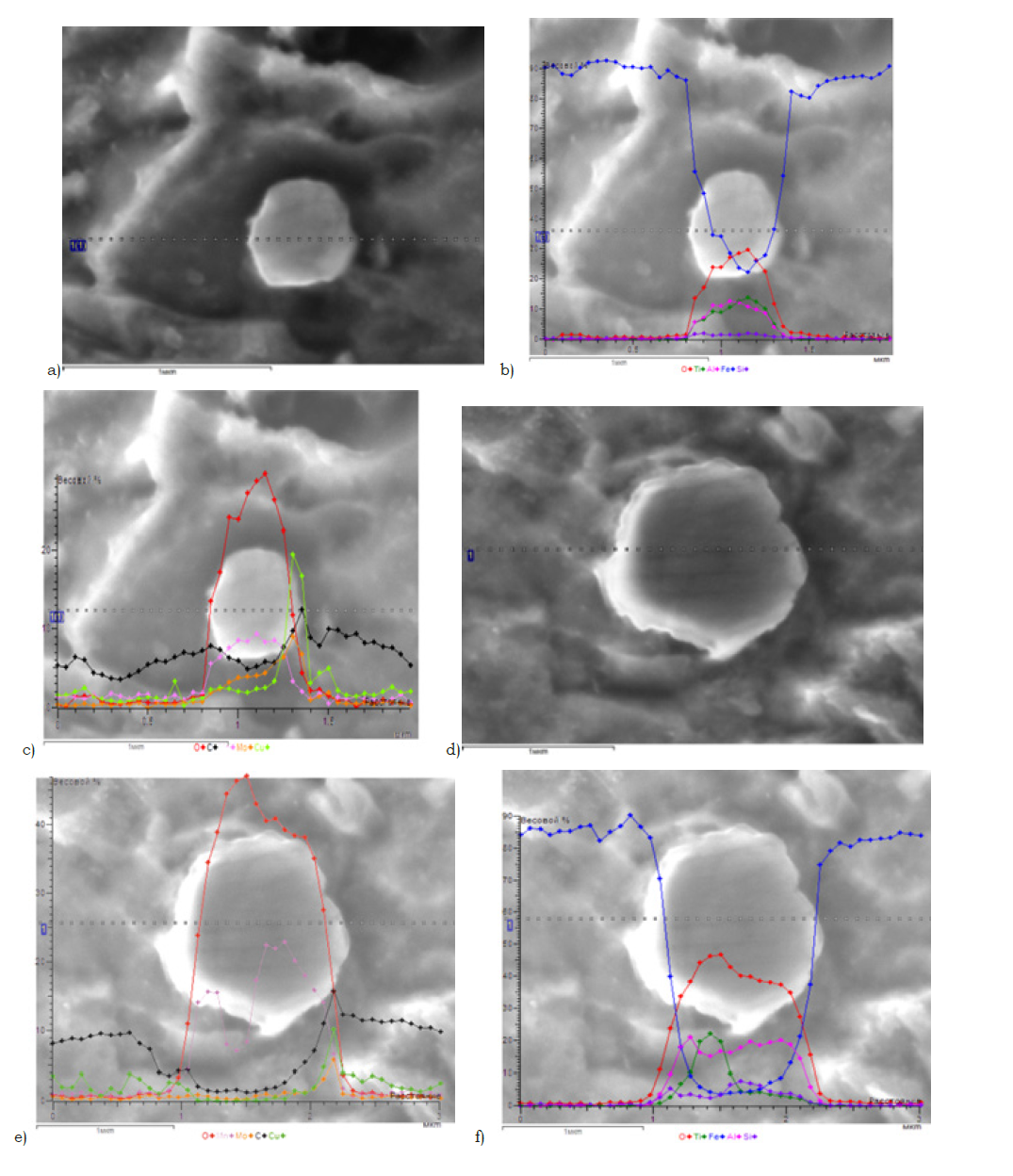
In order to clarify the reasons for such interaction of inclusions with the metal matrix, a linear scan of the most typical inclusions representatives and the surrounding metal matrix was carried out using a Link energy dispersive spectrometer. The study’s results in Figure 6, showed that those inclusions on the surface of which there is a titanium carbide compounds thin film (Figure 6f) have an increased manganese concentration in the outer layer and a reduced manganese content in the solid solution zones adjacent to the inclusion (Figure 6e). The manganese distribution and oxygen in non-metallic inclusions of the welds metal inoculated with ferrotitanium and titanium oxide (Figure 6) indicates that titanium is located on the inclusion’s periphery in the complex oxides form MnTiO3, Mn2 TiO4 or MnTi2 O4 type, which have a crystal structure. An increase in the metal alloying with titanium leads to an increase in the non-metallic inclusions content in the welds, which have a titanium oxides thin layer on the surface, and this leads to an increase in the probability of the intragranular ferrite formation of acicular morphology. The driving mechanisms of such a process may be a low difference in the MnTi2O4 crystal lattice parameters with Fea and a decrease in the manganese content in the solid solution zones adjacent to such inclusions.
Figure 6:Distribution of elements in non-metallic inclusion and adjacent zones of solid solution: a – scanning trajectory; b – distribution of O, Ti, Fe, Al, Si; c – distribution of O, Mn, Mo, C, Cu. Distribution of elements in nonmetallic inclusion and adjacent zones of solid solution: d – scanning trajectory; f – distribution of O, Ti, Fe, Al, Si; e – distribution of O, Mn, Mo, C, Cu.
Analysis of the Research Results
The obtained data showed that the inoculants introduction into the weld pool affects both the non-metallic inclusions size and the size distribution density, as well as the morphology and chemical composition of the inclusions. The inoculants’ introduction into the weld pool is accompanied by a decrease in the inclusions average size, which contributes to an increase in the bainite proportion in the microstructure. The use of titanium-containing inoculants leads to an increase in the inclusions content with multiphase morphology, which have an outer layer with a high titanium oxides content on the surface. In the areas of the solid solution adjacent to such inclusions, zones with a reduced manganese content are formed, and this contributes to an increase in the new phase intragranular nucleation probability in the acicular ferrite form.
During the work, weld metal samples were studied, which have a similar oxygen content and a significant difference in titanium content (Table 2). This approach allowed us to link the in the weld metal microstructure difference with a change in the titaniumcontaining inoculants content in the weld metal. Based on the data obtained, it can be stated that the acicular ferrite formation is associated with the introduction of titanium-containing inoculants into the weld pool in a titanium content wide range in the weld metal from 0.003 to 0.019%.
The titanium influence on the new phase nucleation process can be explained by the correspondence of the phase crystal lattice parameters on the inclusion surface and the surrounding matrix. However, inclusions of the type Mn2 TiO4 and other (Ti,Mn)-oxides do not have a good such parameters correspondence, so this mechanism does not work in this case. There is another possible mechanism associated with a decrease in the surface energy of the inclusion caused by the Mn2 TiO4 particles formation on its surface.
It should be noted that the authors of [10,11] showed that the interfacial energy at the interface between Ti2 O3 and BCC iron is significantly lower than that between Al2O3 and BCC iron. This fact was used to explain the increased tendency of Ti2 O3 inclusions to nucleate AF in the manganese-depleted zones absence in the solid solution. It was later shown [12] that MnTiO3 inclusions also have a high tendency to nucleate AF and it was suggested that the inclusions ability to nucleate a new phase increase with increasing titanium content in the inclusions. This fact and the results obtained by us allow us to assume that (Ti,Mn) oxides have a low interfacial energy at the interface with BCC iron, and this contributes to an increase in the inclusions ability containing such oxides to form AF. However, a physical description of the (Ti,Mn) oxides influence mechanism on the AF nucleation is still lacking and this requires further research in a wide stoichiometric compositions range.
The study results indicate that the increase in titanium content from 0.003 to 0.019% led to a noticeable increase in AF, which corresponds well with the presence of manganese-depleted zones in the solid solution regions adjacent to Ti2 O3 inclusions. There is data in the literature on the presence of the manganese-depleted zones presence near Ti2 O3 inclusions [13-15]. The distance over which manganese diffuses in austenite at 1200 °C in one second is about 100nm, so a manganese-depleted zone may well form during the thermal cycle. The results of the conducted studies confirmed that a manganese-depleted zone is formed in the solid solution regions adjacent to the inclusions (Figure 6), and this contributes to the chemical driving force growth for the gα transformation in Ti2 O3 inclusions, as a result of which intragranular ferrite nucleates on the inclusions surface and the AF content in the weld metal microstructure increases [16,17].
Conclusion
The influence of refractory titanium compounds dispersed particles inoculation into the weld pool on the low-alloyed highstrength steel weld metal microstructure formation was studied. As a result of the microstructure composition and non-metallic inclusions characteristics study of weld metals containing from 0.003 to 0.019% titanium and approximately the same oxygen content, it was established:
a. The microstructure of the metal deposited using the GMAW welding method contained bainite and acicular ferrite, the content of which changed with the change in the titanium content in the weld metal. The content of AF in the microstructure changed from ~43% in the weld metal alloyed with 0.003% titanium to 73% when alloyed with 0.019% titanium. The change in the weld metal microstructure also affected the change in the strength indicators level and the increase in the impact of the toughness values of the weld metal containing 0.019% titanium.
b. The non-metallic inclusions chemical composition and the titanium content in the weld metal are determined by the type of titanium-containing inoculant introduced into the weld pool. When inoculating the weld pool with ferrotitanium and titanium oxide with a titanium content, a crystalline (Ti,Mn) oxides layer is formed on the inclusions surface of the amorphous manganese silicate type. In this case, (Ti,Mn) oxides are responsible for the AF formation in the weld metal in an amount up to 50%. As a mechanism explaining this effect, it is possible to assume the low level of interfacial energy presence at the inclusion-matrix interface.
c. The titanium carbide use as an inoculant leads to the content multiphase morphology inclusions increase in which have an outer layer with a high carbon content on the surface. In the solid solution adjacent areas to such inclusions, zones with a reduced manganese content are formed, and this contributes to an increase in the new phase intragranular nucleation probability in the acicular ferrite form.
d. Based on the obtained data, it can be concluded that the AF nucleation mechanism may be different depending on the nature of the titanium-containing phase located on the inclusion surface. The manganese-depleted zone formation mechanism is triggered in the dominance of Ti2 O3 inclusions case, and an interfacial energy low level is triggered in the case when a (Ti,Mn) oxides layer is retained on the inclusions surface.
Acknowledgement
The authors are thankful to the authorities of the E.O. Paton Welding Institute by Ukraine National Academy of Science for providing facilities and support to carry out this work.
References
- Vanovsek W, Bernhard C, Fiedler M, Schnitzer R (2013) Effect of titanium on the solidification and postsolidification microstructure of high-strength steel welds. Welding in the World 57: 665-674.
- Park JH (2011) Effect of inclusions on the solidification structures of ferritic stainless steel: Computational and experimental study of inclusion evolution. Computer Coupling of Phase Diagrams and Thermochemistry 35: 455-462.
- Maity SK, Ballal NB, Kawalla R (2006) Development of ultrahigh strength steel by electroslag refining: Effect of inoculation of titanium on the microstructures and mechanical properties. ISIJ International 46(9): 1361-1370.
- Mazancová E, Jonšta Z, Bůžek Z, Mazanec K (2003) Physical metallurgy analysis of acicular ferrite nucleation parameters in low-carbon steels. Acta Metallurgica Slovaca 3: 191-197.
- Shim JH, Oh YJ, Suh JY, Cho YW, Shim JD, et al. (2001) Ferrite nucleation potency of non-metallic inclusions in medium carbon steels. Acta Materialia 49(12): 2115-2122.
- Grong Ø, Kolbeinsen L, EIJK C, Tranell G (2006) Microstructure control of steels through dispersoid metallurgy using novel grain refining alloys. ISIJ International 46(6): 824-831.
- Ohta H, Suito H (2006) Effect of nonrandomly dispersed particles on austenite grain growth in Fe–10mass%Ni and Fe–0.20mass%C–0.02mass%P alloys. ISIJ International 46(6): 832-839.
- Grigorenko GM, Kostin VA, Golovko VV, Zhukov VV, Zuber TA (2015) Influence of nanopowder inoculators on the structure and properties of high-strength cast metal. Modern electrometallurgy 2: 32-41.
- Bolshakov VI, Kalinin AV (2021) Influence of nanomodication on structure formation and properties of structural steel. Bulletin of the KhNADU 94: 34-38.
- Suzuki T, Inoue J, Koseki T (2008) Effect of oxides and their volume fraction on intragranular ferrite formation in steel. In: Trends in Welding Research. Proceedings of the 8th International Conference. Callaway Gardens Resort. Pine Mountain, Georgia, USA, pp. 292-296.
- Madariaga I, Gutierrez I (1999) Role of the particle-matrix interface on nucleation of acicular ferrite in a medium carbon micro alloyed steel. Acta Materialia 47(3): 951-960.
- Seo JS, Kim HJ, Lee C (2013) Effect of Ti addition on weld microstructure and inclusion characteristics of bainitic GMA welds. ISIJ International 53(5): 880-886.
- Shim JH, Cho YW, Chung SH, Shim JD, Lee DN (1999) Nucleation of intragranular ferrite at Ti2O3 particle in low carbon steel. Acta Materialia 47(9): 2751-2760.
- Byun JS, Shim JH, Cho YW, Lee DN (2003) Non-metallic inclusion and intragranular nucleation of ferrite in Ti-killed C-Mn steel. Acta Materialia 51(6): 1593-1606.
- Gregg JM, Bhadeshia HKDH (1994) Titanium-rich mineral phases and the nucleation of bainite. Metallurgical and Materials Transactions A 25(8): 1603-1611.
- Yamamoto K, Hasegawa T, Takamura J (1996) Effect of boron on intra-granular ferrite formation in Ti-oxide bearing steels. ISIJ International 36(1): 80-86.
- Kang YB, Lee HG (2010) Thermodynamic analysis of Mn-depleted zone near Ti oxide inclusions for intragranular nucleation of ferrite in steel. ISIJ International 50(4): 501-508.
© 2026 Viktor Holovko. This is an open access article distributed under the terms of the Creative Commons Attribution License , which permits unrestricted use, distribution, and build upon your work non-commercially.
Editor In Chief






.jpg)





























Signup for Newsletter

Quick Links
 Editorial Board Registrations
 Submit your Article
 Best Paper of the Volume
 Reprints
 Refer a Friend
 Advertise With Us
Our Recent Edition
.jpg)



Top Editors




.jpg)

















.bmp)
.jpg)
.png)
.jpg)













.jpg)






.png)

.png)




.png)




Financial Support

Sponsors

Latest e-Books

Latest Video

 a Creative Commons Attribution 4.0 International License. Based on a work at www.crimsonpublishers.com.
Best viewed in
a Creative Commons Attribution 4.0 International License. Based on a work at www.crimsonpublishers.com.
Best viewed in 
 | Above IE 9.0 version