

- About Us
- Information
-

The Author ensures that the research has been conducted responsibly and ethically with adherence to all relevant regulations. read more..
- For Authors
- For Reviewer
- Manuscript Guidelines
- Membership
- Publication Ethics
-
- Journals
- Reprints
- e-Books
- Videos
- Policies
- Contact Us
 COVID-19
- Submissions



Full Text
Annals of Chemical Science Research
Physicochemical Assessment and Cu- Nano Hybrid Modification of Palm Fronds for Cadmium Adsorption: Kinetics and Thermodynamics
Ikeh Obianuju Adaobi1*, Ojiako Eugenia Nnonye2, Nwadiogbu Joseph Onyebuchi2, Ejidike Lynda Chinyere1, Okonkwo Ngozi Anastasia1 and Nwankwo Njideka Veronica1
1Department of Pure and Industrial Chemistry, Nnamdi Azikiwe University, Nigeria
2Department of Pure and Industrial Chemistry, Chukwuemeka Odumegwu Ojukwu University, Nigeria Introduction
*Corresponding author:Ikeh OA, Department of Pure and Industrial Chemistry, Nnamdi Azikiwe University, Awka, Anambra State, Nigeria
Submission: October 28, 2025;Published: March 05, 2026

Volume5 Issue3March 05, 2026
Abstract
Physicochemical evaluation of agricultural wastes underpins their energy potential, adsorption performance and environmental implications. This work aimed at assessment of the physical and chemical constituents of palm fronds and evaluation of raw (RPF) and copper nanocomposite-modified (CuPF) variants for cadmium ion removal from wastewater. Proximate (bulk/tapped density, moisture and ash contents, volatile matter) and ultimate (lignin, cellulose, hemicellulose, holocellulose) compositions, alongside water/oil absorption, were quantified via thermogravimetric analysis. Batch experiments optimized contact time, pH, dosage, temperature, and initial Cd ion concentration, with analysis by atomic absorption spectrometry (AAS). The results of the physicochemical properties showed that palm fronds are capable of providing internal volumes for the penetration and retention of metal ions. CuPF generally showed higher adsorption capacity (qe) to RPF across all conditions studied. Pseudo-secondorder kinetic superseded, with intraparticle diffusion (non-zero intercepts) indicating hybrid surface/ diffusion control. Equilibrium favored Freundlich isotherm from R2 values (0.8009 and 0.8259) for RPF and CuPF respectively, evidencing cooperative adsorption. Thermodynamic parameters showed positive enthalpy and entropy values, denoting an endothermic process with increased disorder at the metal ion interface, while negative ΔG0 values confirmed spontaneity of the process. Conclusively, CuPF achieved >80% removal efficiency, establishing Cu-nanohybrid palm fronds as a low-cost, sustainable sorbent for cadmium pollution remediation.
Keywords:Physicochemical assessment; Palm fronds; Cadmium adsorption; Copper nano composites; Kinetics; Thermodynamics; Equilibrium
Introduction
Accelerated urbanization and industrialization have led to increased waste generation, and environmental pollution, particularly from heavy metals like cadmium [1,2]. Agricultural intensification exacerbates this issue, as agro-wastes, fertilizers, pesticides, and additives accumulate in soils and aquatic systems, causing long term ecological harm [3,4]. Agricultural wastes are specifically the non- edible portions of plants derived from the production, distribution, marketing, and consumption of fruits, vegetables, meat, dairy, and related products [5]. A significant amount of agro wastes and their by-products are generated globally in vast quantities, and often discarded without valorization, thereby amplifying pollution. Oil palm (Elaeis guineensis) is believed to originate from West and Central Africa and also found in in Thailand, Malaysia and Indonesia [6,7]. Higher production of oil palm is cultivated in plantations across the humid tropics of Asia, Africa and the Americas, from where its products are exported to global markets [7]. While palm yields sustainable unsaturated fatty acids and essential minerals (Mg, Fe, Zn, K), its fronds are routinely discarded as low- value wastes, posing disposal burdens when mismanaged [6,7]. Yet, repurposing such wastes as adsorbents for heavy metal remediation harnesses their potential, obviating disposal needs and promoting circular economy principles. Palm fronds, in particular, hold promise for adsorption technologies and bioenergy due to their favorable physical and chemical traits governing material quality, reactivity and transformation [8-10]. Key parameters include bulk/tapped density, moisture/ash content, volatile matter, water/oil absorption capacity and compositional fractions (lignin, cellulose, hemicellulose, holocellulose). These components provide high surface areas and functional groups (e.g. hydroxyl groups from cellulose/ hemicellulose), necessary for pollutant sequestration from wastewater. Such analyses elucidate energy potential, adsorption efficacy, and environmental impacts [11-15]. Leveraging agro-wastes as adsorbents offers multifaceted benefits: it mitigates indiscriminate dumping or incineration-major pollution sources, while cutting disposal costs, boosting sustainability, and rivaling costly activated carbons in capacity without high preparation/ maintenance expenses [9,16]. Abundant and metal-binding rich, agro-wastes like corn cobs, palm shells and peanut shells feature porous structures, functional groups, thermal stability, antibacterial properties and tunable surface areas for remediation [17,18]. Notably, they exhibit exceptional fluid absorption (> initial weight) and undergo natural biodegradation via biological, physical, chemical, or photochemical pathways [19]. This study conducts a comprehensive physicochemical evaluation of palm fronds by assessing bulk/tapped density, moisture/ash content, volatile matter, lignin, cellulose, hemicellulose, holocellulose, and water/ oil absorption capacities via gravimetric methods and preparation of Cu- nano hybrid to evaluate cadmium ion adsorption efficacy from aqueous solutions under optimized conditions (contact time, pH, dosage, temperature, concentration), quantified by atomic absorption spectrometry. To the best of our knowledge, few studies have integrated all these parameters for palm fronds, underscoring the novelty of our multifaceted approach.
Materials and Methods
Sample collection/preparation
Palm fronds used in this research were collected from a bush at Adazi-ani in Anaocha Local Government Area of Anambra state, Nigeria. The dirty material (palm fronds) was washed thoroughly under running water, dried properly in sunlight for (5h for three days) and then left to dry at 65 °C in the oven. After reducing the size, No 20 and 25 British Standard Sieve (BSS Sieves) were used to sieve the materials and corked in clean plastic bottle prior to all analysis. All reagents were analytical grade and used without further purification [20]. The analysis was done at Graceland Laboratories, Igwebuike Street, Awka, Anambra State, Nigeria.
Synthesis of copper nanoparticles
Exactly 0.2M of copper solution was prepared from CuCl2.2H2O by dissolving 10g of the salt with 300mL water in a round bottomed flask under continuous stirring for 20min. About I mL of CH3 COOH was added to the solution and stirred for additional 30min. At the same time, 4.8g (8M) NaOH was dissolved in 15mL water in a separate beaker. The 8M NaOH solution was then added dropwise to the first solution using a micropipette under vigorous stirring and maintained at pH of 11while stirring for another 2h at 60 °C. Following this, the mixture was centrifuged at 5000rpm for 30min. The resulting precipitate was filtered using Whatman paper and washed several times with methanol and distilled water to eliminate any unreacted particles reactants and organic impurities. Finally, the particles were dried in a hot air oven at 200 °C for 20min [21].
Nanoparticle impregnated biomass
The copper nanocomposites synthesized were mixed in distilled water with constant stirring using a magnetic stirrer. Then, approximately 8.0g of pulverized biomass, pre-treated with 0.1 M HN03, was added to the mixture and stirred vigorously with a magnetic stirrer for 8h after stirring, the mixture was left to settle for 30min and then centrifuged at 8000rpm for 2h. The resulting hybrid material was filtered and dried in an oven at 70 °C for 24h. Finally, it was ground thoroughly into a fine powder using a mortar and pestle and passed through a 100-micrometer mesh sieve [20].
Physicochemical analysis of palm fronds
Determination of bulk density (DB)
Five grams of the sample was weighed and transferred into a separate 50mL dry measuring cylinders. The volume occupied by the sample was noted as the bulk volume. Therefore, the bulk density was determined by dividing the mass of the material by the bulk volume according to [22].
Bulk density = [M/VB] (1)
where M is the mass of the sample and VB is the bulk volume of the sample
Determination of tapped density (DTa)
The measuring cylinder containing 5g of the sample was then tapped on a wooden platform by dropping the cylinder from a height of 1inch at 2secs intervals until there was no observable change in volume. The volume occupied by the material was recorded as the tapped volume. The tapped density was determined using the expression:
Tapped density (DTa) = [M/VT] (2)
where M is the mass of the sample and VT is the tapped volume of the sample.
Moisture content determination
Two grams of the powdered sample was weighed, transferred into petri dish and then oven-dried for 3h at 105 °C to a constant weight. The moisture content (%) was then computed based on the initial air-dried weight as reported by [3].
Ash determination
One (1g) of sample was placed in a clean crucible of known weight (W1). The crucible was placed in a muffle furnace at 600 °C for 5h. The crucible and content were cooled in a desiccator and weighed again (W2) according to the procedure by [13].

Where W1 = weight of crucible (g). W2 = weight of crucible and ash (g)
Determination of water holding capacity
One gram of the sample was weighed and evenly distributed over the surface of a 10cm Petri dish. The sample was placed in a large desiccator containing distilled water in its reservoir and the weight gained by the exposed sample at 24h interval was recorded. The amount of water sorbed was calculated from the weight difference.

W1 is the weight of the sample before exposure and W2 is the weight of the sample after exposure [23].
Determination of lignin content
Exactly 1g of the sample was weighed and put in 100mL beaker. About 20mL of 72% sulfuric acid was added drop by drop with constant stirring by a small glass rod. After complete disintegration, the reaction was allowed to stand and the beaker covered with watch glasses and left-over night at room temperature. The sample was then transferred quantitatively to 1L round bottom flask, diluted with 3%sulfuric acid, boiled for 4h under reflux. The lignin was filtered on an ash less filter and washed with hot distilled water till neutrality, then gravimetrically estimated and ignited at 85 °C for 45min. The weight of ash was subtracted to give the ash free lignin percent [24].
Determination of hemicellulose content
Exactly 1g of extracted dried sample was transferred into a 250mL Erlenmeyer flask. About 150mL of 20g NaOH was added. The mixture was boiled for 3.5h with distilled water. It was filtered after cooling through vacuum filtration and washed until neutral pH. The residue was dried to a constant weight at 105 °C in a convection oven. The difference between the sample weight before and after this treatment is the hemicellulose content (%w/w) of dry biomass [25].
Determination of cellulose content
This was obtained by adopting the expression used by [26].
Cellulose = 100% - (Hemicellulose + lignin) (5)
Holocellulose estimation
Holocellulose is the total carbohydrate fraction (cellulose and hemicellulose) of the sample material.
Adsorption experiment
Cadmium salt Cd(NO3)2 was used to prepare solutions of lower concentrations (100-300mg/L). The effects of time, pH, concentrations, dosage and temperature on the adsorbents was monitored and the concentrations determined using Atomic Absorption spectrophotometer (PG- AA500F model manufactured by PG instruments Ltd). Other operating factors were kept constant, while changing the respective studied factor of interest. The uptake capacity qe(mg/g) was calculated from the mass balance equation below:
qe(mg/g) = (Co-Ce) V/m (6)
qe(mg/g) = equilibrium adsorption capacity, representing the amount of adsorbate per unit mass of adsorbent.
Co and Ce(mg/L) = initial and final concentrations of the adsorbate in the solution.
V = volume of the solution
M = mass of the adsorbent [16].
Results and Discussion
The result of the physicochemical constituents of palm fronds is presented in Table 1 below.
Table 1:Physicochemical compositions of the sample.
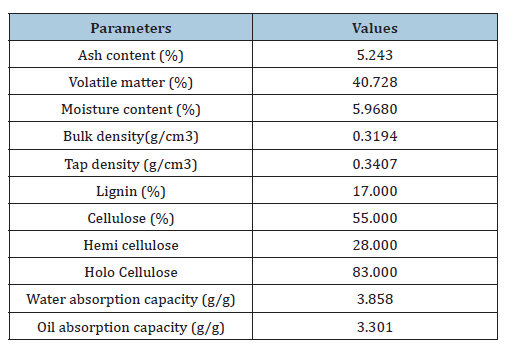
The physical and chemical properties such as moisture and ash contents, volatile matter, cellulose and lignin of agrowaste materials play a vital role in determining their adsorption efficiency and selectivity. Effects of physicochemical parameters on the adsorption capacities of agro-waste materials are considered essential for evaluation of the adsorbents for adsorption of pollutants in aqueous solution. The moisture content of palm fronds was measured at 5.9680%. Low percentage of moisture would likely inhibit the activities of microorganisms and good for storage [27]. Bulk density is influenced by how particles arrange themselves and this arrangement changes as the powder is compressed and settles. It was observed that powders with finer particles and lower moisture levels tend to have a higher bulk density. On the other hand, tapped density also measures how well a powder can be packed into a confined space on repeated tapping. Values of bulk and tapped densities obtained in this study is within the range reported for energy usage [26]. The results obtained showed that ash content of palm fronds was (5.243%), suggesting a low level of inorganic residues. This is advantageous for adsorption process as high ash content often reduces porosity and sorbent effectiveness The physical and chemical properties such as moisture and ash contents, volatile matter, cellulose and lignin of agrowaste materials play a vital role in determining their adsorption efficiency and selectivity. Effects of physicochemical parameters on the adsorption capacities of agro-waste materials are considered essential for evaluation of the adsorbents for adsorption of pollutants in aqueous solution. The moisture content of palm fronds was measured at 5.9680%. Low percentage of moisture would likely inhibit the activities of microorganisms and good for storage [27]. Bulk density is influenced by how particles arrange themselves and this arrangement changes as the powder is compressed and settles. It was observed that powders with finer particles and lower moisture levels tend to have a higher bulk density. On the other hand, tapped density also measures how well a powder can be packed into a confined space on repeated tapping. Values of bulk and tapped densities obtained in this study is within the range reported for energy usage [26]. The results obtained showed that ash content of palm fronds was (5.243%), suggesting a low level of inorganic residues. This is advantageous for adsorption process as high ash content often reduces porosity and sorbent effectiveness
Effects of process parameters on the adsorption of cadmium onto palm fronds
Effects of time on the adsorption of cadmium onto palm fronds
Figure 1 shows the result of the effect of time on the adsorption of cadmium onto raw palm fronds (RPF) and Cu nano-composites of palm fronds (CuPF).
Figure 1:Plots for the effects of time on the adsorption of cadmium onto palm fronds.
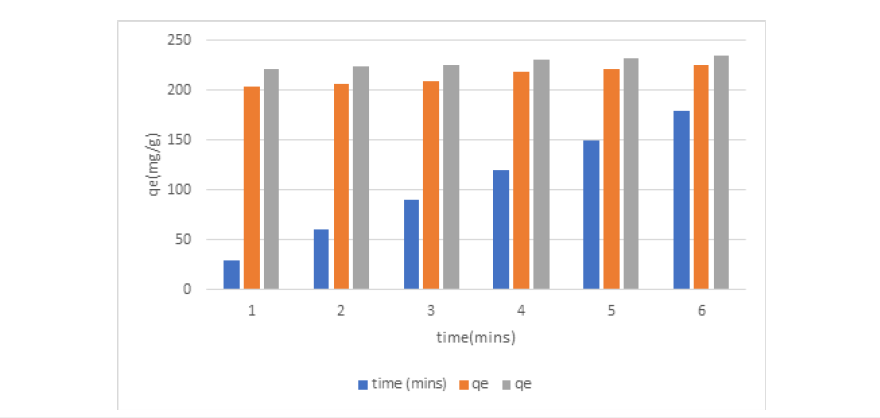
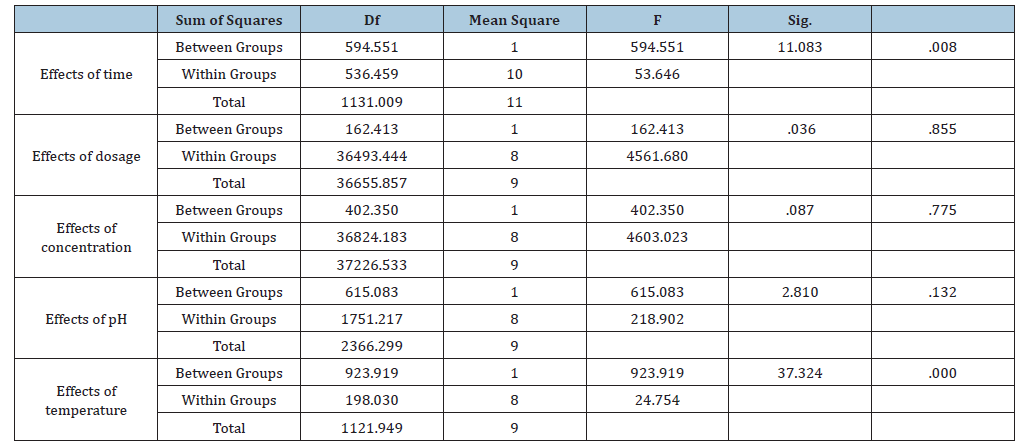
It was observed that as sorption time increased from 30mins to 180mins, the maximum adsorption capacity (qe) increased as well. Throughout all the adsorption durations examined, CuPF had higher adsorption capacity compared to RPF, likely due to the increased number of active sites provided by the presence of copper molecules. These results align with previous studies reported in the literature [16,19]. According to a one-way ANOVA used to test for statistical significance of the process, CuPF are more efficient than that of RPF. It was observed that there is statistically significant difference in the mean efficiency of RPF and CuPF as shown in Table 3.
Effect of pH on the adsorption of cadmium onto palm fronds
The effect of solution pH on the adsorption of cadmium onto RPF and CuPF is shown in Figure 2.
Figure 2:Plots for the effects of pH on the adsorption of cadmium onto palm fronds.
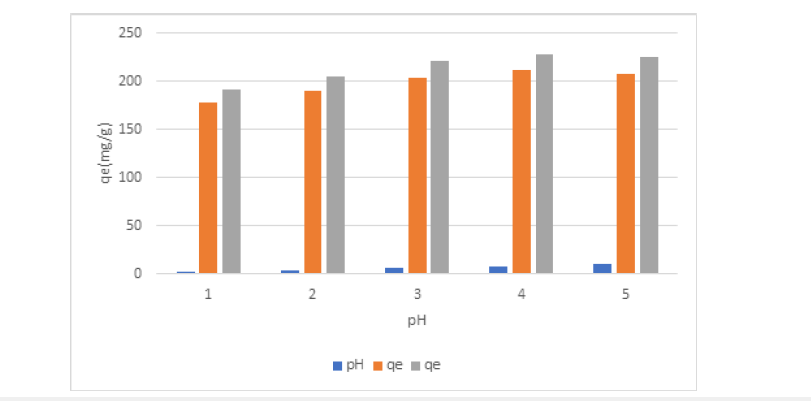
The equilibrium adsorption capacities were minimum at pH 2(178.6512mg/g for RPF and 191.5178mg/g for CuPF) and attained and became maximum at pH 8 (212.0465mg/g and 228.4019mg/g) for RPF and CuPF respectively. The decreased adsorption capacity at acidic pH is likely due to the competition between hydrogen ions (H+) and cadmium ions (Cd2+) for the binding sites on the adsorbent, which reduces cadmium uptake. The finding was similar to studies conducted elsewhere [29]. A one-way ANOVA used to test for its statistical significance showed no significant difference in the mean efficiency of RPF and CuPF. meaning that the efficiency of raw and nano composites of adsorbents is relatively the same.
Effects of concentration on the adsorption of cadmium onto palm fronds
Figure 3 demonstrates how varying cadmium concentrations affect its adsorption by RPF and CuPF
<Figure 3:Plots for the effects of concentration on the adsorption of cadmium onto palm fronds.
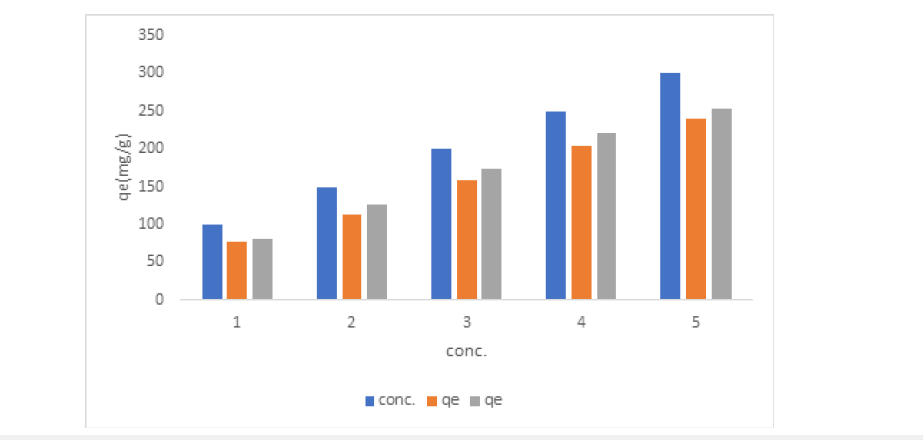
It was seen that as the initial cadmium ion concentration rose from 100mg/L to 300mg/L, the adsorption capacity increased. This is probably due to a higher number of metal ions in the solution, which cause more frequent collisions and improved adsorption. Concentration effect was further confirmed with a one-way ANOVA test which showed no significant difference in the mean efficiency of RPF and CuPF. This means that the efficiency of raw and nano composites of adsorbents is relatively the same.
Effects of dosage on the Adsorption of cadmium onto palm fronds
The result illustrating how adsorbent dosage affects cadmium adsorption onto RPF and CuPF is shown in Figure 4a & 4b.
Figure 4a:Plots for the effects of percentage dosage on the adsorption of cadmium onto palm fronds.
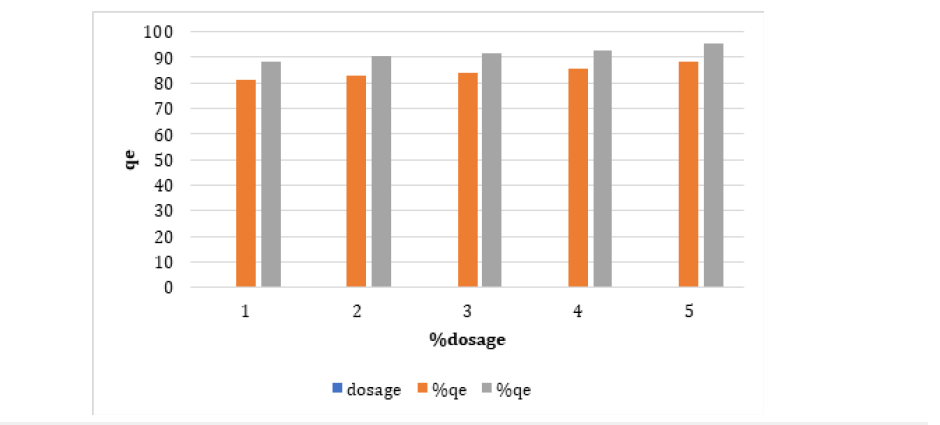
Figure 4b:Plots for the effects of dosage on the adsorption of cadmium onto palm fronds.
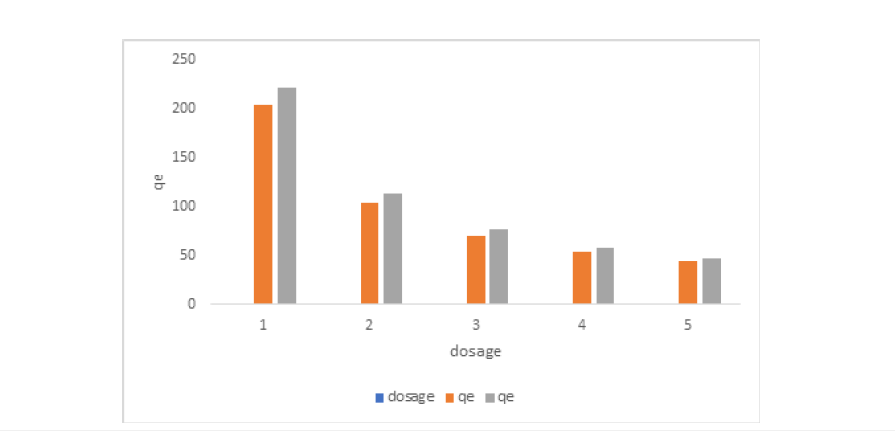
Figure 4a showed that cadmium removal efficiency improved from 81.4066% to 88.6046% for RPF and from 88.2692% to 95.2317% for CuPF as the adsorbent dosage increased from 0.02g to 0.1g. This enhancement is likely due to the expanded surface area and greater availability of active adsorption sites [30,31]. However, Figure 4b showed that adsorption capacity decreases with a higher adsorbent dose. This reduction is probably caused by clustering of the adsorption sites, declining the surface area available for cadmium ion attachment [32]. Although the overall cadmium removal rises with increasing adsorbent doses, the amount of cadmium adsorbed per unit mass of adsorbent declines, leading to a drop in adsorption capacity. ANOVA test showed no significant difference in the mean efficiency of RPF and CuPF. This means that the efficiency of raw and nano composites of adsorbents is relatively the same.
Effects of temperature on the adsorption of cadmium onto palm fronds
Temperature effect on the adsorption of cadmium onto RPF and CuPF was investigated and the result shown in Figure 5.
Figure 5:Plots for the effects of temperature on the adsorption of cadmium onto palm fronds.
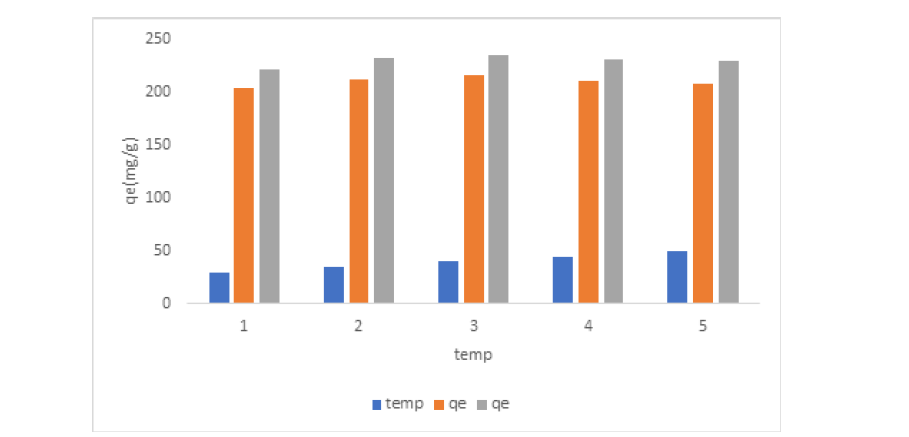
From the result, the rise in temperature from 303K to 327K significantly enhanced cadmium removal, increasing adsorption capacities from 203.5166mg/g to 207.9002mg/g for RPF and from 220.6729mg/g to 229.4953mg/g for CuPF. ANOVA test was conducted for its statistical significance and the result showed a statistically significant difference in the mean efficiency of RPF and CuPF. It was observed that CuPF is more efficient than that of RPF (Table 2).
Table 2:ANOVA Results for all Effects on cadmium adsorption onto palm fronds.
Kinetic studies
Results of kinetics of cadmium adsorption onto palm fronds
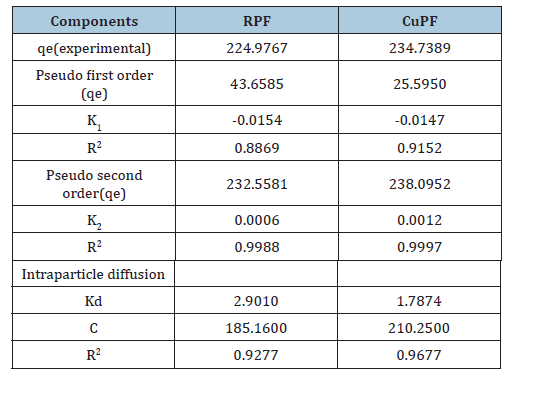
Pseudo-first and second order kinetic and intraparticle diffusion models were used to analyze the data obtained from adsorption of cadmium ion onto RPF and CuPF according to [33]. A summary of the kinetic parameters generated from these models is provided in Table 3.
According to Table 3 above, the pseudo-second order model has higher coefficient of determination (R2) value than the pseudo-first order model for RPF and CuPF respectively. Also, the calculated adsorption capacity (qe) from the pseudo-second order model (232.5581mg/g for RPF and 238.0952mg/g for CuPF) is closer to the experimental values (224.9767mg/g for RPF and 234.7389mg/g for CuPF). The results showed that pseudo-second order model best explained the cadmium adsorption on RPF and CuPF, proving that chemisorption is the dominant mechanism. In addition, the appearance of intercepts from intraparticle diffusion plots showed that cadmium adsorption not only a surface reaction. This observation is similar to a finding elsewhere [16,18,19].
Table 3:Kinetic and intraparticle diffusion models for Cd adsorption on RPF and CuPF.
Thermodynamics studies
Results of thermodynamics for cadmium adsorption onto palm fronds
Thermodynamic parameters (ΔGº, ΔHº and ΔSº) for the sorption process were monitored to determine the heat changes, spontaneity, feasibility and disorderliness related to sorption process and their calculated values for the sorption of cadmium onto RPF and CuPF is summarized in Table 4 below.
Table 4:Thermodynamics for cadmium adsorption onto palm fronds.
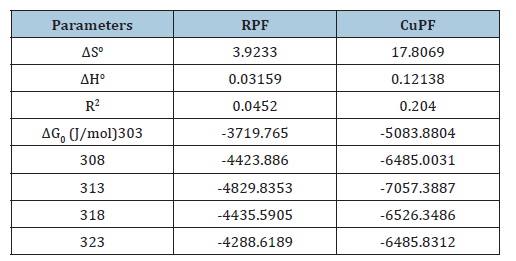
Both RPF and CuPF recorded positive values of ΔHº and ΔSº, suggesting that the removal of cadmium ions is endothermic with high disorderliness at the metal ion/sorbent interface, corresponding with the observed increase in cadmium adsorption as temperature increased. Corresponding with the observed increase in cadmium adsorption as temperature rises. Negative ΔGº values confirmed that the sorption process is spontaneous [19].
Equilibrium studies
The results of equilibrium studies for adsorption of cadmium onto palm fronds
Isotherm modelling parameters for cadmium adsorption onto RPF and CuPF were computed following [33] and the results are presented in Table 5.
Table 5:Equilibrium Isotherm for cadmium adsorption onto RPF and CuPF.
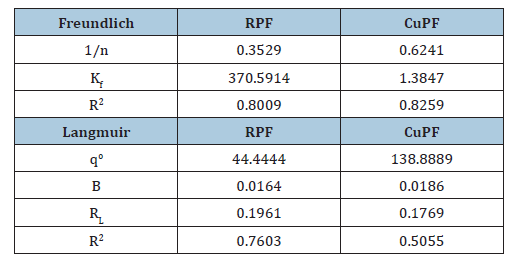
The Freundlich isotherm explains heterogenous surface with sites that have different affinities for the adsorbate, leading to cooperative adsorption rather than a single monolayer adsorption used for Langmuir isotherm. From the plots of Langmuir and Freundlich models used in evaluating the isotherm for cadmium adsorption onto RPF and CuPF, it was observed that Freundlich model produced the best fit with R2 values (0.8009 and 0.8259) for both RPF and CuPF respectively. This suggested that the adsorption of cadmium ions onto RPF and CuPF occurred by multilayer coverage. The adsorption intensity is reflected by Freundlich constant (1/n) values (0.3529 and 0.6241) for both RPF and CuPF respectively fall within the favorable range of 1 to 10, suggesting the adsorption process is favorable and the adsorbents have strong affinity for cadmium ions. The higher (1/n) values for CuPF imply stronger adsorption intensity and better surface heterogeneity compared to RPF [34].
Conclusion
This research highlights the critical role of palm fronds’ physicochemical properties in governing their adsorption efficiency. Elevated lignin and cellulose levels classify them as stable lignocellulosic biomass, rich in functional groups that boost adsorption. These results corroborate prior studies and affirm palm fronds’ promise as a sustainable adsorbent for pollutant remediation. Rather than environmental dumping, valorizing such wastes via adsorption promotes effective waste management and ecological protection.
Authors Contributions
Conceptualization: Ikeh Obianuju Adaobi and Ojiako Eugenia Nnonye, Methodology: Nwadiogbu Joseph Onyebuchi, Validation: Ejidike Lynda, Chinyere, Review and Editing: Okonkwo Ngozi. Anastasia and Nwankwo Njideka. Veronica
References
- Onwukeme VI, Eze VC (2021) Identification of heavy metals source within selected active dumpsites in southeastern Nigeria. Environ Anal Health Toxicol 36(2): e2021008.
- Nwadiogbu JO, Nwankwere ET, Eze KA, Chime CC (2013) Trace metals in airborne harmattan dust in Ahmadu Bello University Zaria, Nigeria. Applied Science Research 5(3): 159-163.
- Ikeh OA, Okonkwo NA, Anarado IL, Ejidike LC, Okpalaunegbu CA, et al. (2024) Physicochemical assessment of soils from selected metal scrap dumpsites in Anambra state, Nigeria. Journal of Materials Science Research and Reviews 7(2): 197-203.
- Flores-Contreras EA, Gonzalez Gonzalez RB, Pizana-Aranda JJP, Parra- Arroyo L, Rodriguez-Aguayo AA, et al. (2024) Agricultural waste as a sustainable source for nano particle synthesis and their antimicrobial properties for food preservation. Frontiers in Nanotechnology 6: 1346069.
- Dey T, Tarashree B, Piyali N, Ritika AG, Arindam K (2021) Valorization of agro-waste into value added products for sustainable development. Bioresource Technology Report 16: 100834.
- Tan XL, Azam-Ali S, Goh EV, Mustafa M, Chai HH, et al. (2020) Bambara groundnut: An underutilized leguminous crop for global food security and nutrition. Front Nutr 7: 601496.
- Murphy DJ, Goggin K, Paterson RRM (2021) Oil palm in the 2020s and beyond: Challenges and solutions. CABI Agric Biosci 2(1): 39.
- Ojiako EN, Mokwe CA (2015) Comparative analysis on the production of oxalic acid from rice husk and cocoa. Advances in Applied Science Research 6(4): 79-81.
- Ali RM, Hamad HA, Hussein MM, Malash GF (2016) Potential of using green adsorbent of heavy metal removal from aqueous solutions: Adsorption kinetics, isotherm, thermodynamics, mechanism and economic analysis. Ecological Engineering 91: 317-332.
- Ahmad AF (2023) The use of agro-waste-based adsorbents as sustainable, renewable, and low-cost alternatives for the removal of ibuprofen and carbamazepine from water. Heliyon 9(6): e16449.
- Igual M, Martinez-Monzo J (2022) Physicochemical properties and structure changes of food products during processing. Foods 11(15): 2365.
- Onyango PV, Oyaro N, Aloys O, Mesopirr L, Omwoyo WN (2014) Assessment of the physicochemical properties of selected commercial soaps manufactured and sold in Kenya. Open Journal of Applied Sciences 4(8): 433-440.
- Ververis C, Georghiou K, Danielidis D, Hatzinikolaou DG, Santas P, et al. (2007) Cellulose, hemicellulose, lignin and ash content of some organic materials and their suitability for use as paper pulp supplements. Bioresource Technology 98(2): 296-301.
- Kumar M, Upadhyay SN, Mishra PK (2019) A comparative study of thermochemical characteristics of lignocellulosic biomasses. Bioresource Technology Report 8: 100186.
- Ibrahim MD, Gan S, Abakr YA, Lee LY, Thangalazhy-Gopakumar S (2023) Physicochemical analysis of bambara groundnut shell (BGS) for biofuel production. Chemical Engineering Transactions 106: 1249-1254.
- Akpomie KG, Conradie J (2020a) Biogenic and chemically synthesized solanum tuberosum peel silver nanoparticle hybrid for the ultrasonic aided adsorption of bromophenol blue dye. Scientific Reports 10(1): 17094.
- Tokula BE, Dada AO, Inyinbor AA, Obayomi KS, Bello OS, et al. (2023) Agro-waste based adsorbents as sustainable materials for effective adsorption of Bisphenol A from the environment: A review. Journal of Cleaner Production 388: 135819.
- Nwadiogbu JO, Okoye PAC, Ajiwe VIE, Nnaji NJN (2014) Hydrophobic treatment of corn cob by acetylation: Kinetics and thermodynamics studies. Journal of Environmental Chemical Engineering 2(3): 1699-1704.
- Nwadiogbu JO, Agu CC, Onwuka JC, Ikeh OA, Nwankwo NV, et al. (2024) Hydrophobic treatment of coconut shell by acetylation: Kinetics and thermodynamics studies. Greener Journal of Physical Sciences 10(1): 7-21.
- Ibifuro A, Akuma O, Tonye OE (2024) Kinetics of the bioremoval of selected heavy metal ions from wastewater by the application of modified Nigerian Bambara groundnuts shells. International Journal of Petrochemical Science and Engineering 7(1): 8-18.
- Ogbuagu AS, Innocent LC, Okoye NN, Umeh SO, Ogbuagu JO (2023) Green synthesis of silver and zinc oxide nano particles using post-harvest leaves of Vigna subterranean and their antimicrobial, anti-inflammatory and antioxidant potentials. Asian Journal of Applied Chemistry Research 13(3): 1-14.
- Nwajiobi CC, Otaigbe JOE, Oriji O (2019) Physicochemical, spectroscopic and tableting properties of microcrystalline cellulose obtained from the African bread fruit seed hulls. African journal of Biotechnology 18(18): 371-382
- Duruaku JI, Okoye PAC, Onuegbu TU, Onwukeme VI, Okoye NH, et al. (2023) Physicochemical properties of sustainable wood plastic composites of tropical sawdust and thermoplastic waste for possible utilization in the wood industry. Journal of Sustainable Bioenergy System 13(4).
- Nwadiogbu JO, Igwe AA, Okoye NH, Chime CC (2015) Extraction and characterization of microcrystalline cellulose from mango kernel: A waste management approach. Der Pharma Chemica 7(11): 1-7.
- Owofadeju FK, Alonge SA (2020) Investigating the suitability of Nigerian Eichhornia crassipes and Chromolaena odoranta in pulp and paper making. Adeleke University Journal of Engineering and Technology 4(1): 15-22.
- Ravolatahina CA, Rafanjanirina E, Randriamanantany ZA (2024) Experimental biodiesel derivation from peanut and bambara groundnut shells pyrolysis oils. International Journal of Progressive Sciences and Technology 47(2): 94-103.
- Aka BL, Nwadiogbu JO, Oragwu IP, Igwe DO, Aka SC, et al. (2025) Acetylation and characterization of African star apple kernels (chrysophyllum albidum) for the preparation of crude oil sorption active material: Physicochemical properties, FTIR spectroscopy, and surface morphology analysis. Journal of Hunan university Natural sciences 62(5): 55-66.
- Lungaho M, Ojuederie OB, Odozi EB, Mshelmbula BP, Onawo LO, et al. (2025) From discard to resource: unlocking the environmental and nutritional value of Bambara ground nut waste. Front Sustain Food Syst.
- Hameed BH, El-khaiary MI (2018) Adsorption of dyes from aqueous solutions onto agricultural waste materials: A review. Journal of Environmental Chemical Engineering 6(4): 5439-5456.
- Zafar MN, Nadeem R, Hanif MA (2007) Biosorption of nickel from protonated rice bran. Journal of Hazardous Materials 143(1-2): 478-485.
- Arinze-Nwosu UL, Ajiwe VIE, Okoye PAC, Nwadiogbu JO (2019) Kinetics and equilibrium of crude oil sorption from aqeous solution using borassus aethopum coir. Chemistry and Materials Research 11(2): 12-19.
- Dawodu FA, Akpomie KG (2014) Simultaneous adsorption of Ni(II) and Mn(II) ions from aqueous solutions onto a Nigerian kaolinite clay. Journal of Materials Research and Technology 3(2): 129-141.
- Ikeh OA, Ojiako EN, Nwadiogbu JO, Obiora JO (2025) Green synthesis and characterization of copper nano composites of palm fronds for the removal of Pb ion from aqueous solution. Journal of e-science Letters 6(4): 7-13.
- Akpomie KG, Conradie J (2020b) Efficient synthesis of magnetic nano-particle-Musa acuminate peel composite for the adsorption of anionic dye. Arabian Journal of Chemistry, 13: 71157131.
© 2026 Ikeh Obianuju Adaobi. This is an open access article distributed under the terms of the Creative Commons Attribution License , which permits unrestricted use, distribution, and build upon your work non-commercially.
Editor In Chief







.jpg)































Signup for Newsletter

Quick Links
 Editorial Board Registrations
 Submit your Article
 Best Paper of the Volume
 Reprints
 Refer a Friend
 Advertise With Us
Our Recent Edition

.jpg)



Top Editors




.jpg)

















.bmp)
.jpg)
.png)
.jpg)













.jpg)






.png)

.png)




.png)




Financial Support

Sponsors

Latest e-Books

Latest Video

 a Creative Commons Attribution 4.0 International License. Based on a work at www.crimsonpublishers.com.
Best viewed in
a Creative Commons Attribution 4.0 International License. Based on a work at www.crimsonpublishers.com.
Best viewed in 
 | Above IE 9.0 version