

- About Us
- Information
-

The Author ensures that the research has been conducted responsibly and ethically with adherence to all relevant regulations. read more..
- For Authors
- For Reviewer
- Manuscript Guidelines
- Membership
- Publication Ethics
-
- Journals
- Reprints
- e-Books
- Videos
- Policies
- Contact Us
 COVID-19
- Submissions



Full Text
Advances in Complementary & Alternative medicine
Complementary and Integrative Medicine (CIM): A Guide for Future Physicians on Common Ayurvedic, Chinese, and Botanical Agents with Potential Drug Interactions
Priya Weerasinghe1,2*
1McGovern Medical School, The University of Texas Health Science Center at Houston (UTHealth Houston), Houston, USA
2Department of Pathology and Laboratory Medicine, McGovern Medical School, The University of Texas Health Science Center at Houston (UTHealth Houston), Houston, USA
*Corresponding author:Priya Weerasinghe, Department of Pathology and Laboratory Medicine, McGovern Medical School, The University of Texas Health Science Center at Houston (UTHealth Houston), Houston, USA
Submission: May 27, 2026;Published: June 09, 2026

ISSN: 2637-7802 Volume 9 Issue 2
Abstract
Complementary and Integrative Medicine (CIM) is increasingly relevant to clinical practice because many patients use herbal products, dietary supplements, and traditional remedies together with conventional medications. This narrative review summarizes commonly used Ayurvedic, Chinese, and botanical agents with potential drug interactions and safety concerns relevant to future physicians. National survey data show that natural products are widely used in the United States, including among patients with chronic diseases who are more likely to take multiple prescription or over-the-counter medications. This manuscript reviews selected agents, including capsicum, cranberry, echinacea, evening primrose oil, flaxseed, garlic, ginseng, green tea, ginkgo, milk thistle, saw palmetto, soy isoflavones, St. John’s wort, valerian, ginger, turmeric, ashwagandha, guggul, dong quai, danshen, licorice, and ephedra. Major clinical concerns include bleeding risk, additive sedation, altered blood pressure or glucose control, thyroid effects, cytochrome P450 and P-glycoprotein interactions, immune modulation, hepatotoxicity, electrolyte abnormalities, and reduced medication effectiveness. Rather than discouraging all herbal use, this review emphasizes respectful medication reconciliation, patient-centered counseling, and recognition of highrisk patterns, especially in surgical patients, older adults, transplant recipients, oncology patients, and individuals taking anticoagulants, antiplatelet agents, sedatives, antidepressants, immunosuppressants, thyroid medications, or cardiovascular drugs. CIM education can prepare physicians to integrate traditional health practices safely while applying modern pharmacology and evidence-based patientsafety principles.
Keywords:Complementary and integrative medicine; Herbal medicine; Herb-drug interactions; Dietary supplements; Ayurvedic medicine; Traditional chinese medicine; Medication reconciliation; Patient safety
Introduction
Complementary and Integrative Medicine (CIM) is increasingly important in medical education because many patients use herbal products, dietary supplements, traditional remedies, and wellness approaches alongside conventional medications. The National Center for Complementary and Integrative Health (NCCIH) distinguish these terms clearly: a non-mainstream approach used together with conventional medicine is considered “complementary,” while a non-mainstream approach used in place of conventional medicine is considered “alternative.” Integrative health brings conventional and complementary approaches together in a coordinated, patient-centered way, often emphasizing whole-person care rather than treatment of a single organ system or isolated symptom [1]. National Health Interview Survey (NHIS) data show that natural products are one of the most common forms of complementary health use in the United States. In the 2012 NHIS, 17.7% of U.S. adults reported using nonvitamin, nonmineral dietary supplements during the previous year, making natural products the most used complementary health approach among adults [2,3]. Use of fish oil, probiotics/prebiotics, and melatonin increased between 2007 and 2012, while use of glucosamine/chondroitin, echinacea, and garlic decreased [2,3].
These data are especially important for physicians because natural products are often used without being documented in the medical record. Use of herbal and natural products is also common among patients with chronic disease. An analysis of the 2012 NHIS found that 17.9% of U.S. adults used nonvitamin or herbal therapies, and this increased to 22.0% among adults with multiple chronic conditions [4]. Another U.S. national analysis found that 35.1% of adults reported current herbal medicine use; among herbal users, 37.6% also used prescription medications and 42.0% used over-the-counter medications [5]. This overlap is clinically important because patients with chronic illnesses are more likely to take multiple drugs, increasing the risk of herb-drug interactions. For future physicians, these statistics make CIM education essential during medication reconciliation, preoperative evaluation, oncology care, transplant care, cardiovascular care, chronic disease management, and primary care counseling. Herbal agents can interact with conventional therapy through effects on bleeding, sedation, blood pressure, glucose control, thyroid function, cytochrome P450 metabolism, P-glycoprotein transport, immune function, and liver or kidney safety.
NCCIH emphasizes that dietary supplements may interact with medications or pose risks in patients with medical conditions or before surgery, while the FDA notes that dietary supplements are not approved for safety and effectiveness before marketing in the same way as prescription drugs [6,7]. The next section presents commonly used Ayurvedic, Chinese, and botanical agents that patients may use for pain, inflammation, urinary symptoms, immune support, sleep, anxiety, cardiovascular health, metabolic health, or general wellness. These agents are not included to dismiss traditional medicine, but to help future physicians recognize clinically relevant patterns of risk. The most important clinical skill is asking specifically and respectfully about herbs, teas, powders, oils, traditional formulas, vitamins, and supplements, especially when patients take anticoagulants, antiplatelet agents, antihypertensives, diabetes medications, sedatives, antidepressants, immunosuppressants, chemotherapy, thyroid medications, or perioperative medications.
Common herbal agents, traditional uses, and drug-interaction concerns (Table 1)
Capsicum pepper / cayenne, Capsicum frutescens and Capsicum annuum: Capsicum pepper, including Capsicum frutescens and Capsicum annuum, contains capsaicin, which is commonly used topically for musculoskeletal pain, neuropathic pain, and arthritis-type discomfort. Its main clinical concern is local irritation, burning, redness, eye irritation, and incorrect use near mucous membranes. Older experimental work suggested that capsaicin may influence platelet aggregation and thrombotic pathways, while more recent reviews describe capsaicinoids as compounds with analgesic, anti-inflammatory, cardiovascular, and pharmacokinetic relevance [8-10]. Capsicum is generally less concerning than herbs such as ginkgo, St. John’s wort, or ephedra, but physicians should still document topical and oral use, especially in patients using high-dose oral cayenne, anticoagulants, antiplatelet drugs, NSAIDs, or perioperative medications.
Table 1:Common herbal agents, traditional uses, and drug-interaction concerns.
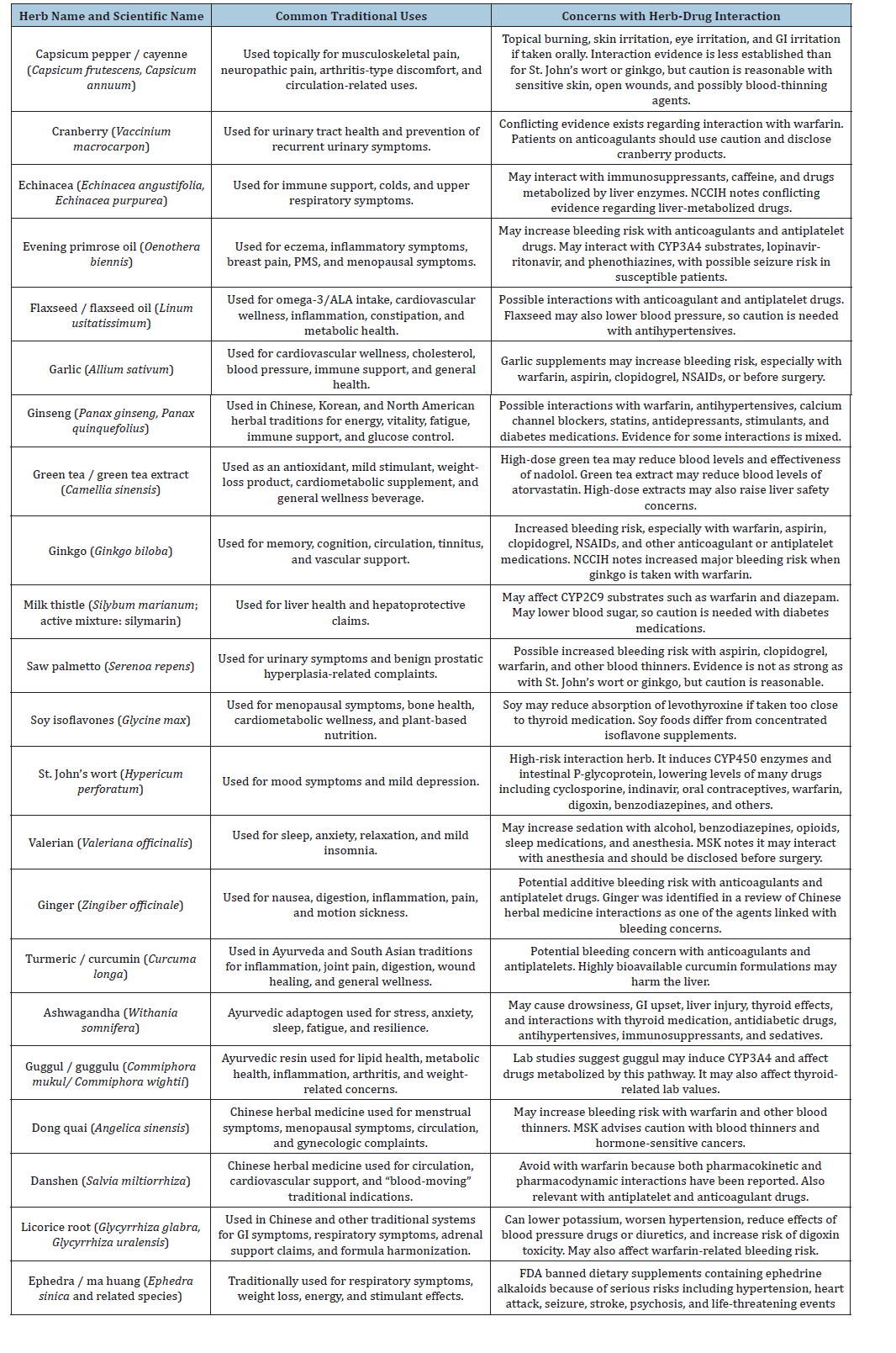
Cranberry, Vaccinium macrocarpon: Cranberry, Vaccinium macrocarpon, is widely used for urinary tract health and prevention of recurrent urinary symptoms. Earlier Cochrane evidence questioned whether cranberry reliably prevented urinary tract infections across all populations, but a more recent Cochrane update found that cranberry products reduced the risk of symptomatic, culture-verified urinary tract infections in some groups, including women with recurrent UTIs and children [11,12]. Cranberry is useful for teaching because its interaction evidence is not completely settled, yet it remains clinically relevant in patients taking warfarin. A patient taking warfarin who suddenly begins cranberry capsules or drinks large amounts of cranberry juice may require closer INR monitoring, especially if other bleeding risks are present.
Echinacea, Echinacea angustifolia and Echinacea purpurea: Echinacea, particularly Echinacea angustifolia and Echinacea purpurea, is commonly used for immune support and upper respiratory symptoms. A 2007 meta-analysis suggested that echinacea may reduce the incidence and duration of common colds, although results varied by preparation and study design [13]. A 2024 meta-analysis also suggested that echinacea may help prevent recurrent respiratory tract infections and reduce antibiotic use in some settings [14]. The clinical concern is not only whether echinacea helps colds, but whether it may interfere with immune-modulating drugs or drugs metabolized by liver enzymes. Physicians should ask about echinacea in transplant patients, patients with autoimmune disease, and patients receiving biologics, corticosteroids, chemotherapy, or other immune-modulating therapies.
Evening primrose oil, Oenothera biennis: Evening primrose oil, Oenothera biennis, is commonly used for eczema, breast pain, premenstrual symptoms, menopausal symptoms, and inflammatory complaints. Older reviews challenged its effectiveness for atopic dermatitis, while more recent systematic reviews have examined its possible role in mastalgia and other women’s health conditions with mixed results [15,16]. Its main drug-interaction concern is possible increased bleeding risk when combined with anticoagulants or antiplatelet agents. It may also be relevant in patients taking drugs metabolized by CYP3A4, lopinavir-ritonavir, phenothiazines, or medications that lower seizure threshold. For future physicians, evening primrose oil is a reminder that supplements used for skin or women’s health should still be included in medication reconciliation.
Flaxseed and flaxseed oil, Linum usitatissimum: Flaxseed and flaxseed oil, Linum usitatissimum, are used for omega-3 alpha-linolenic acid intake, constipation, cardiovascular wellness, cholesterol, blood pressure, and metabolic health. Earlier reviews suggested that flaxseed may modestly reduce total and LDL cholesterol, while evidence for antiplatelet and blood-pressure effects was less conclusive [17]. More recent meta-analytic evidence suggests that flaxseed supplementation can reduce systolic and diastolic blood pressure in hypertensive patients [18]. Physicians should distinguish whole flaxseed, ground flaxseed, flaxseed oil, and concentrated capsules because dose and formulation influence both benefits and risks. Flaxseed may be relevant in patients taking antihypertensive medications, anticoagulants, antiplatelet drugs, or diabetes medications.
Garlic, Allium sativum: Garlic, Allium sativum, is commonly used for cardiovascular wellness, cholesterol, blood pressure, and immune support. Culinary garlic is usually less concerning than concentrated garlic supplements, but high-dose supplements can increase bleeding risk. Older clinical evidence suggested that aged garlic extract may be safe in carefully monitored patients on warfarin, but more recent reviews of dietary supplements and bleeding continue to identify garlic as a supplement of concern in patients taking anticoagulants, antiplatelet agents, NSAIDs, or perioperative medications [19,20]. Garlic is high yield for future physicians because patients often see it as food rather than as a product that can affect medication safety.
Ginseng, Panax ginseng and Panax quinquefolius: Ginseng includes Panax ginseng and Panax quinquefolius. It is commonly used for energy, vitality, immune support, fatigue, stress resilience, glucose regulation, and general wellness. A randomized trial found that American ginseng reduced warfarin’s anticoagulant effect in healthy volunteers, raising concern that ginseng may decrease anticoagulation rather than simply increase bleeding [21]. More recent safety reviews continue to describe ginseng interactions as complex and product-dependent, with possible concerns involving warfarin, antihypertensives, antidiabetic drugs, antidepressants, and cardiovascular medications [22]. This uncertainty is clinically important because many patients who use ginseng also have diabetes, hypertension, depression, cardiovascular disease, or anticoagulation therapy.
Green tea and green tea extract, Camellia sinensis: Green tea, Camellia sinensis, is consumed as a beverage and also used in concentrated extracts for antioxidant, weight-loss, and cardiometabolic claims. The distinction between green tea as a beverage and green tea extract as a supplement is clinically important. A clinical pharmacokinetic study found that green tea markedly reduced plasma concentrations of nadolol, suggesting a transporter-mediated interaction [23]. Another study found that green tea extract reduced atorvastatin exposure in healthy volunteers [24]. Physicians should ask whether patients use ordinary tea, capsules, powders, or concentrated extracts, especially if they take beta-blockers, statins, hepatotoxic drugs, or medications with narrow therapeutic windows.
Ginkgo, Ginkgo biloba: Ginkgo, Ginkgo biloba, is used for cognition, memory, circulation, tinnitus, and vascular support. It is one of the most clinically important herbs for medication reconciliation because of bleeding concerns. An older controlled study in healthy volunteers found no significant effect of ginkgo or ginger on warfarin pharmacokinetics or pharmacodynamics, but later real-world data in a Veterans Affairs population associated concurrent ginkgo-warfarin use with increased bleeding risk [25,26]. This difference shows why healthy-volunteer studies may underestimate risk in older adults with comorbidities and polypharmacy. Physicians should ask specifically about ginkgo in patients taking warfarin, DOACs, aspirin, clopidogrel, NSAIDs, or preparing for surgery.
Milk thistle, Silybum marianum: Milk thistle, Silybum marianum, contains silymarin and is commonly used for liver health. Earlier pharmacokinetic reviews suggested that silymarin may affect drug metabolism, including CYP-related pathways, although clinical evidence was limited [27]. A later case report described a clinically relevant rise in INR after a warfarin-treated patient began a liver-cleanse supplement containing milk thistle, supporting concern for a CYP2C9-mediated interaction [28]. Milk thistle is clinically relevant because patients may use it while also taking hepatotoxic medications, chemotherapy, diabetes medications, sedatives, warfarin, or other drugs with narrow therapeutic windows.
Saw palmetto, Serenoa repens: Saw palmetto, Serenoa repens, is used for urinary symptoms and benign prostatic hyperplasiarelated complaints. An older systematic review suggested possible benefit for lower urinary tract symptoms, but a later Cochrane review found that Serenoa repens did not improve urinary flow measures or prostate size compared with placebo, even at higher doses [29,30]. This makes saw palmetto a good example of an herb whose popularity may exceed the strength of later evidence. Interaction concerns still matter because older male patients using saw palmetto may also take aspirin, clopidogrel, warfarin, DOACs, antihypertensives, or other cardiovascular medications. Urinary symptoms should also not be managed with supplements alone without appropriate evaluation.
Soy isoflavones, Glycine max: Soy isoflavones, from Glycine max, are used for menopausal symptoms, bone health, cardiometabolic wellness, and plant-based nutrition. The main teaching point is that soy foods and concentrated soy isoflavone supplements are not identical. A classic case report showed that soy protein supplementation interfered with levothyroxine absorption and increased the need for thyroid hormone replacement [31]. More recent evidence suggests that soy may have small effects on thyroid hormone measures, particularly in patients with limited iodine intake or thyroid disease [32]. Physicians should counsel patients to separate soy intake from levothyroxine dosing when appropriate and to monitor thyroid labs if diet patterns change significantly.
St. John’s wort, Hypericum perforatum: St. John’s wort, Hypericum perforatum, is one of the most important herbal products for physicians to know because of its strong interaction potential. It is used for mood symptoms and mild depression. A foundational clinical study showed that St. John’s wort induces intestinal P-glycoprotein/MDR1 and intestinal and hepatic CYP3A4, explaining many of its drug interactions [33]. A modern review confirmed that St. John’s wort can alter the pharmacokinetics of drugs such as digoxin, tacrolimus, indinavir, warfarin, alprazolam, simvastatin, and oral contraceptives, with hyperforin content contributing to interaction risk [34]. It may also increase serotonergic risk when combined with antidepressants. In a medical curriculum, St. John’s wort should be taught as a must-ask supplement.
Valerian, Valeriana officinalis: Valerian, Valeriana officinalis, is used for sleep, anxiety, and relaxation. Older mechanistic research found that valerian and valerenic acid have GABAergic effects, which may explain concerns about additive sedation or potentiation of anesthetic drugs [35]. Later reviews found limited evidence for major clinically proven drug interactions, but the sedative pharmacology remains clinically relevant [36]. Physicians should ask about valerian before surgery, procedural sedation, opioid prescribing, benzodiazepine use, alcohol use, sleepmedication use, or anesthesia exposure. The practical concern is additive sedation rather than a single predictable CYP interaction.
Ginger, Zingiber officinale: Ginger, Zingiber officinale, is used for nausea, digestion, inflammation, motion sickness, and pain. An older systematic review supported ginger’s potential usefulness for nausea and vomiting in some clinical contexts [37]. More recent case literature and bleeding-focused reviews continue to raise caution about possible INR elevation or bleeding risk when ginger supplements are used with anticoagulants, although normal dietary ginger is usually much less concerning [8,38]. Physicians should distinguish dietary ginger from medicinal-dose teas, capsules, extracts, or concentrated products, especially in patients taking warfarin, aspirin, clopidogrel, DOACs, or NSAIDs.
Turmeric and curcumin, Curcuma longa: Turmeric, Curcuma longa, and its active constituent curcumin are used in Ayurveda and South Asian traditions for inflammation, joint pain, digestion, and general wellness. Experimental work has shown that curcumin and related compounds may affect coagulation pathways, including thrombin and factor Xa activity [39]. More recent reviews describe curcumin’s effects on platelet activity and inflammatory signaling, while also raising questions about bleeding risk and liver safety with concentrated or highly bioavailable formulations [8,40]. Turmeric in food should be distinguished from high-dose curcumin capsules, black-pepper-enhanced formulations, or concentrated extracts. Physicians should ask about turmeric and curcumin in patients using anticoagulants, antiplatelet agents, hepatotoxic drugs, or multiple anti-inflammatory supplements.
Ashwagandha, Withania somnifera: Ashwagandha, Withania somnifera, is an Ayurvedic adaptogen commonly promoted for stress, anxiety, sleep, fatigue, and resilience. A randomized, doubleblind, placebo-controlled study found that a high-concentration ashwagandha root extract reduced stress and anxiety in adults under stress [41]. More recent literature suggests possible sleep benefits, but case series have also reported ashwagandha-induced liver injury, including cholestatic hepatitis and more severe outcomes in patients with pre-existing liver disease [42]. Safety concerns include loose stools, nausea, drowsiness, possible liver injury, thyroid effects, and interactions with thyroid medications, antidiabetic drugs, antihypertensives, immunosuppressants, and sedatives. This herb is especially relevant because it is increasingly popular among young adults and wellness-focused patients.
Guggul / guggulu, Commiphora mukul and Commiphora wightii: Guggul, also called guggulu, comes from Commiphora mukul or Commiphora wightii and is used in Ayurveda for lipid health, arthritis, inflammation, metabolic health, and weightrelated concerns. A randomized controlled trial found that guggulipid did not improve cholesterol levels and may have increased LDL cholesterol in some participants [43]. More recent research suggests that Maha-Yogaraj Guggulu and guggulsterone isomers may affect CYP3A4-mediated metabolism [44]. Since CYP3A4 metabolizes many medications, including some statins, calcium channel blockers, benzodiazepines, immunosuppressants, and oncology drugs, guggul is important in pharmacology-centered CIM education. It may also affect thyroid-related markers, making it relevant in patients with thyroid disease.
Dong quai, Angelica sinensis: Dong quai, Angelica sinensis, is used in Traditional Chinese Medicine for menstrual symptoms, menopausal symptoms, circulation, and gynecologic complaints. A classic case report described potentiation of warfarin after dong quai use, supporting concern for increased bleeding risk [45]. Later reviews of warfarin and Chinese herbal medicines continued to highlight the need for careful medication reconciliation when patients use Traditional Chinese Medicine products with anticoagulants [46]. Physicians should ask about dong quai in patients using products for menstrual symptoms, menopause, circulation, or women’s health, especially if they also take warfarin, aspirin, clopidogrel, DOACs, or have pregnancy or hormonesensitive cancer concerns.
Danshen, Salvia miltiorrhiza: Danshen, Salvia miltiorrhiza, is used in Traditional Chinese Medicine for circulation and cardiovascular support. It is especially important because it is traditionally considered a blood-moving herb. Earlier reviews concluded that danshen should be avoided in patients taking warfarin because both pharmacokinetic and pharmacodynamic interactions may occur [47]. More recent human and preclinical work on Danshen-Gegen products continues to show clinically relevant interaction potential with warfarin and aspirin [48]. Danshen is therefore a high-yield teaching example for patients with cardiovascular disease, atrial fibrillation, stroke history, anticoagulation therapy, or upcoming procedures.
Licorice root, Glycyrrhiza glabra and Glycyrrhiza uralensis: Licorice root, including Glycyrrhiza glabra and Glycyrrhiza uralensis, is used in Chinese and other traditional systems for gastrointestinal symptoms, respiratory symptoms, and as a harmonizing component in formulas. A classic JAMA report established licorice-induced pseudoaldosteronism as a syndrome involving hypertension, hypokalemia, suppressed renin activity, and low aldosterone [49]. A recent practice-based review reinforced that licorice could cause pseudohyperaldosteronism through mineralocorticoidlike effects [50]. Licorice is clinically important because it can worsen hypertension, fluid retention, and hypokalemia, and it may increase risk in patients taking diuretics, digoxin, antihypertensive medications, corticosteroids, or other drugs affected by potassium balance.
Ephedra / ma huang, Ephedra sinica: Ephedra, including Ephedra sinica, is one of the clearest examples of a botanical product with serious safety concerns. It was traditionally used for respiratory symptoms and later marketed for weight loss, energy, and athletic performance. A landmark New England Journal of Medicine review linked ephedra-containing dietary supplements with serious cardiovascular and central nervous system adverse events [51]. More recent systematic-review evidence continues to examine ephedra-containing oral medications in specific contexts, but this does not change the key U.S. teaching point that dietary supplements containing ephedrine alkaloids were banned because of serious safety risks. Ephedra should be emphasized because it shows that natural products can have potent sympathomimetic effects, including hypertension, arrhythmia, myocardial infarction, seizure, stroke, and psychiatric toxicity concerns.
Discussion
Taken together, these herbal agents demonstrate why CIM should be included in medical education rather than treated as a minor or optional topic. Patients frequently use herbs and supplements for symptoms that overlap with common medical problems, including pain, inflammation, fatigue, anxiety, insomnia, urinary symptoms, menopausal symptoms, digestive symptoms, cardiovascular wellness, immune support, and general health. Many patients do not volunteer this information unless asked directly, and many do not consider herbs, teas, oils, powders, or traditional formulas to be medications. Therefore, the physician’s ability to ask about CIM in a respectful and specific way is central to patient safety. A major theme across these agents is bleeding risk. Ginkgo, garlic, ginger, turmeric, dong quai, danshen, evening primrose oil, saw palmetto, cranberry, and possibly flaxseed oil can be relevant in patients taking warfarin, aspirin, clopidogrel, DOACs, NSAIDs, or perioperative medications. Not all bleeding interactions are equally proven, and not all normal dietary use creates the same risk as concentrated supplements.
However, the pattern is clinically important because bleeding risk becomes more significant in patients with polypharmacy, older age, liver disease, kidney disease, surgery, dental procedures, anticoagulation changes, or unexplained bruising and abnormal INR. A second major theme is drug metabolism and transporter effects. St. John’s wort is the clearest example because it induces CYP450 enzymes and intestinal P-glycoprotein, reducing the levels or effectiveness of drugs such as cyclosporine, tacrolimus, indinavir, oral contraceptives, warfarin, digoxin, benzodiazepines, and statins. Guggul may affect CYP3A4, echinacea may influence liver-enzyme- related metabolism, green tea extract may reduce atorvastatin exposure, green tea may reduce nadolol levels, and milk thistle may affect CYP2C9 substrates such as warfarin and diazepam. These examples show why pharmacokinetics should be taught in the context of supplements, not only prescription drugs. A third theme is additive pharmacodynamic effects. Valerian may increase sedation when combined with alcohol, benzodiazepines, opioids, sleep medications, or anesthetic agents. Ashwagandha may add to the effects of sedatives, antihypertensives, antidiabetic drugs, thyroid medications, and immunosuppressants.
Licorice can worsen hypertension and hypokalemia, creating concerns in patients taking diuretics, digoxin, or antihypertensive medications. Ginseng may affect glucose control and anticoagulation. These interactions do not always depend on CYP metabolism; they occur because the herb and the medication push the body in the same or opposite physiologic direction. A fourth theme is dose and formulation. Normal dietary turmeric, ginger, garlic, soy, and green tea are not the same as concentrated capsules, extracts, or high-bioavailability formulations. A patient who cooks with turmeric occasionally has a different risk profile from a patient taking high-dose curcumin with black pepper extract. A patient who drinks green tea has a different risk profile from a patient using concentrated green tea extract for weight loss. Physicians should ask not only whether the patient uses an herb, but also whether it is taken as food, tea, capsule, tincture, oil, powder, extract, or a multi-ingredient formula. A fifth theme is population-specific risk. Herbal products may be especially important in older adults, preg nant patients, surgical patients, transplant recipients, oncology patients, patients on anticoagulation, patients with liver or kidney disease, patients with thyroid disease, and patients using multiple medications.
Ashwagandha raises thyroid, liver, sedative, and immune-related questions; dong quai raises pregnancy, bleeding, and hormone- sensitive cancer concerns; licorice raises blood pressure, potassium, and digoxin concerns; and ephedra is unsafe as a dietary supplement because of serious cardiovascular and neurologic risks. A sixth theme is product quality and regulation. The FDA does not approve most dietary supplements for safety or effectiveness before marketing, and manufacturers are responsible for product safety and labeling. This means that the dose, purity, labeling accuracy, and active ingredients of supplements may vary. Multi-ingredient products are especially difficult to evaluate because they may combine several herbs with overlapping effects on bleeding, sedation, blood pressure, liver enzymes, or immune function. This is not an argument against all traditional medicine; rather, it is an argument for careful sourcing, disclosure, documentation, and evidence- informed clinical guidance. For future physicians, the practical skill is not memorizing every possible herb-drug interaction. The practical skill is recognizing patterns. A physician should think about bleeding when a patient uses ginkgo, garlic, ginger, turmeric, dong quai, danshen, evening primrose oil, or saw palmetto.
A physician should think about sedation when a patient uses valerian or ashwagandha. A physician should think about CYP and P-glycoprotein interactions when a patient uses St. John’s wort, guggul, echinacea, milk thistle, or concentrated extracts. A physician should think about thyroid effects with soy and ashwagandha, glucose effects with ginseng, milk thistle, and ashwagandha, and cardiovascular or electrolyte effects with licorice and ephedra. The best clinical approach is respectful, direct, and nonjudgmental. Instead of asking only, “What medications do you take?” physicians should ask, “Do you take any vitamins, herbs, teas, powders, oils, Ayurvedic products, Chinese herbal formulas, supplements for sleep, immune support, weight loss, pain, energy, or digestion?” This wording improves disclosure because many patients do not consider herbal products to be medications. It also creates an opportunity for culturally sensitive counseling rather than dismissal.
Conclusion
Complementary and integrative medicine is important for future physicians because patients already use herbal and traditional agents alongside conventional medical care. National survey data show that natural products are commonly used, especially among people with chronic conditions, and many herbal users also take prescription or over-the-counter medications. This overlap makes herb-drug interactions a practical patient-safety issue rather than a theoretical concern. The agents discussed here, including capsicum, cranberry, echinacea, evening primrose oil, flaxseed, garlic, ginseng, green tea, ginkgo, milk thistle, saw palmetto, soy isoflavones, St. John’s wort, valerian, ginger, turmeric, ashwagandha, guggul, dong quai, danshen, licorice, and ephedra, demonstrate the broad range of possible concerns: bleeding, sedation, altered drug metabolism, reduced medication effectiveness, liver injury, thyroid effects, glucose changes, blood pressure changes, electrolyte abnormalities, immune effects, and severe cardiovascular toxicity. A balanced CIM curriculum should teach future physicians to respect traditional medical systems while also applying modern pharmacology, evidence-based medicine, and patient-safety principles. The goal is not to reject complementary medicine or accept every claim uncritically. The goal is to prepare physicians to ask better questions, recognize clinically significant risks, guide patients safely, and integrate appropriate complementary approaches into whole-person care.
Conflict of Interest
The author declares that there is no conflict of interest to disclose.
References
- National Center for Complementary and Integrative Health (NCCIH) (2026) Complementary, alternative, or integrative health: What’s in a name? National Institutes of Health, Bethesda, Maryland, USA.
- Clarke TC, Black LI, Stussman BJ, Barnes PM, Nahin RL (2015) Trends in the use of complementary health approaches among adults: United States, 2002-2012. National Health Statistics Reports (79): 1-16.
- National Center for Complementary and Integrative Health (NCCIH) (2015) National survey reveals widespread use of mind and body practices, shifts in use of natural products. National Institutes of Health, Bethesda, Maryland, USA.
- Falci L, Shi Z, Greenlee H (2016) Multiple chronic conditions and use of complementary and alternative medicine among US adults: Results from the 2012 National Health Interview Survey. Preventing Chronic Disease 13: E61.
- Rashrash M, Schommer JC, Brown LM (2017) Prevalence and predictors of herbal medicine use among adults in the United States. Journal of Patient Experience 4(3): 108-113.
- National Center for Complementary and Integrative Health (NCCIH) (2026) Using dietary supplements wisely. National Institutes of Health, Bethesda, Maryland, USA.
- S. Food and Drug Administration (FDA) (2024) Questions and answers on dietary supplements. U.S. Food and Drug Administration, Silver Spring, Maryland, USA.
- Leday AJ, Iyengar D, Weerasinghe P (2026) Globally used herbal supplements with blood-thinning effects and their interactions with warfarin and aspirin in stroke care: A narrative review. Advances in Complementary & Alternative Medicine 9(2): 1004-1012.
- Wang JP, Hsu MF, Hsu TP, Teng CM (1985) Antihemostatic and antithrombotic effects of capsaicin in comparison with aspirin and indomethacin. Thrombosis Research 37(6): 669-679.
- Batiha GES, Alqahtani A, Ojo OA, Shaheen HM, Wasef L, et al. (2020) Biological properties, bioactive constituents, and pharmacokinetics of some Capsicum spp. and capsaicinoids. International Journal of Molecular Sciences 21(15): 5179.
- Williams G, Hahn D, Stephens JH, Craig JC, Hodson EM (2023) Cranberries for preventing urinary tract infections. Cochrane Database of Systematic Reviews 4(4): CD001321.
- Shah SA, Sander S, White CM, Rinaldi M, Coleman CI (2007) Evaluation of echinacea for the prevention and treatment of the common cold: A meta-analysis. Lancet Infectious Diseases 7(7): 473-480.
- Gancitano G, Mucci N, Stange R, Ogal M, Vimalanathan S, et al. (2024) Echinacea reduces antibiotics by preventing respiratory infections: A meta-analysis (ERA-PRIMA). Antibiotics 13(4): 364.
- Williams HC (2003) Evening primrose oil for atopic dermatitis. BMJ 327(7428): 1358-1359.
- Adni LLA, Norhayati MN, Rosli RRM, Muhammad J (2021) A systematic review and meta-analysis of the efficacy of evening primrose oil for mastalgia treatment. International Journal of Environmental Research and Public Health 18(12): 6295.
- Bloedon LT, Szapary PO (2004) Flaxseed and cardiovascular risk. Nutrition Reviews 62(1): 18-27.
- Moghadam EF, Khaghani L, Esfahani PS (2024) Flaxseed lowers blood pressure in hypertensive subjects: A meta-analysis of randomized controlled trials. Clinical Nutrition Research 13(4): 295-306.
- Macan H, Uykimpang R, Alconcel M, Takasu J, Razon R, et al. (2006) Aged garlic extract may be safe for patients on warfarin therapy. Journal of Nutrition 136(3 Suppl): 793S-795S.
- Hatfield J, Saad S, Housewright C (2022) Dietary supplements and bleeding. Proceedings Baylor University Medical Center 35(6): 802-807.
- Yuan CS, Wei G, Dey L, Karrison T, Nahlik L, et al. (2004) American ginseng reduces warfarin’s effect in healthy patients: A randomized, controlled trial. Annals of Internal Medicine 141(1): 23-27.
- Frazer E, Zhao C, Lee J, Shaw J, Lai C, et al. (2025) A review of the mechanisms and risks of Panax ginseng in clinical use. Healthcare 13(9): 285.
- Misaka S, Yatabe J, Müller F, Takano K, Kawabe K, et al. (2014) Green tea ingestion greatly reduces plasma concentrations of nadolol in healthy subjects. Clinical Pharmacology & Therapeutics 95(4): 432-438.
- Abdelkawy KS, Abdelaziz RM, Abdelmageed AM, Donia AM, Khodary NME (2020) Effects of green tea extract on atorvastatin pharmacokinetics in healthy volunteers. European Journal of Drug Metabolism and Pharmacokinetics 45(3): 351-360.
- Jiang X, Williams KM, Liauw WS, Ammit AJ, Roufogalis BD, et al. (2005) Effect of ginkgo and ginger on the pharmacokinetics and pharmacodynamics of warfarin in healthy subjects. British Journal of Clinical Pharmacology 59(4): 425-432.
- Stoddard GJ, Archer M, McWhorter LS, Bray BE, Redd DF, et al. (2015) Ginkgo and warfarin interaction in a large Veterans Administration population. AMIA Annual Symposium Proceedings 2015: 1174-1183.
- Wu JW, Lin LC, Tsai TH (2009) Drug-drug interactions of silymarin on the perspective of pharmacokinetics. Journal of Ethnopharmacology 121(2): 185-193.
- Lash DB, Ward S (2020) CYP2C9-mediated warfarin and milk thistle interaction. Journal of Clinical Pharmacy and Therapeutics 45(2): 368-369.
- Wilt TJ, Ishani A, Stark G, MacDonald R, Lau J, et al. (1998) Saw palmetto extracts for treatment of benign prostatic hyperplasia: A systematic review. JAMA 280(18): 1604-1609.
- Wilt T, Ishani A, Donald RM (2002) Serenoa repens for benign prostatic hyperplasia. Cochrane Database of Systematic Reviews 3: CD001423.
- Bell DS, Ovalle F (2001) Use of soy protein supplement and resultant need for increased dose of levothyroxine. Endocrine Practice 7(3): 193-194.
- Otun J, Sahebkar A, Östlundh L, Atkin SL, Sathyapalan T (2019) Systematic review and meta-analysis on the effect of soy on thyroid function. Scientific Reports 9(1): 3964.
- Dürr D, Stieger B, Ublick GAK, Rentsch KM, Steinert HC, et al. (2000) St John’s wort induces intestinal P-glycoprotein/MDR1 and intestinal and hepatic CYP3A4. Clinical Pharmacology & Therapeutics 68(6): 598-604.
- Nicolussi S, Drewe J, Butterweck V, Schwabedissen HEMZ (2020) Clinical relevance of St. John’s wort drug interactions revisited. British Journal of Pharmacology 177(6): 1212-1226.
- Yuan CS, Mehendale S, Xiao Y, Aung HH, Xie JT, et al. (2004) The GABAergic effects of valerian and valerenic acid on rat brainstem neuronal activity. Anesthesia & Analgesia 98(2): 353-358.
- Kelber O, Nieber K, Kraft K (2014) Valerian: No evidence for clinically relevant interactions. Evidence-Based Complementary and Alternative Medicine 2014: 879396.
- Ernst E, Pittler MH (2000) Efficacy of ginger for nausea and vomiting: A systematic review of randomized clinical trials. British Journal of Anaesthesia 84(3): 367-371.
- Rubin D, Patel V, Dietrich E (2019) Effects of oral ginger supplementation on the INR. Case Reports in Medicine 2019: 8784029.
- Kim DC, Ku SK, Bae JS (2012) Anticoagulant activities of curcumin and its derivative. BMB Reports 45(4): 221-226.
- Hussain Y, Abdullah, Khan F, Alsharif KF, Alzahrani KJ, et al. (2022) Regulatory effects of curcumin on platelets: An update and future directions. Biomedicines 10(12): 3180.
- Chandrasekhar K, Kapoor J, Anishetty S (2012) A prospective, randomized double-blind, placebo-controlled study of safety and efficacy of a high-concentration full-spectrum extract of ashwagandha root in reducing stress and anxiety in adults. Indian Journal of Psychological Medicine 34(3): 255-262.
- Philips CA, Valsan A, Theruvath AH, Ravindran R, Oommen TT, et al. (2023) Ashwagandha-induced liver injury: A case series from India and literature review. Hepatology Communications 7(10): e0270.
- Szapary PO, Wolfe ML, Bloedon LT, Cucchiara AJ, DerMarderosian AH, et al. (2003) Guggulipid for the treatment of hypercholesterolemia: A randomized controlled trial. JAMA 290(6): 765-772.
- Sabarathinam S, Chandra SKR, Mahalingam VT (2021) CYP3A4-mediated pharmacokinetics drug interaction potential of Maha-Yogaraj Guggulu and E, Z guggulsterone. Scientific Reports 11(1): 715.
- Page RL, Lawrence JD (1999) Potentiation of warfarin by dong quai. Pharmacotherapy 19(7): 870-876.
- Chua YT, Ang XL, Zhong XM, Khoo KS (2015) Interaction between warfarin and Chinese herbal medicines. Singapore Medical Journal 56(1): 11-18.
- Chan TY (2001) Interaction between warfarin and danshen (Salvia miltiorrhiza). Annals of Pharmacotherapy 35(4): 501-504.
- Zhang Y, Yang M, Ho NJ, Mok RY, Zhang Z, et al. (2020) Is it safe to take radix salvia miltiorrhiza-radix puerariae lobatae product with warfarin and aspirin? A pilot study in healthy human subjects. Journal of Ethnopharmacology 262:113151.
- Conn JW, Rovner DR, Cohen EL (1968) Licorice-induced pseudoaldosteronism: Hypertension, hypokalemia, aldosteronopenia, and suppressed plasma renin activity. JAMA 205(7): 492-496.
- Sabbadin C, Graziani A, Bavaresco A, Mazzeo P, Tizianel I, et al. (2024) Pseudohyperaldosteronism due to licorice: A practice-based review. International Journal of Molecular Sciences 25(13): 7454.
- Haller CA, Benowitz NL (2000) Adverse cardiovascular and central nervous system events associated with dietary supplements containing ephedra alkaloids. New England Journal of Medicine 343(25): 1833-1838.
- Cho H, Oh J, Chu H, Jin H, Leem J (2024) Efficacy and safety of ephedra-containing oral medications: A systematic review, meta-analysis, and exploratory dose-response analysis for weight reduction. Medicine 15: 1397247.
© 2026 Priya Weerasinghe. This is an open access article distributed under the terms of the Creative Commons Attribution License , which permits unrestricted use, distribution, and build upon your work non-commercially.
Editor In Chief







.jpg)































Signup for Newsletter

Quick Links
 Editorial Board Registrations
 Submit your Article
 Best Paper of the Volume
 Reprints
 Refer a Friend
 Advertise With Us
Our Recent Edition

.jpg)



Top Editors




.jpg)

















.bmp)
.jpg)
.png)
.jpg)













.jpg)






.png)

.png)




.png)




Financial Support

Sponsors

Latest e-Books

Latest Video

 a Creative Commons Attribution 4.0 International License. Based on a work at www.crimsonpublishers.com.
Best viewed in
a Creative Commons Attribution 4.0 International License. Based on a work at www.crimsonpublishers.com.
Best viewed in 
 | Above IE 9.0 version