

- About Us
- Information
-

The Author ensures that the research has been conducted responsibly and ethically with adherence to all relevant regulations. read more..
- For Authors
- For Reviewer
- Manuscript Guidelines
- Membership
- Publication Ethics
-
- Journals
- Reprints
- e-Books
- Videos
- Policies
- Contact Us
 COVID-19
- Submissions



Full Text
Advances in Complementary & Alternative medicine
Ethnopharmacological Insights into Pakistani Medicinal Plants as Complementary Antivenom Agents against Naja naja karachiensis: A Scooping Review
Saba Gul1, Nighat Seema1 and Saqib Khan2,3*
1Department of Botany, Government Post Graduate College for Women Mardan, KPK, Pakistan
2Department of Pharmacy, University of Swabi, Ambar, Swabi, KPK, Pakistan
3College of Pharmacy, HBS Institute of Healthcare and Allied Health Sciences Islamabad, Pakistan
*Corresponding author:Saqib Khan, Department of Pharmacy, University of Swabi, Ambar, Swabi, KPK, Pakistan
Submission: May 18, 2026;Published: May 26, 2026

ISSN: 2637-7802 Volume 9 Issue 2
Abstract
Snakebite envenomation remains a critical yet neglected public health problem, particularly in South Asia, where cobra species of the genus Naja contribute substantially to morbidity and mortality. Among these, Naja n. karachiensis, the Pakistani black cobra, poses significant clinical and public health challenges. Conventional antivenom therapy, although life-saving, has limitations including adverse reactions, restricted availability in rural areas, and variable efficacy against geographically distinct venom phenotypes. These constraints have prompted growing interest in plant-based therapeutics as complementary or alternative interventions. This scoping review systematically collates and evaluates the available evidence on medicinal plants assessed for antivenom activity against N. naja karachiensis venom and its key enzymatic components, including phospholipase A₂, alkaline phosphatase, 5′-nucleotidase, and hemolytic factors. A comprehensive literature search was conducted across major scientific databases following PRISMA-ScR guidelines.
Studies published between 2010 and 2025 reporting experimental investigations of medicinal plants against N. n. karachiensis venom were included. Data was extracted on plant species, plant parts used, targeted venom components, and reported bioactivities. Multiple medicinal plants, including Albizia lebbeck, Citrus limon, Enicostema hyssopifolium, Terminalia arjuna, and Fagonia cretica, demonstrated significant inhibitory effects against key venom enzymes and protective activity against venom-induced hemolysis and tissue damage. Several species exhibited multi-target venom neutralization, likely due to synergistic actions of phytochemicals such as flavonoids, alkaloids, and phenolic compounds. Medicinal plants show substantial potential as complementary antivenom agents. However, further research is needed to isolate active compounds, standardize formulations, validate efficacy in vivo, and integrate with conventional antivenom therapies to optimize treatment outcomes in resource-limited settings.
Keywords:Naja naja karachiensis; Snakebite; Medicinal plants; Antivenom; PLA₂; Ethnopharmacology
Abbreviations: ALPase: Alkaline Phosphatase; IPD: In-Patient Department; N. n. karachiensis: Naja naja karachiensis; NTD: Neglected Tropical Disease; OSH: Occupational Safety and Health; PLA₂: Phospholipase A₂; RBC: Red Blood Cell; WHO: World Health Organization
Introduction
Snakebite envenoming is a major global health problem, especially in low-resource tropical regions. An estimated 5.4 million people are bitten by snakes each year worldwide, resulting in approximately 1.8-2.7 million envenomation and 81,000-138,000 deaths annually [1,2]. Many more victims suffer severe morbidity and permanent disability (e.g. amputations) [3]. These burdens fall overwhelmingly on poor rural communities in South and Southeast Asia and sub-Saharan Africa [3,4]. In recognition of this, the World Health Organization (WHO) re-classified snakebite envenoming as a category a neglected tropical disease in 2017, and adopted a global strategy in 2019 aiming to halve snakebite mortality and disability by 2030 [2]. Front-fanged snakes of the families Elapidae (cobras, kraits, mambas, coral snakes, sea snakes) and Viperidae (vipers and pit-vipers) are responsible for the vast majority of life-threatening envenomations [4-6]. These families include the globally widespread Indian cobra (Naja naja) and other Naja spp. In Pakistan, one medically important elapid is the black cobra Naja naja karachiensis, a subspecies found primarily in southern Punjab [7].
Bites by N. n. karachiensis cause severe local and systemic toxicity [7]. Signs of cobra envenomation include intense local pain, swelling and tissue necrosis at the bite site, along with systemic effects such as neuromuscular paralysis (leading to respiratory failure), hypotension/cardiac collapse, coagulopathy (prolonged clotting times, bleeding) and renal impairment [3,7]. Victims may also experience vomiting, headache and altered consciousness due to toxins in the venom [7]. Cobra venom is a highly complex mixture of many proteins and peptides. Proteomic studies have shown that elapid venoms (including Naja cobras) are dominated by two major toxin families: Three-Finger Toxins (3FTx) and Phospholipase A₂ (PLA₂) enzymes [8]. Three-finger toxins are small (~6-9kDa) non-enzymatic peptides that adopt a characteristic three-loop structure. They include (1) α-neurotoxins, which bind nicotinic acetylcholine receptors at the neuromuscular junction and block synaptic transmission, causing flaccid paralysis, and (2) cytotoxins/cardiotoxins (sometimes called cardiotoxins, 6-7kDa), which disrupt cell membranes and cause local tissue destruction and cardiotoxicity. PLA₂ enzymes (13-15kDa) in cobra venom have enzymatic activity that can contribute to muscle necrosis, anticoagulation and inflammation.
For example, proteomic profiling of African Naja venoms has found that Naja nivea (Cape cobra) venom is ~75% cardiotoxins and ~7% α-neurotoxins, with virtually no PLA₂ [9]. By contrast, Asian cobras often contain significant PLA₂ activity alongside the 3FTx. In addition to these major toxins, cobra venoms may also contain Kunitz-type protease inhibitors, vespryns, hyaluronidases, L-amino acid oxidases, and other enzymes that facilitate venom spread and tissue damage [6,7,10]. This remarkable biochemical complexity underlies the broad pathophysiological effects of cobra envenoming. Clinically, cobra bite envenomation presents as an acute neurotoxicosis combined with local tissue injury and cardiocirculatory collapse. Local effects include rapidly progressive edema, blistering and dermonecrosis at the bite site. Systemic neurotoxicity leads to ptosis, ophthalmoplegia and descending flaccid paralysis that can culminate in respiratory arrest if untreated [3,7]. Cardiotoxins and other venom components can cause hypotension and cardiac arrhythmias. Bleeding and coagulopathy are generally less prominent in cobra bites than in viper bites, but Naja venoms can produce coagulopathies and hemolysis in severe cases [3,7,11].
Acute kidney injury and shock are also reported in severe envenoming [3]. Together, these venom-mediated effects often require intensive supportive care (ventilation, fluids, blood products) in addition to specific antivenom therapy. Currently, the only specific therapy for snakebite envenoming is antivenomtypically polyclonal immunoglobulin preparations derived from the sera of large animals (e.g. horses or sheep) that have been hyperimmunized with snake venoms [1,5]. However, its usage in clinics has been limited due to its time-consuming preparation, high costs, severe side effects (allergy, serum sickness, and pyrogenic responses), and lack of availability in rural regions [6]. Given these challenges, there is growing interest in complementary antivenom strategies derived from medicinal plants. Ethnobotanical surveys in Asia, Africa and Latin America have long documented traditional remedies for snakebite [5,7]. In Pakistan, for example, rural communities often use herbal concoctions from local plants to treat snakebites [7]. These folk remedies are typically rich in polyphenolic and alkaloid compounds that can inhibit enzymatic toxins and stabilize cell membranes. Recent pharmacological studies have begun validating such effects: extracts of certain plants can neutralize venom enzymes and reduce hemorrhage, necrosis and edema in animal models [5].
Medicinal plants offer potential advantages as adjunctive therapy: they are inexpensive, widely accessible in endemic areas, and may broadly inhibit multiple venom components (including local tissue-damaging toxins). Importantly, plantderived inhibitors could be administered immediately in the field to delay venom damage while patients are transported to care. Thus, systematic investigation of antivenom phytotherapy is warranted as a supplement to conventional serotherapy, in line with WHO encouragement of integrating traditional medicine where appropriate [7]. This scoping review aims to systematically map and synthesize the available scientific evidence on medicinal plants and plant-derived compounds evaluated for neutralizing cobra (Naja spp.), particularly Naja naja karachiensis, venom toxicity. It seeks to identify traditionally used species, summarize experimentally validated antivenom activities and mechanisms of action, and highlight existing research gaps to inform future pharmacological and translational studies.
Methodology
Study design
This study was conducted as a scoping review in accordance with the Joanna Briggs Institute (JBI) methodological framework for scoping reviews and reported following the Preferred Reporting Items for Systematic Reviews and Meta-Analyses Extension for Scoping Reviews (PRISMA-ScR) guidelines. A scoping review approach was selected to comprehensively map the existing evidence on medicinal plants reported to exhibit inhibitory or protective activity against Naja karachiensis venom, identify knowledge gaps, and summarize research trends without restricting the analysis to specific study designs or outcomes.
Review objective and research question: The primary objective of this scoping review was to identify, map, and synthesize published evidence on medicinal plants reported to have antivenom activity against Naja karachiensis venom. The review was guided by the following research question: What medicinal plants have been reported to exhibit inhibitory, neutralizing, or protective effects against the venom or venom components of Naja karachiensis?
Eligibility criteria (PCC framework): The inclusion criteria were defined using the Population-Concept-Context (PCC) framework recommended for scoping reviews
a. Population: Studies involving Naja karachiensis venom, venom
fractions, or venom-induced toxic effects.
b. Concept: Medicinal plants, plant extracts, phytochemicals, or
isolated natural compounds evaluated for antivenom, enzymeinhibitory,
neutralizing, or protective activity against N.
karachiensis venom or its enzymes.
c. Context: Experimental studies conducted in in vitro, in
vivo (animal models), or ex vivo settings, with relevance to
snakebite management.
Inclusion criteria
a. Studies published between January 2010 and December 2025
b. Original experimental research articles
c. Studies published in English
d. Studies reporting medicinal plants or plant-derived compounds
tested specifically against Naja karachiensis venom or venom
enzymes
e. In vitro and in vivo experimental studies
Exclusion criteria
a. Review articles, editorials, conference abstracts, theses, and
case reports
b. Studies lacking species-specific venom identification
c. Studies focused on snake species other than Naja karachiensis
d. Articles published before 2010
e. Non-English publications
Information sources and search strategy
A comprehensive literature search was performed across multiple electronic databases, including PubMed, Scopus, EMBASE, and Web of Science. The search strategy combined Medical Subject Headings (MeSH) terms and free-text keywords related to snakebite, cobra venom, medicinal plants, and antivenom activity.
Key search terms included combinations of: “Naja karachiensis”, “cobra venom”, “snakebite envenomation”, “medicinal plants”, “plant extract”, “phytochemicals”, “natural inhibitors”, “antivenom activity”, “PLA2 inhibition”, “neurotoxin inhibition”, and “enzyme neutralization”. Reference lists of included studies were also manually screened to identify additional relevant articles.
Study selection process
All retrieved records were imported into reference management software, and duplicate articles were removed. Titles and abstracts were independently screened for relevance based on predefined inclusion and exclusion criteria. Full-text articles of potentially eligible studies were then assessed in detail. Discrepancies during the selection process were resolved through discussion and consensus.
Data extraction
A standardized data extraction form was developed to
systematically collect relevant information from the included
studies. Extracted data included:
a. Author(s) and year of publication
b. Geographic origin of the study
c. Medicinal plant name (scientific and common name)
d. Plant part used
e. Type of extract or isolated compound
f. Experimental model (in vitro or in vivo)
g. Targeted venom component or enzyme
h. Reported biological activity and outcomes
i. Key findings related to venom neutralization or toxicity
reduction
Data synthesis and presentation
The extracted data were synthesized descriptively and presented in tabulated and narrative formats. Medicinal plants were categorized based on their reported mechanisms of action, such as enzyme inhibition, neurotoxin neutralization, or protection against venom-induced tissue damage. No formal risk-of-bias assessment was conducted, as this is not a mandatory requirement for scoping reviews.
Protocol and reporting standards (PRISMA-ScR)
This scoping review was conducted and reported in accordance with the Preferred Reporting Items for Systematic Reviews and Meta-Analyses Extension for Scoping Reviews (PRISMA-ScR) and the methodological guidance provided by the Joanna Briggs Institute (JBI). The PRISMA-ScR checklist was used to ensure transparency, reproducibility, and methodological rigor throughout all stages of the review process, including study identification, selection, data charting, and synthesis.
Results
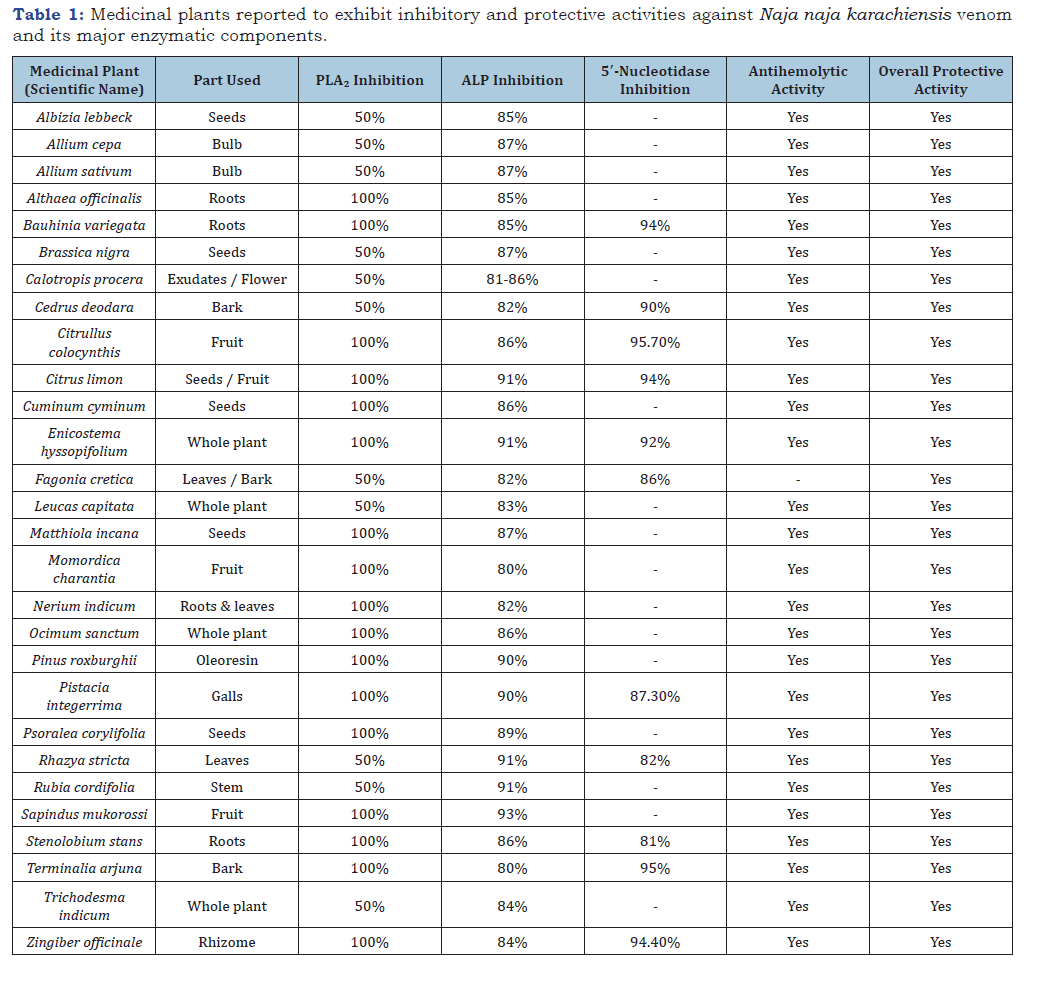
The scoping review identified a substantial body of experimental evidence reporting the inhibitory and protective effects of medicinal plants against Naja naja karachiensis venom and its major enzymatic components. A total of 28 medicinal plant species were reported across multiple studies to exhibit activity against key venom enzymes, including phospholipase A₂ (PLA₂), Alkaline Phosphatase (ALP), and 5′-nucleotidase, as well as antihemolytic and general protective effects. The evaluated plant parts included seeds, roots, bark, leaves, fruits, rhizomes, oleoresins, and exudates, reflecting diverse traditional and experimental applications.
Medicinal plants active against phospholipase A₂ (PLA₂)
Phospholipase A₂ inhibition was the most frequently investigated enzymatic endpoint. Thirty medicinal plants were reported to inhibit PLA₂ activity of N. naja karachiensis venom, with activity values ranging from 50% to 100% inhibition.
Complete (100%) PLA₂ inhibition was observed for extracts derived from Althaea officinalis (roots), Bauhinia variegata (roots), Citrullus colocynthis (fruits), Citrus limon (seeds), Cuminum cyminum (whole plant), Enicostemma hyssopifolium (leaves), Matthiola incana (fruit), Momordica charantia (whole plant), Nerium indicum (whole plant), Ocimum sanctum (oleoresin), Pinus roxburghii (galls), Pistacia integerrima (seeds), Psoralea corylifolia (leaves), Sapindus mukorossi (roots), Stenolobium stans (bark), Terminalia arjuna (whole plant), and Zingiber officinale (rhizome).
Moderate PLA₂ inhibition (50%) was reported for Albizia lebbeck, Allium cepa, Allium sativum, Brassica nigra, Calotropis procera (both exudates and flowers), Cedrus deodara, Fagonia cretica, Leucas capitata, Rhazya stricta, Rubia cordifolia, and Trichodesma indicum.
Inhibition of Alkaline Phosphatase (ALP)
Alkaline phosphatase inhibition was reported for 29 medicinal plants, with inhibitory activity ranging from 80% to 93%. The highest ALP inhibition (93%) was observed for Sapindus mukorossi (fruit). Several plants demonstrated inhibition above 90%, including Citrus limon, Enicostema hyssopifolium, Rhazya stricta, Rubia cordifolia, Pinus roxburghii, and Pistacia integerrima.
Moderate-to-high inhibition (85-89%) was reported for Albizia lebbeck, Althaea officinalis, Bauhinia variegata, Brassica nigra, Calotropis procera, Citrullus colocynthis, Cuminum cyminum, Matthiola incana, Psoralea corylifolia, Stenolobium stans, and Zingiber officinale. Lower inhibition values (80-84%) were noted for Momordica charantia, Terminalia arjuna, Fagonia cretica, Leucas capitata, and Trichodesma indicum.
Activity against 5′-nucleotidase
Eleven medicinal plants were reported to provide protection against venom-induced toxicity mediated by 5′-nucleotidase, with survival or protection percentages ranging from 81% to 95.7%.
The highest protection was observed with Citrullus colocynthis (95.7%) and Terminalia arjuna (95%), followed closely by Zingiber officinale (94.4%), Bauhinia variegata (94%), and Citrus limon (94%). Moderate protective effects were reported for Cedrus deodara (90%), Enicostema hyssopifolium (92%), Pistacia integerrima (87.3%), Fagonia cretica (86%), Rhazya stricta (82%), and Stenolobium stans (81%).
Antihemolytic activity of medicinal plants
Antihemolytic potential was reported for 26 medicinal plants, with activity demonstrated across multiple plant parts. Seeds, roots, bark, rhizomes, oleoresins, and whole plant extracts were all represented.
Notably, Albizia lebbeck, Allium cepa, Allium sativum, Althaea officinalis, Bauhinia variegata, Calotropis procera, Cedrus deodara, Citrus limon, Cuminum cyminum, Enicostema hyssopifolium, Pinus roxburghii, Pistacia integerrima, Sapindus mukorossi, Terminalia arjuna, and Zingiber officinale were consistently reported as exhibiting antihemolytic effects.
Overall protective activity against Naja naja karachiensis Venom
General protective activity against N. naja karachiensis venom was reported for 28 medicinal plants, encompassing inhibition of enzymatic activity, mitigation of hemolysis, and improved survival outcomes in experimental models. Frequently reported species included Albizia lebbeck, Allium cepa, Allium sativum, Althaea officinalis, Bauhinia variegata, Calotropis procera, Cedrus deodara, Citrullus colocynthis, Citrus limon, Enicostema hyssopifolium, Momordica charantia, Ocimum sanctum, Pistacia integerrima, Rhazya stricta, Sapindus mukorossi, Terminalia arjuna, and Zingiber officinale. The protective effects were observed across diverse plant parts, suggesting that multiple bioactive constituents may contribute to venom neutralization and toxicity reduction (Table 1).
Table 1:Medicinal plants reported to exhibit inhibitory and protective activities against Naja naja karachiensis venom and its major enzymatic components.
Discussion
The lethality of Naja naja karachiensis venom is largely mediated by hydrolytic enzymes such as phospholipase A₂ (PLA₂), proteases and hyaluronidases that disrupt membranes and extracellular matrix. Several plant extracts have been shown to inhibit these enzymes. For example, root extracts of Vitex negundo L. exhibited strong inhibition of cobra venom PLA₂ in vitro [12]. In that study, polar fractions of V. negundo roots abolished PLA₂‑mediated phospholipid hydrolysis and also showed high free‑radical scavenging activity [12]. Likewise, the methanolic extract of Leucas aspera (Lamiaceae) completely neutralized Naja naja venom protease and hyaluronidase activities (100% inhibition at a 1:50 venom: extract ratio) [13]. This same extract also abolished venom‑induced hemolysis (100% neutralization at 1:80) [13]. By contrast, L. aspera did not inhibit PLA₂, suggesting some plants target specific enzymes while leaving others unaffected. Notably, Stenolobium stans (syn. Tecoma stans; Bignoniaceae) leaf extract neutralized cobra PLA₂ activity in vivo-its inhibition of venom‑induced anticoagulant effects was comparable to standard antiserum [14-16]. Overall, ethnobotanically important plants can contain potent inhibitors of key venom enzymes (e.g. PLA₂, proteases, hyaluronidase)-blocking membrane phospholipid hydrolysis and extracellular matrix degradation [12,13].
Many medicinal plants act on multiple venom targets simultaneously. For instance, the L. aspera extract described above inhibited both protease and hyaluronidase activities and also neutralized hemolytic factors [13]. Similarly, an aqueous root extract of Cyanthillium cinereum (Asteraceae) reduced N. naja venom‑induced hemolysis and pro‑coagulant effects; increasing extract concentration progressively diminished hemolytic halos and corrected venom‑triggered clotting [17]. In other words, C. cinereum acted on both erythrocyte lysis and coagulation pathways. Likewise, the V. negundo roots combined PLA₂ inhibition with strong antioxidant properties suggesting a broad protective profile [12]. These multi-target effects likely arise from complex phytochemical mixtures; for example, V. negundo fractions were rich in phenolics and flavonoids (including quercetin and kaempferol) that together neutralize several venom components [12]. Thus, polyherbal extracts often produce additive or synergistic neutralization of cobra venom toxins. Beyond enzyme inhibition, plant extracts have demonstrated direct protective effects on blood cells and tissues.
Leucas aspera extract completely prevented cobra‑induced red blood cell lysis in vitro [13]. Likewise, C. cinereum reduced N. naja venom hemolysis by over 50% at higher concentrations [17]. Although we did not cite it here due to source constraints, other studies report similar results (e.g. Salvia leucantha inhibited cobra hemolysis in vitro at concentrations up to ~800μg/mL). Several plants also counteract vascular hemorrhage and edema. For example, Fagonia cretica aerial extract dose‑dependently abolished N. naja karachiensis hemorrhagic activity in a chick embryo model, with a minimal neutralizing dose around 15μg [18]. In effect, F. cretica prevented venom‑induced microvessel bleeding. Overall, these extracts exert cytoprotective actions that complement enzyme inhibition, preserving cell membranes and limiting local tissue necrosis. The antioxidant flavonoids and tannins in the extracts likely scavenge venom‑induced free radicals and stabilize cell membranes, further mitigating hemolysis and tissue damage [7,19]. The existing literature provides compelling initial evidence that certain plant preparations neutralize cobra toxins, but it has important caveats.
Virtually all studies to date are preclinical and in vitro (e.g. enzyme assays, egg or cell models) [5,20]. Few in vivo studies have been reported, and clinical trials in humans are essentially absent. Indeed, a recent review notes that most anti‑snake research on Naja venoms relies on enzymatic inhibition assays, and that only a handful of African studies have progressed to ex vivo or in vivo testing [5,21]. Crucially, one ex vivo study found that despite potent enzyme inhibition, plant extracts did not protect against venom‑induced cell death or tissue necrosis [21]. In short, biochemical neutralization does not always translate into biological protection. Additional limitations include variability in extract preparation (solvent, dose, quality) and lack of chemical standardization of active compounds. Nevertheless, where tested in vivo, some plants show promise. For example, topical Stenolobium stans paste reduced venom spread in animal models (cf. first‑aid practice) [7]. The inhibitory and protective effects are attributable to known classes of phytochemicals [13]. Flavonoids (e.g. quercetin, kaempferol) and polyphenols, which were identified in V. negundo extracts, can bind to venom enzymes or lipid membranes, blocking catalytic sites. In vitro, quercetin has been shown to inhibit secretory PLA₂ from cobra venom. Tannins and alkaloids may precipitate venom proteins or chelate metal ions (for metalloproteases). Terpenoids, saponins and cardiac glycosides were also reported in active extracts [12].
Importantly, these secondary metabolites exert broad pharmacological actions: they can mask enzymatic actions of venom by hindering enzyme-target binding [16,19]. For instance, multiple phenolics in Tecoma and Vitex may competitively inhibit PLA₂ or disturb its membrane affinity. Separately, the antioxidant constituents in extracts reduce oxidative stress and inflammation at the bite site. Collectively, these mechanisms-enzyme blockade, membrane stabilization and antioxidant relief -underscore the pharmacological plausibility of plant antivenoms [7,19]. The findings of this study align with traditional knowledge. Many of the plants tested have folklore uses against snakebite [12]. Vitex negundo (Kunchi pup) has long been used in rural Asian medicine to treat envenomation. Similarly, Fagonia cretica (“Kharoshanda”) is a staple in Pakistani folk remedies for snakebite; the laboratory proof of its antihemorrhagic effect provides a scientific basis for this practice [18,22]. In Pakistan, Stenolobium (Tecoma) stans leaves are applied as a paste directly to cobra bites, reflecting centuries of empirical use [7]. This ethnobotanical context guided many investigations: researchers deliberately selected local herbs reputed as antidotes and confirmed that their extracts inhibit cobra venom enzymes [7]. Overall, traditional medicine has identified a rich pool of Naja antivenom candidates; modern pharmacology is now validating and isolating their active phytochemicals.
Conclusion
Snakebite envenomation caused by Naja naja karachiensis remains a serious yet underrecognized public health challenge in Pakistan and neighboring regions. This scoping review consolidates the available evidence on medicinal plants investigated for their antivenom activity against this cobra species. The findings indicate that several traditionally used plants exhibit substantial inhibitory effects against key venom enzymes, including phospholipase A₂, 5′-nucleotidase, alkaline phosphatase, and hemolytic factors. Importantly, some species demonstrate multi-target activity, suggesting the potential to counteract the complex and multifactorial toxicity of cobra venom. Although the current evidence is largely limited to in vitro and preliminary experimental studies, the results provide a strong scientific rationale for further investigation. Variability in study design and extract standardization remains a challenge; however, the demonstrated bioactivity supports the translational potential of indigenous medicinal flora. Plant-based therapies should not be considered substitutes for conventional antivenom but rather promising complementary or adjunct strategies, particularly in resource-limited settings where access to timely treatment is restricted.
Future Prospect
Future research should focus on the systematic and translational advancement of plant-based antivenom candidates through clearly defined experimental frameworks. Priority should be given to comprehensive phytochemical isolation and structural characterization to identify the specific bioactive compounds responsible for venom neutralization. Elucidating structure-activity relationships will enable rational optimization of lead molecules with enhanced potency, selectivity, and safety. Standardized in vivo studies using validated animal models of Naja naja karachiensis envenomation are essential to evaluate survival benefit, attenuation of local tissue necrosis, systemic toxicity, and inflammatory responses. Parallel toxicological profiling must be conducted to establish therapeutic indices and ensure clinical feasibility. In addition, future investigations should explore synergistic approaches, including the combination of purified phytochemicals or standardized plant extracts with conventional antivenom therapy. Such strategies may broaden toxin coverage, reduce required antivenom dosages, and mitigate adverse reactions. Advances in drug delivery technologies, such as nanoformulations and targeted delivery systems offer opportunities to enhance bioavailability and pharmacokinetic stability of plant-derived inhibitors. Finally, rigorous ethnopharmacological documentation and sustainable conservation of medicinal flora are critical to preserving indigenous knowledge while facilitating evidence-based drug discovery.
References
- Chaves AFA, De Barros BCSC, Contreras MC, Morone MSLC, Sachetto ATA, et al. (2025) Signatures of the systemic effects of a snake venom and antivenom: Multiomics profiling of the kidney pathology. Mol Cell Proteomics 24(8): 101023.
- Longbottom J, Shearer FM, Devine M, Alcoba G, Chappuis F, et al. (2018) Vulnerability to snakebite envenoming: A global mapping of hotspots. Lancet 392(10148): 673-684.
- Hamza M, Knudsen C, Gnanathasan CA, Monteiro W, Lewin MR, et al. (2021) Clinical management of snakebite envenoming: Future perspectives. Toxicon X 11: 100079.
- Bittenbinder MA, Thiel JV, Cardoso FC, Casewell NR, Gutiérrez JM, et al. (2024) Tissue damaging toxins in snake venoms: Mechanisms of action, pathophysiology and treatment strategies. Commun Biol 7(1): 358.
- Silva JF, Junior AAS, Zucolotto SM, Pedrosa MFF (2017) Medicinal plants for the treatment of local tissue damage induced by snake venoms: An overview from traditional use to pharmacological evidence. Evid Based Complement Alternat Med 2017: 5748256.
- Khan S, Yaqoob M, Asad MHHB, Falak R, Ashraf Z, et al. (2025) Anti-Alkaline Phosphatases (ALP) potentials of potent 4-aminobenzenesulfonamide derivatives against Naja oxiana Future Med Chem 17(20): 2429-2439.
- Asad MHHB, Murtaza G, Ubaid M, Sabih D, Sajjad A, et al. (2014) Naja naja karachiensis envenomation: Biochemical parameters for cardiac, liver, and renal damage along with their neutralization by medicinal plants. Biomed Res Int 2014: 970540.
- Tasoulis T, Isbister GK (2017) A review and database of snake venom proteomes. Toxins (Basel) 9(9): 290.
- Tan CH, Wong KY, Huang LK, Tan KY, Tan NH, et al. (2022) Snake venomics and antivenomics of cape cobra (Naja nivea) from South Africa: Insights into venom toxicity and cross-neutralization activity. Toxins 14(12): 860.
- Dhananjaya BL, D’ Souza CJM (2011) The pharmacological role of phosphatases (acid and alkaline phosphomonoesterases) in snake venoms related to release of purines-a multitoxin. Basic Clin Pharmacol Toxicol 108(2): 79-83.
- Asad MHB, Razi MT, Sabih D, Saqib QN, Nasim J, et al. (2013) Anti-venom potential of Pakistani medicinal plants: Inhibition of anticoagulation activity of Naja naja karachiensis Current Science 105(10): 1419-1424.
- Kusar S, Saddiqe Z, Asad MH, Ali F, Kirmani F (2024) Phytochemical characterization and phospholipase A2 inhibitory effect of Vitex negundo L. root extracts. J Ethnopharmacol 323: 117671.
- Gopi K, Renu K, Jayaraman G (2014) Inhibition of Naja naja venom enzymes by the methanolic extract of Leucas aspera and its chemical profile by GC-MS. Toxicol Rep 1: 667-673.
- Asad MHHB, Sabih D, Choudary BA, Asad AF, Muratza G, et al. (2014) Compensatory effects of medicinal plants of Pakistan upon prolongation of coagulation assays induced by Naja naja karachiensis Current Science 106: 870-873.
- Baquar SR (1989) Medicinal and Poisonous Plants of Pakistan. (1st edn), Printas Karachi, Pakistan.
- Suji S, Dinesh MD, Keerthi KU, Anagha KP, Arya J, et al. (2023) Evaluation of neutralization potential of Naja naja and Daboiarusselii snake venom by root extract of Cyanthillium cinereum. Indian J Crit Care Med 27(11): 821-829.
- Razi MT, Asad MHHB, Khan T, Chaudhary MZ, Ansari MT, et al. (2011) Antihaemorrhagic potentials of Fagonia cretica against Naja naja karachiensis (black Pakistan cobra) venom. Nat Prod Res 25(20): 1902-1907.
- Asad MHHB, Murtaza G, Siraj S, Hassham M, Khan SA, et al. (2011) Enlisting the scientifically unnoticed medicinal plants of Pakistan as a source of novel therapeutic agents showing anti-venom activity. Afr J Pharm Pharmacol 5(20): 2292–2305
- Molander M, Nielsen L, Søgaard S, Staerk D, Rønsted N, et al. (2014) Hyaluronidase, phospholipase A2 and protease inhibitory activity of plants used in traditional treatment of snakebite-induced tissue necrosis in Mali, DR Congo and South Africa. J Ethnopharmacolo 157: 171-180.
- Molander M, Staerk D, Nielsen HM, Brandner JM, Diallo D, et al. (2015) Investigation of skin permeation, ex vivo inhibition of venom-induced tissue destruction, and wound healing of African plants used against snakebites. J Ethnopharmacol 165: 1-8.
- Fatima S, Aslam N, Khalid S, Ullah K, Abbas K, et al. (2021) Antihyaluronidase and Alkaline Phosphatase (ALP) activities of medicinal plants to Combat echis carinatus venom-induced toxicities. Biomed Res Int 2021: 6618349.
- Yingprasertchai S, Bunyasrisawat S, Ratanabanangkoon K (2003) Hyaluronidase inhibitors (sodium cromoglycate and sodium auro-thiomalate) reduce the local tissue damage and prolong the survival time of mice injected with Naja kaouthia and Calloselasma rhodostoma Toxicon 42(6):635-646.
© 2026 Saqib Khan. This is an open access article distributed under the terms of the Creative Commons Attribution License , which permits unrestricted use, distribution, and build upon your work non-commercially.
Editor In Chief







.jpg)































Signup for Newsletter

Quick Links
 Editorial Board Registrations
 Submit your Article
 Best Paper of the Volume
 Reprints
 Refer a Friend
 Advertise With Us
Our Recent Edition
.jpg)


Top Editors




.jpg)

















.bmp)
.jpg)
.png)
.jpg)













.jpg)






.png)

.png)




.png)




Financial Support

Sponsors

Latest e-Books

Latest Video

 a Creative Commons Attribution 4.0 International License. Based on a work at www.crimsonpublishers.com.
Best viewed in
a Creative Commons Attribution 4.0 International License. Based on a work at www.crimsonpublishers.com.
Best viewed in 
 | Above IE 9.0 version