

- About Us
- Information
-

The Author ensures that the research has been conducted responsibly and ethically with adherence to all relevant regulations. read more..
- For Authors
- For Reviewer
- Manuscript Guidelines
- Membership
- Publication Ethics
-
- Journals
- Reprints
- e-Books
- Videos
- Policies
- Contact Us
 COVID-19
- Submissions



Full Text
Advances in Complementary & Alternative medicine
The Significance Health Benefits of Artemisia Santolinifolia: Historical and Present-Day Patterns
Uyanga Batbold1,3, Baasanjav Nachin3, Jun-Jen Liu1,2*
1School of Medical Laboratory Science and Biotechnology, College of Medical Science and Technology, Taipei Medical University, Taiwan
2Traditional Herbal Medicine Research Center, Taipei Medical University Hospital, Taiwan
3Ach Medical University, Mongolia
*Corresponding author:Jun-Jen Liu, School of Medical Laboratory Science and Biotechnology, College of Medical Science and Technology, Taipei Medical University, Taipei 11031, Traditional Herbal Medicine Research Center, Taipei Medical University Hospital, Taiwan
Submission: July 03, 2024;Published: July 16, 2024

ISSN: 2637-7802 Volume 8 Issue 2
Abstract
Medicinal plants that exhibit substantial active therapeutic components are considered the richest source of raw drugs. In 2015, Tu Youyou graciously received the Nobel Prize in medicine for her remarkable efforts in developing an anti-malaria medication by extracting Artemisinin. This accomplishment has significantly brought the Asteraceae family into the limelight due to its wide array of essential compounds and notable functional properties. This article explores the enduring significance of Artemisia Santolinifolia (A. santolinifolia), a member of the extensive and varied genus found in the Asteraceae family. We examine both its historical and present-day trends to illustrate the importance of this exceptional plant. Recently this exquisite plant has captured the attention of scholars, researchers, and enthusiasts alike due to its remarkable properties and possible applications. It has a wide distribution across the globe, primarily found in Central Asia, Tibet, and Pakistan.
However, its role and value have not been thoroughly explored. The purpose of this review is to gather information on the botanical characteristics and biological functions of A. santolinifolia. This includes its chemical constituents, traditional medicinal uses, and pharmacological activities supported by scientifically validated studies. We have examined the most influential studies that highlight the potential health benefits of A. santolinifolia, focusing on the therapeutic relevance of its bioactive components and derivatives. Through compositional analyses of medicinally active compounds, the antioxidant, anticancer, chemosensitization, and antibacterial properties of A. santolinifolia have been scientifically proven. Regardless of the geographical region where A. santolinifolia is found, we aim to discuss the list of bioactive molecules that are most prevalent in this species and highlight the general understanding of its abilities as reported in previous studies. A. santolinifolia demonstrates promising potential in traditional medicinal practices, as it contains phytoconstituents that are recognized for their pharmacological activities. Furthermore, it has been reported to show efficacy in combination with conventional drugs against various diseases.
Keywords:Artemisia santolinifolia; Chemical constituets; Pharmacological activity; Allelopathic effect
Introduction
In recent decades, medicinal plants or herbs have emerged as an abundant source of raw materials used in various therapies worldwide. These plants contain a high concentration of bioactive therapeutic ingredients, making them highly sought after [1]. Among populations worldwide, herbal medicines have well known as the most cost-effective solution for various therapies [2-4]. Over the past few decades, phytochemical experts have shown great interest in the Artemisia species due to their wide range of essential compounds and the functional benefits they offer [5,6]. This heightened interest can be attributed to the recognition received in 2015 when artemisinin, a sesquiterpenoid lactone derived from the common sweet wormwood species, Artemisia annua, was discovered. Nowadays, it’s used as a medication to combat malaria, even against drug resistant strains [5,7]. Artemisia is a large, diverse genus in the family Asteraceae comprising more than 500 species. Several biopharmaceutical products containing extracts derived from Artemisia species are currently on the market for treating various diseases [8,9]. Through preclinical and practical evidences, pharmacological activities of this genus, such as Antioxidant, Anti-inflammatory [10], Antitumor [11], Antilipidemic [12], Antimalarial, Neuroprotective [13], Immunoregulatory [14], and Hepatoprotective [15] properties, have received the most attention so far.
In this review article, our objective was to examine a commonly known species called Artemisia santolinifolia Turcz. ex Krasch, also referred to as A. stechmanniana Besser and A. gmelinii Weber ex Stechm. However, the most frequently used name for this exceptional specie, A. santolinifolia, is obtained from The International Compositae Alliance data (TICA) with the identification number 2333EAFF-5C8A-4851-BAF3-1A15018FAAE9. The original publication details can be found in “Krylov, Fl. Zap. Sibir. 11” 2791 1949. Until now, A. santolinifolia has been proven to be biologically active due to its many active ingredients or secondary metabolites that exhibit various modes of action. The composition analysis of the medicinally active compounds has scientifically validated the antibacterial, antioxidant, anticancer, and chemosensitization potentials of A. santolinifolia [16-21]. Traditional and modern pharmaceuticals of various research groups have also mentioned A. santolinifolia along with other species like A. cappilaries, A. sacrotum, A. absinthium, A. herba alba, A. annua, A. vulgaris, A. tridentata, A. argentea, A. ludoviciana, etc. These species possess significant ethnopharmacological value and show promising therapeutic properties [7,22-26]. Phytochemical profile and pharmacological activity studies of Artemisia species have revealed the presence of secondary metabolites such as terpenoids, including mono, di, sesqui, and triterpenoids, sesquiterpenes, lactones, phenolic acids, steroids, coumarins, alkaloids, and flavonoids in the essential oil. These compounds have been reported to exhibit a wide range of biological activities through various scientifically validated techniques [27-29].
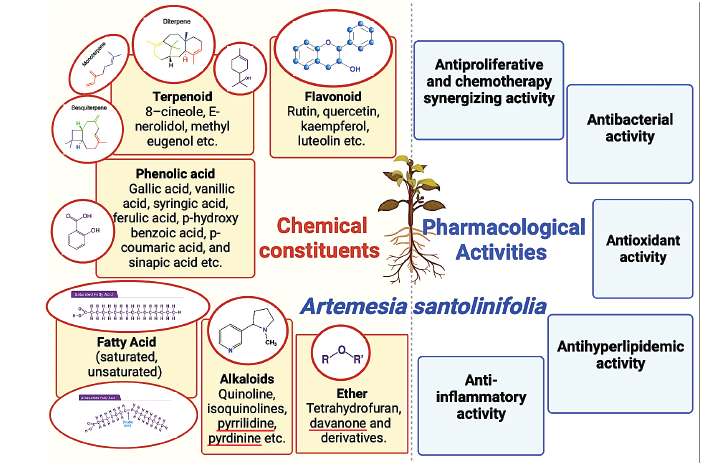
Although there are limited publications on specific health advantages associated with A. santolinifolia, including different parts of the plant, extracts, and pure compounds, the majority of recent in vitro and in vivo studies are summarized in this article. Despite these studies are not yet at the stage of practical clinical application, they are essential in assessing the potential bioactivity of the species. Furthermore, the relatively small number of studies conducted on this particular plant compared to other Artemisia species accounts for the explaining wide selection criteria we used in this review. In this article, our group aims to delve into the topic of A. santolinifolia, exploring its various agricultural applications, nutritional compositions, traditional medicinal uses, and scientifically validated pharmacological activities (as shown in Figure 1). We have gathered relevant information from sources such as Scopus, Research Gate, Web of Science, PubMed, and Google Scholar databases. To conduct a thorough search, we specifically focused on the primary keywords “Artemisia santolinifolia” and “Artemisia” in this comprehensive review. The review compiles the relevant scholarly work up until August 2023.
Figure 1:Graphical abstract.
Ethnobotanical Characteristics of A. santolinifolia
The Artemisia genus presents a taxonomical complexity due to the close resemblance of its species in terms of morphology. As a result, it becomes challenging to accurately distinguish the specimens without conducting a thorough examination. Most Artemisia species are characterized as herbaceous plants that occasionally grow as shrubs, emitting a distinctive and strong aroma. The distribution of Artemisia is widespread, as it is a windpollinated genus found across various regions of temperate areas with moderate to high latitudes. These regions include sandy plains and stony steppes extending from Central Asia to the Himalayas. In addition, there is some degree of diversification observed in the species inhabiting the southern hemisphere. However, the presence of Artemisia species in Africa and Europe is limited, with only a few documented occurrences [30,31].
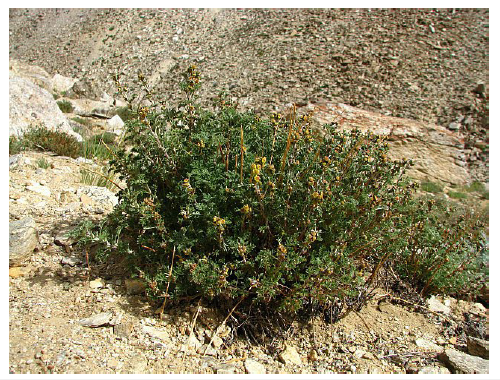
A. santolinifolia is widely distributed across various regions including Mongolia, China, India, Tibet, Russia, and Afghanistan. Research conducted in Pakistan has shown that this plant species is predominantly found at altitudes ranging from 2500 to 3500 meters. The flowering period of A. santolinifolia typically takes place between the months of July and September [31]. In terms of its physical characteristics, A. santolinifolia is a perennial shrub with large branches and compound leaves [3,32,33]. Its branches can grow up to a height of 50cm and are often devoid of leaves. The upper leaves are typically pinnatisect, with one or two segments measuring 1-4mm in length. These leaves have a linear lanceolate shape with pointed ends. The petiole of the middle leaves can reach up to 2.5cm in length and is connected to the leaf lamina, which is oval to wide triangular-ovate in shape. The upper edges of the leaf lamina may have a few hairs, known as underhair. The dimensions of the leaf lamina range from approximately 2.5-5cm in length and 1-3cm in width. On the other hand, the lower leaves are threepinnatisect and have elliptical to lanceolate shapes. These leaves exhibit main segments and lobes on both sides (Figure 2) [32]. A. santolinifolia possesses seeds that display exceptional adaptability to various environmental conditions. It has a preference for growing in less favorable soil types, enabling it to dominate open areas and propagate rapidly, as long as there is sufficient space available. The germination process of these seeds can occur under both light and dark condition [34].
Figure 2:Artemisia santolinifolia (Asteraceae).
Chemical Constituents of A. santolinifolia
Artemisia species possess bioactivity, owing to the presence of many active constituents or secondary metabolites, which work through various modes of action. Recently, the authors conducted a study on the microelement composition of the most commonly found species within the Artemisia genus [35-37]. Following this, A. santolinifolia has emerged as a highly promising and potential source for physiologically active substances. These compounds include coumarins, flavonoids, lipids, polyisoprenoids, sesquiterpene lactones, tannins, and amino acids, as indicated by Suleimen et al., and Tsybikova et al. in their study [14,38]. Regarding the flavonoids, the roots of this plant have been found to contain quercetin, luteolin, rutin, kaempferol, and its glycoside. Moreover, coumarins like scopoletin and umbelliferone have been extracted from the roots of A. santolinifolia. On the other hand, the aerial parts of the plant have been found to contain genkwanin and acacetin, as highlighted by Suleimen group. Additionally, a distinct research group utilized Gas Chromatographic-Mass Spectrometric (GC-MS) techniques to determine the fatty acid composition of A. santolinifolia. Their analysis revealed a lipid fraction consisting of 25 fatty acids with carbon chains ranging from 9 to 28 atoms. The Saturated Fatty Acid (SFA) content in A. santolinifolia was approximately 51.80% to 65.02%. Among the SFAs, palmitic acid was the most abundant, accounting for about one-fifth of the total content.
However, during the early flowering period, Polyunsaturated Fatty Acids (PFAs) were pre-dominant among the unsaturated fatty acids. Notably, linoleic and α-linolenic acids were present, which are essential for vital bodily functions and have been reported to exhibit strong antioxidant activities. However, oleic acid made up the majority of the monounsaturated fatty acids [39]. The chemical composition of A. santolinifolia, as revealed by previous studies, suggests that it holds promise as a source of fatty acids [16]. Further-more, another research project utilized an identical GC-MS method to analyze the essential oils of aerial parts of three Artemisia species indigenous to Mongolia: A. adamsii Bess, A. santolinifolia Krasch, and A. glauca Pall Ex. Willd. The analysis revealed a total of 79 different components in the essential oils obtained from these samples. Notably, α-thujone (13.10-67.12%) and β-thujone (11.35- 58.77%) following 1.8-cineole (14.32-21.37%) were found to be the most prevalent substances in A. adamsii and A. santolinifolia, while E-nerolidol, and methyl eugenol were identified as the next most abundant compounds [17]. The authors determined the content of 58 constituents in the extracts obtained from the aerial parts of plants of the genus Artemisia collected in the flowering phase in typical growing areas in Siberia, Kazakhstan and Mongolia. Subsequently, a cluster analysis by microelement status was performed, leading to the construction of a dendrogram.
In particular, according to the resulting dendrogram, the plants were combined into 5 clusters according to the degree of similarity or elemental composition. Afterwards, the following groups of elements have been identified: macroelements (magnesium, potassium, calcium, and phosphorus), which are essential for the structure and proper functioning of various cellular processes, trace elements (iron, manganese, chromium, and copper), are the key factors of enzyme systems and have been detected to possess a certain level of specificity to different species. Furthermore, they are considered microelements of the hematopoietic complex and are required in preparations for the treatment and prevention of iron deficiency anemia. In addition, it should be noted that the elements considered potentially toxic elements, such as arsenic, cadmium, mercury and lead were identified. Nonetheless, the content of these toxic elements determines the safety the safety of utilizing herbal preparations is carefully controlled and overseen in the Russian State Pharmacopoeia, which focuses on the quality and standards of medicinal plant raw materials [40]. Notably, certain widespread species of Artemisia, such as A. santolinifolia, were found to possess an optimal concentration of trace elements required for hematopoiesis. This finding implies that they hold promising potential as a source of antianemic medicinal plant materials [41]
The morphological features of closely related wormwood are also confirmed by the composition of essential oil components. At the same time, the analysis confirmed not only their phylogenetic closeness, but also noticeable differences, which indicates their sufficient isolation, leading to their independent status. Consequently, another research team conducted a study focusing on the specific components found in the essential oil of wormwood species A. sacrorum var. messerschmidtiana (Besser), A. gmelinii, and A. santolinifolia. Notably, A. sacrorum exhibited higher levels of certain components, including transsabinene hydrate (2.4%), γ-terpinene (2.0%), and germacrene D (1.6%). It is important to highlight that while these components demonstrate the specificity of this particular species, there are also common essential oil components present in all three species. These common components include a relatively high content of borneol (8.0%/12.6%/4.0%), α-terpineol (0.6%/4.3%/0.2%), and bornyl acetate (2.8%/0.9%/2.5%). Additionally, the essential oil of A. sacrorum contains a notably high percentage of 1,8cineole (30.3%), while A. gmelinii contains 40.3% -1,8-cineole, and A. santolinifolia possesses only a minimal amount of 0.3% [42].
The taxonomic classification of A. santolinifolia remains a subject of debate among researchers. While some authors acknowledge its distinct species status [43,44] others consider it a variant of Gmelin’s wormwood: Artemisia gmelinii Weber ex Stechm.= A. santolinifolia auct. non Turcz. ex-Besser [41,45]. Extensive literature exists regarding the chemical composition of the essential oil of A. gmelinii wormwood. However, a comparative analysis of the essential oil from different populations of A. gmelinii in Western Siberia revealed two distinct chemotypes with significantly different compositions. The initial chemotype originates from the Altai Mountains and is characterized by a significant presence of 6-acetoxypinene (chrysanthenyl acetate) in its oil composition, reaching up to 73%. The second chemotype comes from plants found in the foothill plain of Altai, as well as the surrounding areas of Tomsk and the Krasnoyarsk Territory. The essential oils derived from these plants produce a similar oil composition, in which the constant components include p-cymene (0.6-4%), 1,8-cineole (4.0- 32.0%), γ-terpinene (0.2-1.2%), camphor (13-40%), isoborneol (0.2-0.6%), and caryophyllene oxide (0.6-2.5%) [46]. Samples from Buryatia, the Irkutsk region, and Mongolia exhibit characteristic components such as 1,8-cineole (21.5-40.3%), camphor (10.0- 31.0%), borneol (4.5-17.6%), terpineol-4 (4.5-7.7%), p-cymene (1.1-3.3%), bornyl acetate (0.9-2.5%), and caryophyllene (up to 1.4%). Therefore, it was concluded, regardless of the growth location, the essential oil of wormwood A. gmelinii consistently contains 1,8-cineole, camphor, and p-cymene. A. santolinifolia, on the other hand, has been less extensively studied. Nevertheless, the main components of the essential oil derived from the aerial part of A. santolinifolia are camphor (10.9%), presilfiperfolan- 9α-ol (5.2%), and borneol (4.0%), which are also found in the composition of A. gmelinii wormwood’s oil [47].
It is important to emphasize that the composition of A. santolinifolia oil is distinguished by a high concentration of davanone derivatives, including davanone ether (isomer 1) (2.1%), davanofuran (isomer) (1.3%), cisthreodavanofuran (1.4%), davana ether (0.8%), davana ether (isomer 2) (0.9%), and nor-davanone (0.5%). In contrast, only davanone is observed in the essential oil of A. gmelinii, and it is exhibiting a very minimal content of davanone derivatives in their essential oil composition45. Thus, the previous observation result suggests that the presence of davanone components in the composition of A. santolinifolia oil distinguishes it from the closely related A. gmelinii wormwood. To address the issue of weed invasion in wheat cultivation in an ecofriendly manner, the methanolic extracts of castor (Ricinus communis), artemisia (A. santolinifolia), wheat (Triticum aestivum), and sorghum (Sorghum bicolor) were tested for their phytotoxic potential in bioassay-based detection of allelopathy. High-Performance Liquid Chromatography (HPLC) coupled with MS analysis was employed to comprehensively profile the allelochemical derivatives present in these plant extracts. The phytochemical analysis revealed a correlation between the phytotoxicity of the extracts and their antioxidant potential, suggesting potential connections with major constituents such as rutin, quercetin, cate-chin, gallic acid, vanillic acid, syringic acid, ferulic acid, p-hydroxy benzoic acid, p-coumaric acid, and sinapic acid. These compounds were identified in a total of 13 methanolic fractions. Alkaloids, terpenoids, phenolic acids, and flavonoids were also found to be prominent components in the extracts. Notably, quinoline, isoquinolines, pyrrolidines, pyridine, terpenoids, and steroids were identified as the most prevalent alkaloids. Moreover, A. santolinifolia exhibited the strongest allelopathic effects against three types of weeds due to its higher concentrations of phenolic and flavonoid content, as demonstrated in this study [48].
Based on our recent study findings, the analysis conducted using LC-Quadrupole Time of Flight (QTOF) technique identified steroids and terpenoids as the predominant chemical compounds. It is highly likely that these two main chemicals possess the potential to enhance the sensitivity of Non-Small-Cell Lung Cancer (NSCLC) cells towards conventional chemotherapy drugs. Within Riceberry Rice Bran (RBDS), gramisterol is recognized as the primary phytosterol. Previous research has demonstrated its toxic effect on WEHI-3 cells through the inhibition of phosphorylated (p) Signal Transduction and Activator of Transcription 3 (STAT3) transcriptional activity, which aligns with our own findings [49]. Another active phytochemical, Tranmetenolic Acid B (TAB), a triterpene compound, exhibited cytotoxic effects on tumor cells but also displayed the ability to promote the ac-cumulation of chemotherapy drugs within cancer cells, thereby sensitizing resistant cell lines to chemotherapy [50,51]. Consequently, understanding the composition of herbal ex-tracts, as supported by isolated chemical constituents, provides clear advantages [52]. Differences in the chemical composition of A. santolinifolia extracts can be attributed to various factors such as geolocation, the specific plant part used for extraction, the collection process, and the techniques employed during extraction. As a result, these discrepancies may significantly influence the biofunctional properties of the plant (Table 1). It is crucial for future research to focus on establishing a standardized quality control protocol that minimizes metabolic variations among individuals.
Table 1:Experimental therapeutic benefits of A. santolinifolia.
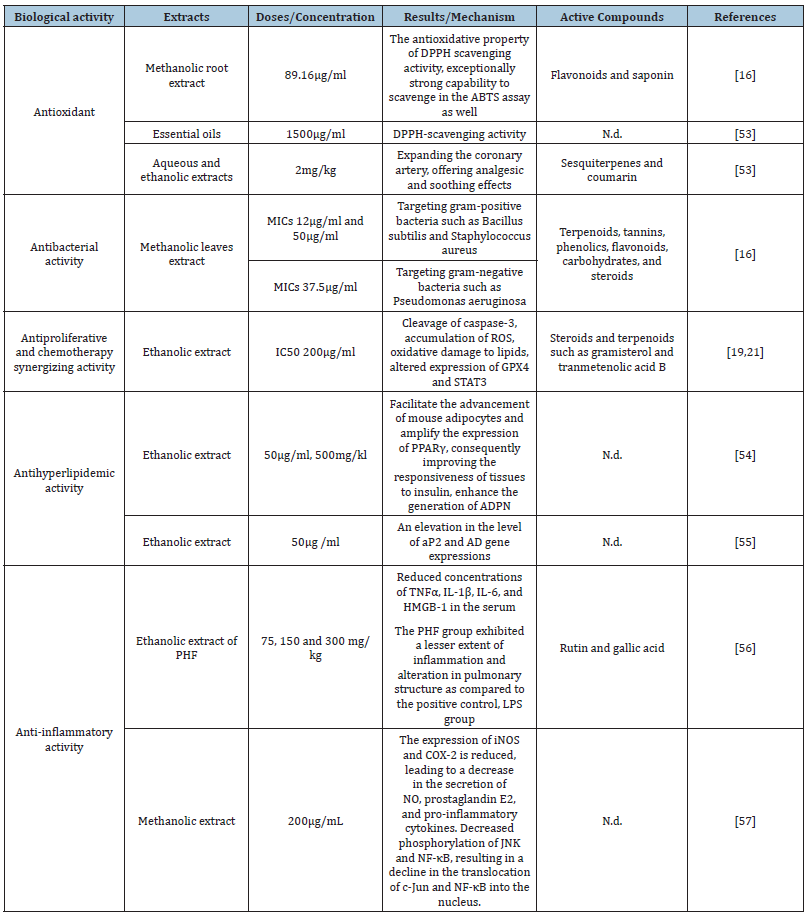
N.d. = no data.
Abbreviations: DPPH, 2,2-diphenyl-1-picrylhydrazyl; ABTS ,2,2’-azino-bis(3-ethylbenzothiazoline-6-sulfonic acid; ROS,
reactive oxygen species; GPX4, glutathione peroxidase 4, STAT3, signal transducers and activators of transcription 3;
PPARγ, peroxisome proliferator-activated receptor gamma; ADPN, adiponectin; aP2, adipocyte protein 2; AD, adipocytes;
TNFα, tumor necrosis factor alpha; IL-1β, interleukin-1 beta; IL-6, interleukin-6; HMGB-1, high mobility group box
1; JNK, c-Jun N-terminal kinase; PHF, polyherbal formulation; LPS, lipopolysaccharide; iNOS, inducible nitric oxide
synthase; COX-2, cyclooxygenase-2; NO, nitric oxide; NF-κB, nuclear factor kappa-light-chain-enhancer of activated B
cells.
Pharmacological Activities of A. santolinifolia
Antioxidant activity
Recently, there has been a growing interest in exploring traditional medicinal plants as potential sources of secondary metabolites for therapeutic purposes. This has led to the development of new plant-based antioxidant agents. In this regard, extensive research has been conducted on A. santolinifolia, investigating its antioxidant properties through the use of 1,1-Diphenyl-2-Picrylhydrazyl (DPPH) and 2,2\’-Azinobis-3- Ethyl Benzthiazoline-6-Sulphonic Acid (ABTS) assays. These assays have revealed that the methanolic root extract of A. santolinifolia exhibits the highest DPPH-scavenging activity, while the leaves display the lowest activity. Furthermore, the roots of A. santolinifolia demonstrate the most potent scavenging ability in the ABTS assay, exhibiting a concentration of 89.16μg/ml, followed by the leaves [16]. In addition, another study focused on investigating the antioxidant activity of the essential oils extracted from A. santolinifolia. The results showed that at a concentration of 1500μg/ml, the essential oil from A. santolinifolia exhibited an antioxidant activity of approximately 3.9% [53].
These findings highlight the potential of A. santolinifolia as a valuable source of natural molecules with strong antioxidant properties, capable of neutralizing harmful free radicals [54-58]. Building on this knowledge, researchers combined A. santolinifolia with Iris bungei to develop a plant derived drug called Asicadol. The aqueous and 30% ethanol extracts of A. santolinifolia has been found to have relaxing effects on the contraction of the intestine, similar to the effects of papaverin hydrochloride. This beneficial action is attributed to the presence of high biological compounds, specifically sum sesquiterpenes and coumarin, in the herb. In addition to this, research has demonstrated that coumarins and certain sesquiterpenes have been found to possess active properties that promote the relaxant effect [59,60]. Furthermore, in vivo study, when A. santolinifolia was administered at a dosage of 2mg/kg, it was highly effective in widening the coronary artery. This effect was also observed in an Electrocardiogram (ECG), as the amplitude height of the T-tooth coronary decreased by 57.1% and the contraction index of the heart muscle was shortened by 35.9%.
Additionally, aqueous extracts of A. santolinifolia, along with the sum coumarin derived from the upper ground part of the plant, have been found to possess analgesic and calming effects in temperature and chemically induced pain models. This innovative product, now available in the market, harnesses the antioxidant properties of these two plants to provide therapeutic benefits [53]. However, a different group of researchers regarded A. santolinifolia as a species with allelopathic properties. These allelopathic plants can serve as a valuable source of chemicals to combat the invasiveness of weeds. This is due to their ability to generate oxidative damage during the development of ecological bio-herbicides. In contrast to the previous study, it was discovered that the methanolic extract of A. santolinifolia, at a concentration of 20%, significantly triggered oxidative stress and resulted in prolonged wilting of major weeds. This effect appeared to be associated with higher levels of phenols and flavonoids, such as rutin and quercetin, present in the plant extracts [38,48,61,62].
Antibacterial activity
Several plants are known to produce compounds that can effectively combat microorganisms. These extracts are mainly derived from polyphenolic biomolecules such as tannins and glycosides [63]. Tsybikova and their team conducted a study on the crude methanolic extract of A. santolinifolia Turcz. Ex Besser to determine its potential against microorganisms. The crude extract of A. santolinifolia demonstrated significant inhibition against all tested microbes at relatively low concentrations of 25,50, and 100μg/ml. Specifically, the extract from A. santolinifolia leaves (AsL) exhibited Minimum Inhibitory Concentrations (MICs) of 12μg/ml and 50μg/ml against gram-positive bacteria Bacillus subtilis and Staphylococcus aureus, respectively. For gram-negative bacteria Pseudomonas aeruginosa, the MIC was 37.5μg/ml, which was comparable to the effectiveness of the standard treatment with ciprofloxacin. Recent research findings have also revealed that the root extract of A. santolinifolia (AsR) displays significant antioxidant potential, while the leaf extract (AsL) exhibits a notable antibacterial effect. These findings suggest that different mixtures of various parts of this plant could potentially be utilized to address specific situations. Additionally, these findings imply the potential use of A. santolinifolia in the management and treatment of various infectious diseases [16]. Researchers from the Suleimen group, as mentioned above, have identified genkwanin and acacetin in the above-ground parts of the plant [38]. These compounds have been previously investigated in pharmacological studies, which have revealed their diverse range of effects, including antibacterial properties [64,65].
Antiproliferative and chemotherapy synergizing activity
In the field of cancer management, there is currently a growing interest in the discovery of new approaches and the use of natural complementary treatment methods [66]. These approaches have shown promise in reducing the dosage of cytotoxic drugs used, thereby minimizing their side effects [67]. Previous studies have documented the cytotoxic and antitumor effects of various Artemisia species, along with the molecular mechanisms involved. These effects include the activation of caspase, changes in the Bax/ Bcl-2 ratio, and the accumulation of Reactive Oxygen Species (ROS), which lead to cell cycle arrest [68-70]. The phytochemistry of Artemisia species has also been extensively discussed, highlighting the presence of terpenoids, flavonoids, coumarins, and essential oils, and their cytotoxic activities have been investigated [27,68]. Our research group previously reported that the crude ethanolic extract of A. santolinifolia exhibits an antitumor effect against Non- Small Cell Lung Cancer (NSCLC), and when combined with the chemotherapy Drug Docetaxel (DTX), it has a synergistic impact on tumor cell death. Surprisingly, our study found that caspase-3 cleavage, a predictor of apoptotic cell death, was primarily induced in H23 cells by A. santolinifolia. In contrast, in A549 cells, it mainly caused the production of ROS and lipid peroxidation, as well as altered expression levels of glutathione peroxidase 4 (GPX4), indicating that ferroptosis played a major role in cell death. Furthermore, our study revealed that the suppression of STAT3 resulted in decreased expression of downstream prosurvival molecules in both cell lines.
A. santolinifolia also targeted the NRF2 signaling molecule, indicating its importance as a regulator of the antitumor and synergistic effects of A. santolinifolia in various cell death models [19,21]. The analysis using LC-QTOF indicated that the chemical compounds discovered primarily belong to the categories of steroids and terpenoids. This report highlights two major compounds, namely gramisterol and Trametenolic Acid B (TAB), which exhibit potential in enhancing the antitumor and chemosensitizing effects. Our findings align with previous studies that have explored the cytotoxicity of gramisterol and trametenolic acid B in different types of tumor cells. The observed cytotoxic effects on cancer cells closely resemble the mechanisms identified in our study, which involve effectively inhibiting cancer cell growth through interference with the p-STAT3 signaling pathway, induction of autophagic cell death, or suppression of the expression of the crucial drug efflux protein known as P-glycoprotein(P-gp) [71-73].
A separate research team investigated the potential antitumor effects of the essential oil extracted from A. santolinifolia, utilizing the 3-(4,5-dimethylthiazol-2-yl)-2,5-diphenyl-2Htetrazolium bromide (MTT) methodology. Based on the findings from an experiment targeting cancer hepato and gastric cells, it was deduced that the essential oil derived from A. santolinifolia leaves exhibited the most substantial inhibition rates in terms of cell viability. The inhibition rates were recorded as 93.7% and 93.8% for HepG2 and AGS cells respectively, at concentration of 300μg/ ml53. In recent times, there has been a growing fascination with the utilization of essential oils for medicinal purposes. This interest has been sparked by the discovery of the active components present in the essential oils of different Artemisia species are responsible for their ability to combat cancer through the induction of apoptosis (programmed cell death) in various types of cancer cells [74-76]. However, it is worth noting that there is currently no scientific data available specifically regarding the apoptosis-inducing effects of A. santolinifolia essential oil.
Antihyperlipidemic activity
Hyperlipidemia, also known as increased plasma lipids, is a condition that has been found to be associated with the development and severity of atherosclerotic cardiovascular diseases [77]. It is a significant factor in numerous chronic diseases such as hyperglycemia, obesity, and heart diseases. Recent evidence suggests that incorporating functional foods derived from plants into the diet may be a promising approach for managing or preventing chronic and metabolic diseases like hyperlipidemia [78,79]. Artemisia species were reported to possess antidiabetic properties as well [80]. In a study, researchers examined over 400 botanical extracts from various species to evaluate their ability to activate the Peroxisome Proliferator-Activated Receptor Gamma (PPARγ) and regulate adipogenesis in 3T3-L1 monocyte cells. The results revealed that A. scoparia and A. santolinifolia could modulate the development of adipocytes, stimulate murine adipocyte progression, and enhance PPARγ expression, thereby increasing insulin sensitivity in remote tissues. Furthermore, both in vitro and in vivo studies demonstrated that these extracts had the potential to increase the production of adiponectin (ADPN). Adipocytes secrete adiponectin, which stimulates insulin expression and improves insulin responsiveness and glucose utilization in remote tissues. Overall, the research suggests that these extracts have the ability to prevent adipocyte-related illnesses by promoting adipocyte development, increasing ADPN levels, and enhancing insulin sensitivity in fatty tissues. Additionally, these findings highlighted the biochemical benefits that White Adipocyte Tissues (WATs) and adipocytes can derive from isolates obtained from Artemisia species [54].
As previously mentioned, A. santolinifolia was determined to contain a high amount of Saturated Fatty Acids (SFAs), such as palmitic acid. On the other hand, linoleic acid, α-linolenic acid, and oleic acid, which are unsaturated fatty acids, have been reported to exhibit strong antilipidemic properties [39]. These findings are consistent with a previous study that isolated palmitic acid, oleic acid, linoleic acid, linolenic acid, and 12,13-epoxylinolenic acid from the crude lipophilic extract of A. integrifolia. In an acute hyperlipidemia model induced by Triton WR-1339, the crude lipophilic extract at a dose of 200mg/kg significantly reduced Total Cholesterol (TC) and Triglycerides (TGs). Furthermore, when the fractioned compound linolenic acid was administered at a dose of 4mg/kg, it also significantly decreased the concentrations of TC (64%) and TGs (93%) [12]. These compounds, namely palmitic acid, oleic acid, and linolenic acid, were identified as the key contributors to the bioactive antihyperlipidemic effect [81,82].
Anti-inflammatory activity
Numerous species of Artemisia have been extensively studied in the literature for their therapeutic effects. Throughout history, various Artemisia species such as A. capillaris, A. annua, A. absinthium, A. afra, and A. vulgaris have been used as herbal medicines and have undergone thorough research on their antiinflammatory activities [8,83-85]. In traditional Mongolian medicine, a Polyherbal Formulation (PHF) consisting of Artemisia santolinifolia, Saussurea salicifolia L., and Hippophae rhamnoides L. is commonly used to treat inflammatory disorders. The authors of this study examined the ability of PHF to reduce inflammation in rat models using two different reagents - the folin ciocalteu reagent and aluminum chloride reagent. To induce inflammation, the experimental groups were treated with carrageenan and Lipopolysaccharide (LPS). The PHF pretreatment groups showed significantly lower concentrations of tumor necrosis factor (TNF), interleukin (IL)-1, IL-6, and high mobility group box 1 protein (HMGB-1) in the serum compared to the group treated only with carrageenan injection after PHF administration.
Furthermore, the serum levels of TNF-α, IL-1, and HMGB-1 were significantly lower in the group pretreated with 150mg PHF/ kg Body Weight (BW) compared to the control group following LPS injection [56]. Moreover, the researchers employed LPS-stimulated RAW 264.7 macrophages as experimental models to investigate the potential anti-inflammatory properties of the methanolic extract of the whole plant from A. santolinifolia. The extract demonstrated remarkable inhibitory effects on the production of proinflammatory cytokines including IL-6 and TNF-α, as well as inflammatory mediators like Nitric Oxide (NO) and Prostaglandin E2 (PGE2). Additionally, it affected crucial signaling pathways such as the Nuclear Factor (NF)-κB and Mitogen-Activated Protein Kinase (MAPK). It is worth mentioning that the A. santolinifolia extract also mitigated C-Jun N-Terminal Kinase (JNK) and NF-κB inhibitor α (IκBα) phosphorylation levels. Numerous research studies have indicated that the naturally occurring phenolic compounds found in A. santolinifolia possess properties that can alleviate inflammation. These findings suggest that the phenolic constituents, such as flavonoids and coumarins, might play a role in the anti-inflammatory effects observed in roots of A. santolinifolia. Additionally, it has been observed that fatty acids exhibit varying impacts on inflammation. This implies that the anti-inflammatory properties of A. santolinifolia could be attributed to the presence of fatty acids [15,27,39]. Nevertheless, further investigations are warranted to precisely identify and evaluate the specific compounds responsible for the anti-inflammatory properties exhibited by A. santolinifolia [57].
Traditional Uses of A. santolinifolia
Throughout the ages, this plant has been revered for its medicinal qualities. Ancient civilizations across the globe recognized its healing potential and utilized it in various remedies. From treating common ailments to promoting overall well-being, A. Santolinifolia played a vital role in traditional medicine. In recent times, the appreciation for A. santolinifolia has continued to grow. Its applicability spans beyond traditional medicine. Consequently, numerous pharmaceutical products available on the market today incorporate extracts derived from plants of genus Artemisia [86]. One such species, A. santolinifolia, has long been employed in traditional Mongolian medicine as a folk remedy for ailments such as anthrax, tumors, and intestinal parasites [53]. Previous studies have indicated that A. santolinifolia can be utilized either alone or in combination with other ingredients to effectively treat inflammation. In Mongolian traditional remedies, the Polyherbal Formulation (PHF) stands out, and it prominently features two key herbs: A. santolinifolia and Hippophae rhamnoides. These herbs are primarily utilized for their anti-inflammatory properties. Notably, the ratio of these herbs in the formulation is 2:1:1, comprising Herba Saussureae salicifoliae, Herba Artemisiae santolinifoliae, and Fructus Hippophae rhamnoides [56].
Additional comprehensive chemical analysis has revealed that two distinct species of herbal medicine, A. santolinifolia and Iris bungei, contain three essential natural isoflavones. Isoflavones belong to the group of organic compounds known as flavonoids, which are potent antioxidants. Isoflavones have been found to act as protective antioxidants, preventing the formation of harmful radicals and Reactive Oxygen Species (ROS) [87]. They achieve this by neutralizing active singlet oxygen, thus reducing oxidative stress caused by hydrogen peroxide breakdown. Additionally, they effectively trap and quench radicals before they can harm cellular structures. In the context of Cardiovascular Diseases (CVDs), particularly ischemic stroke and Ischemic Heart Disease (IHD), the consumption of flavonoids, including isoflavones, has been shown to lower the risk of ischemic stroke and potentially decrease CVDrelated mortality. This highlights the potential benefits derived from a diet rich in flavonoids [88].
Consequently, extracts obtained from A. santolinifolia and Iris bungei plants have been harnessed to produce a medication known as Asicardol [53]. In addition, A. santolinifolia has been employed in Tibetan medicine for centuries as a remedy for tumors and inflammation, following traditional practices. The plant’s ethanol extract is recognized for its hepatoprotective and antioxidant characteristics, while the previously mentioned essential oil has been acknowledged for its bactericidal properties [16,89]. In the northern region of Pakistan, the plant A. santolinifolia is known by different local names such as churisaroj, dona, dron, jhau, lasaj, marua, jaanh, and jaukay. This plant has been traditionally utilized in folk medicine to treat ailments related to the stomach, especially intestinal worms [90]. A comprehensive ethnobotanical study conducted in Pakistan examined a total of 52 species belonging to 25 families and 46 genera. Samples were collected from 17 villages in northern Pakistan to explore the relationship between plant diversity and their folk uses by the local community. Among the various plant families, the Asteraceae family stood out as the most commonly used, comprising of five species. A. santolinifolia, with its bitter taste, also goes by the name Kho bustae, where “Kho” represents bitterness and “bustae” refers to any species of the Artemisia genus. Furthermore, the plant is referred to as Shadi bustae due to its thick indumentum, which makes it resemble monkeys. Traditionally, this plant has been applied to repel rats, snakes, insects, centipedes, and other pests due to its prickly nature, bitter taste, and strong odor. While A. santolinifolia possesses diverse qualities, including pharmacological and biological characteristics, it remains inadequately studied, primarily finding its application within folk medicine [91].
Agricultural Uses of A. santolinifolia
Allelopathy, also referred to as an interactive phenomenon, pertains to the ability of certain plants to impact the growth and development of other plants by releasing chemicals that they naturally synthesize, thereby inhibiting germination and growth. The chemicals derived from these plants, known as allelochemicals, are considered to be advantageous alternatives to synthetic herbicides due to their abundance, affordability, and notable allelopathic effects [92]. An array of studies has demonstrated that specific allelochemicals derived from various Artemisia species plants have the potential to impede weed growth [93-95]. As a result, these plants, either in their entirety or specific components, can be utilized to extract bioactive compounds with bioherbicidal properties. Such an approach proves to be cost-effective and sustainable, while ensuring minimal disturbance to the ecosystem and biodiversity [96]. To tackle the issue of weed invasion in wheat in an environmentally friendly manner, methanolic extracts of Ricinus communis, Artemisia santolinifolia, Triticum aestivum, and Sorghum bicolor were employed in bioassay-based detection of allelopathins.
The plant mixtures displayed phytotoxic effects in a dosedependent manner, indicating their potential to inhibit plant growth. At higher concentrations, the extracts showed increased herbicidal activities, which can be attributed to a higher concentration of allelochemicals. The extracts of A. santolinifolia exhibited severe phytotoxicity, leading to 100% germination inhibition in Sinapis arvensis, Lolium multiflorum, and Parthenium hysterophorus. On the other hand, the Ricinus communis extract revealed 100%, 70%, and 40% inhibition of germination in the mentioned weeds, respectively. Additionally, a phytochemical analysis conducted using High-Performance Liquid Chromatography (HPLC) established a correlation between the obtained data and the active compounds present in the extracts. A. santolinifolia showcased the strongest allelopathic effect against S. arvensis, L. multiflorum, and P. hysterophorus, attributable to its high content of phenolic and flavonoid compound, such as rutin, quercetin, catechin, gallic acid following vanillic acid and sinapic acid [48]. The discoveries emphasize variations of phenolic acids, flavonoids, and alkaloids, providing persuasive proof of the exceptional allelopathic abilities present in particular plant, as previously documented in other studies [97,98]. Furthermore, assessing the allelopathic potential of identified derivative compounds may serve as a basis for developing environmentally friendly bio-herbicidal analogs to effectively manage weeds.
Conclusion and Prospects of A. santolinifolia
It is estimated that approximately 80% of the global population, especially those living in developing countries, rely on herbal medicines for their primary healthcare needs. The use of herbal medicines is deeply rooted in the culture of these communities [99]. In relation to the previous reports, at least 25% of modern drugs of plant origin, such as aspirin, picrotoxin and many others are synthetic analogues built on archetypal compounds isolated from plants [100]. Amongst the various plants, Artemisia species have gained significant attention from physiochemists due to their wide range of essential compounds and functional properties. Recently, Artemisia species, particularly Artemisia annua, have been in the spotlight for the discovery of the active compound artemisinin, which is highly effective in treating malaria [5,7]. Considering the information in this review, the biological activities of A. santolinifolia such as antioxidant, anti-inflammatory, antitumor, anti-lipidemic and immunomodulatory properties, have received the most attention far through preclinical and practical evidences. Since more and more studies have pointed out A. santolinifolia ‘ medicinal and economic value, it can be concluded that, if more potentially active constituent (s) could be defined, A. santolinifolia might become a future flagship plant in the treatment of numerous diseases [10-15]. While many manufacturing companies strive to maintain consistent levels of active constituents through a process known as standardization, its impact on the safety and efficacy of the final product can be inconsistent [101]. The lack of comprehensive investigation into A. santolinifolia and limited information about this particular species further emphasizes the need for more research scholars to focus on this diverse group of plants in the future.
Author Contributions
Writing, conception, and design, U.B. and J.-J.L.; review and revision of the manuscript, B. N. and J.-J.L.; All authors have read and agreed to the published version of the manuscript.
Funding
This work was supported by research grants from the Ministry of Science and Technology, Taiwan (MOST104-2113-M-038-002 and MOST 105-2622-M-038-001-CC1) and the Ministry of Health and Welfare (MOHW103-TDU-N-211-133003).
References
- Atanasov AG, Waltenberger B, Wenzig EMP, Linder T, Wawrosch C, et al. (2015) Discovery and resupply of pharmacologically active plant-derived natural products: A Review. Biotechnology Advances 33(8): 1582-1614.
- Najmi A, Javed SA, Al Bratty M, Alhazmi HA (2022) Modern approaches in the discovery and development of plant-based natural products and their analogues as potential therapeutic agents. Molecules 27(2): 349.
- Wesche K, Ronnenberg K (2004) Phytosociological affinities and habitat preferences of Juniperus sabina L. and Artemisia santolinifolia ex Bess. in mountain sites of the south‐eastern Gobi Altay, Mongolia. Feddes Repertorium: Zeitschrift für botanische Taxonomie und Geobotanik 115: 585-600.
- Tang Y, Li X, Yuan Y, Zhang H, Zou Y, et al. (2022) Network pharmacology-based predictions of active components and pharmacological mechanisms of Artemisia annua L. for the treatment of the novel Corona virus disease 2019 (COVID-19). BMC Complementary Medicine and Therapies 22(1): 56.
- Soni R, Shankar G, Mukhopadhyay P, Gupta V (2022) A concise review on Artemisia annua L.: A major source of diverse medicinal compounds. Industrial Crops and Products 184: 115072.
- Fu C, Zhang K, Wang M, Qiu F (2022) Multi-component pharmacokinetics assessment of Artemisia annua L. in rats based on LC-ESI-MS/MS quantification combined with molecular docking. Arabian Journal of Chemistry 15(11): 104254.
- Trendafilova A, Moujir LM, Sousa PM, Seca AM (2020) Research advances on health effects of edible Artemisia species and some sesquiterpene lactones constituents. Foods 10(1): 65.
- Adewumi OA, Singh V, Singh G (2020) Chemical composition, traditional uses and biological activities of Artemisia Int J Pharmacogn Phytochem 9(5): 1124-1140.
- Bordean ME, Ungur RA, Borda IM, Borda IM, Marțiș GM, et al. (2023) Antibacterial and phytochemical screening of Artemisia Antioxidants 12(3): 596.
- Chebbac K, Ghneim HK, El Moussaoui A, Bourhia M, Barnossi AE, et al. (2022) Antioxidant and antimicrobial activities of chemically-characterized essential oil from Artemisia aragonensis against drug-resistant microbes. Molecules 27(3): 1136.
- Lang SJ, Schmiech M, Hafner S, Paetz C, Steinborn C, et al. (2019) Antitumor activity of an Artemisia annua herbal preparation and identification of active ingredients. Phytomedicine 62: 152962.
- Xu Y, Wang Q, Bao W, Pa B (2019) Antihyperlipidemic effect, identification and isolation of the lipophilic components from Artemisia integrifolia. Molecules 24(4): 725.
- Rashidi R, Akaberi M, Mobasheri L, Sadeghi M, Mousavi SH, et al. (2023) Protective Effect of Artemisia absinthium extract against glutamate-induced toxicity in PC12 Cells. Letters in Drug Design & Discovery 20(8): 1117-1122.
- Weng X, Zhao B, Li R, Li Q, Zhang A. (2023) Cultivated Artemisia rupestris L. polysaccharide CARP2 as an adjuvant for influenza vaccines to prolong immune responses. International Journal of Biological Macromolecules 224: 713-724.
- Sihem T, Hafsia B, Intissar E, Fatma R, Nasr H (2022) The Preventive Effect of Artemisia Campestris Infusion Against Hepatotoxicity. Int J Diabetes 4(2): 112-120.
- Tsybikova S, Randalova T, Radnaeva L (2019) Fatty acid composition of Artemisia santolinifolia ex Bess. of flora of Buryatia. IOP Conference Series: Earth and Environmental Science: IOP Publishing 53(28): 3.
- Shatar S, Dung NX, Karashawa D (2003) Essential oil composition of some Mongolian Artemisia Journal of Essential Oil-Bearing Plants 6(3): 203-206.
- Tan RX, Zheng W, Tang H (1998) Biologically active substances from the genus Artemisia. Planta medica 64(4): 295-302.
- Batbold U, Liu JJ (2021) Artemisia santolinifolia-mediated chemosensitization via activation of distinct cell death modes and suppression of STAT3/survivin-signaling pathways in NSCLC. Molecules 26(23): 7200.
- Vance KM, Ribnicky DM, Rogers RC, Hermann GE (2014) Artemisia santolinifolia enhances glutamatergic neurotransmission in the nucleus of the solitary tract. Neuroscience Letters 582: 115-119.
- Batbold U, Liu JJ (2022) Novel insights of herbal remedy into NSCLC suppression through inducing diverse cell death pathways via affecting multiple mediators. Applied Sciences 12: 4868.
- Feng X, Cao S, Qiu F, Zhang B (2020) Traditional application and modern pharmacological research of Artemisia annua L. Pharmacology Therapeutics 216: 107650.
- Batiha GES, Olatunde A, Mleeh AE, Hetta HF, Rejaieet SA, et al. (2020) Bioactive compounds, pharmacological actions, and pharmacokinetics of wormwood (Artemisia absinthium). Antibiotics 9(6): 353.
- Xiao B, Wang JH, Zhou CY, Chen JM, Zhang N, et al. (2020) Ethno-medicinal study of Artemisia ordosica Krasch.(traditional Chinese/Mongolian medicine) extracts for the treatment of allergic rhinitis and nasosinusitis. Journal of Ethnopharmacology 248: 112262.
- Nabimeybodi R, Zareshahi R, Tansaz M, Dastjerdi MV, Hajimehdipoor H (2019) Scientific evaluation of medicinal plants used for the treatment of cervicitis (Qorohe-Rahem) in Iranian traditional medicine. Iranian Journal of Pharmaceutical Research 18(4): 1884.
- Romero JLG, Sosa CMP, Burgoa GL, Leal ACL, Kassis EGE, et al. (2022) Antimycobacterial, cytotoxic, and anti-inflammatory activities of Artemisia ludoviciana. Journal of Ethnopharmacology 293: 115249.
- Nurlybekova A, Kudaibergen A, Kazymbetova A, Amangeldi M, Baiseitova A, et al. (2022) Traditional use, phytochemical profiles and pharmacological properties of Artemisia genus from Central Asia. Molecules 27(16): 5128.
- Sankhuan D, Roytrakul S, Nakano M, Supaibulwatana K (2022) Proteomic sensing associated with terpenoid biosynthesis of Artemisia annua L. in response to different artificial light spectra. Journal of Plant Interactions 17(1): 19-32.
- Ickovski JD, Arsic B, Mitić MN, Stojković MB, Đorđević MM, et al. (2022) Chemometric approach to the composition of flavonoid compounds and phenolic acids and antioxidant potential of Artemisia species from different habitats. Chemistry & Biodiversity 19(12): e202200365.
- Olivier D, Kooy FVD, Gerber M (2022) Geographical and seasonal phytochemical variation of Artemisia afra ex Willd. Phytochemical Analysis 34(2): 175-185.
- Vallès J, McArthur ED (2001) Artemisia systematics and phylogeny: cytogenetic and molecular insights. In: Fairbanks DJ (Eds.), Proceedings of shrubland ecosystem genetics and biodiversity, pp. 67-74.
- Hayat MQ, Khan MA, Ashraf M, Jabeen S (2009) Ethnobotany of the genus Artemisia L. (Asteraceae) in Pakistan. Ethnobotany Research and Applications 7: 147-162.
- Muhammad A, Muhammad QH, Abdul SM (2010) A study on elemental contents of medicinally important species of Artemisia L.(Asteraceae) found in Pakistan. Journal of Medicinal Plants Research 4(21): 2256-2263.
- Ronnenberg K (2005) Reproductive ecology of two common woody species, Juniperus sabina and Artemisia santolinifolia, in mountain steppes of southern Mongolia.
- Nigam M, Atanassova M, Mishra AP, Pezzani R, Devkota HP, et al. (2019) Bioactive compounds and health benefits of Artemisia Natural product communications 14: 1934578X19850354.
- Wehrden HV, Zimmermann H (2009) Plant communities of the summits of the Dund Saykhan mountain range (Southern Mongolia). Candollea 64(1): 49-67.
- Doležal J, Dvorský M, Börner A, Wild J, Schweingruber FH (2018) Anatomy, age and ecology of high mountain plants in Ladakh, the Western Himalaya. Springer Publishing Company, USA.
- Suleimen E, Dzhalmakhanbetova R, Ishmuratova MY (2014) Flavonoids from Artemisia santolinifolia. Chemistry of Natural Compounds 50: 918-919.
- KarimiPourSaryazdi A, Ghaffarifar F, Dalimi A, Dayer MS (2020) In-vitro and in-vivo comparative effects of the spring and autumn-harvested Artemisia aucheri Bioss extracts on Leishmania major. Journal of Ethnopharmacology 257: 112910.
- Shikov AN, Narkevich IA, Flisyuk EV, Luzhanin VG, Pozharitskaya ON (2021) Medicinal plants from the 14th edition of the Russian Pharmacopoeia, recent updates. Journal of Ethnopharmacology 268: 113685.
- Kruglov DS, Prokusheva DL (2022) Microelement composition of the most common plants of the genus Artemisia L. Chemistry of plant raw materials, pp. 139-149.
- Suleimenov E, Tkachev A, Adekenov S (2010) Essential oil from Kazakhstan Artemisia Chemistry of Natural Compounds 46: 135-139.
- Baasanmunkh S, Urgamal M, Oyuntsetseg B, Sukhorukov AP, Tsegmed Z, et al. (2022) Flora of Mongolia: Annotated checklist of native vascular plants. PhytoKeys 192: 63.
- Namzalov B, Zhigzhitzhapova S, Radnaeva L (2017) On the problem of the taxonomic status of Artemisia santolinifolia ex Bess: chemosystematic arguments and features of the oka cenopopulation of the species (Eastern Sayan). Problems of Botany in Southern Siberia and Mongolia, pp. 279-283.
- Namzalov B, Zhigzhitzhapova S, Dubrovsky N, Sakhyaeva A, Radnaeva L (2019) Wormwoods of Buryatia: Diversity analysis, ecological-geographical features, and chemotaxonomy of section abrotanum. Acta Biologica Sibirica 5(3): 178-187.
- Khanina M, Serykh E, Pokrovskii L, Tkachev A (2000) The chemical study of Artemisia gmelinii Web. et Stechm. Siberian flora, Khim. Rastit. Syr’ya, pp. 77-84.
- Namzalov B, Snytko V, Wika S, Szczypek T (2017) Characteristic of psammophyte vegetation in mankhan-elysu (Western Transbaikalya). Acta Geographica Silesiana, pp. 31-46.
- Anwar S, Naseem S, Karimi S, Asi MR, Akrem A, et al. (2021) Bioherbicidal activity and metabolic profiling of potent allelopathic plant fractions against major weeds of wheat-Way forward to lower the risk of synthetic herbicides. Frontiers in plant science 12: 632390.
- Somintara S, Leardkamolkarn V, Suttiarporn P, Mahatheeranont S (2016) Anti-tumor and immune enhancing activities of rice bran gramisterol on acute myelogenous leukemia. PLoS One 11(1): e0146869.
- Zhang P, Yan XM, Wang JZ, She XX; Yu HL, et al. (2017) Trametenolic acid B induces the programmed death of human gastric cancer HGC-27 cells. Chinese Traditional Patent Medicine 12: 33-39.
- Zhang Q, Wang J, He H, Liu H, Yan X, et al. (2014) Trametenolic acid b reverses multidrug resistance in breast cancer cells through regulating the expression level of p‐ Phytotherapy Research 28(7): 1037-1044.
- Son SR, Ju IG, Kim J, Park KT, Oh MS, et al. (2022) Chemical constituents from the aerial parts of Artemisia iwayomogi and their anti-neuroinflammatory activities. Plants 11(15): 1954.
- Amarzhargal A, Nandintsetseg B, Bayarhuu B (2020) Study of anti-cancer and antioxidant activity of essential oil of Martum santolinolifollia. Bulletin of Tuva State University. Natural and agricultural sciences, pp. 6-13.
- Richard AJ, Burris TP, Infantes DS, Wang Y, Ribnicky DM, Stephens JM (2014) Artemisia extracts activate PPARγ, promote adipogenesis, and enhance insulin sensitivity in adipose tissue of obese mice. Nutrition 30(7-8 Suppl): S31-S36.
- Amini Z (2011) St. John’s wort and Artemisia extracts modulate adipocyte development and function.
- Jargalsaikhan BE, Ganbaatar N, Urtnasan M, Uranbileg N, Begzsuren D (2019) Anti-Inflammatory effect of Polyherbal Formulation (PHF) on carrageenan and lipopolysaccharide-induced acute inflammation in rats. Biomedical and Pharmacology Journal 12(4): 1801-1809.
- Kim WH, Jang HJ, Kim J, Jeong CH, Enebish G, et al. (2021) Anti-inflammatory effects of Artemisia stechmanniana Besser extract on LPS-stimulated macrophages. Food and Agricultural Immunology 32(1): 679-692.
- Hao DC, Xiao PG (2020) Pharmaceutical resource discovery from traditional medicinal plants: Pharmacophylogeny and pharmacophylogenomics. Chinese Herbal Medicines 12(2): 104-117.
- Gutierrez RMP, Sosa IA, Victoria TCY, Flores JMM (2012) Sesquiterpene lactones: Antispasmodic principles of the freshwater algae Hydrodictyon reticulatum. Medicinal Chemistry Research 21: 1023-1029.
- Saeidnia S, Gohari A, Dezfuli NM, Kiuchi F (2011) A review on phytochemistry and medicinal properties of the genus Achillea. DARU 19(3): 173-186.
- Garg SK, Shukla A, Choudhury S (2019) Polyphenols and flavonoids. Nutraceuticals in Veterinary Medicine, pp. 187-204.
- Urquiaga I, Leighton F (2000) Plant polyphenol antioxidants and oxidative stress. Biological Research 33(2): 55-64.
- Aboaba O, Smith S, Olude F (2006) Antibacterial effect of edible plant extract on Escherichia coli 0157: H7. Pakistan Journal of Nutrition 5(4): 325-327.
- Bisht D, Kumar D, Kumar D, Dua K, Chellappan DK (2021) Phytochemistry and pharmacological activity of the genus Artemisia. Archives of pharmacal research 44(5): 439-474.
- Menyiy NE, Aboulaghras S, Bakrim S, Moubachir R, Taha D, et al. (2023) Genkwanin: An emerging natural compound with multifaceted pharmacological effects. Biomedicine & Pharmacotherapy 165: 115159.
- Catissi G, Oliveira LBD, Victor EDS, Savieto RM, Borba GB, et al. (2023) Nature photographs as complementary care in chemotherapy: a randomized clinical trial. International Journal of Environmental Research and Public Health 20(6): 6555.
- Yazdani M, Hallaj A, Salek F, Baharara J (2022) Potential of the combination of Artemisia absinthium extract and cisplatin in inducing apoptosis cascades through the expression of p53, BAX, caspase 3 ratio, and caspase 9 in lung cancer cells (Calu-6). European Journal of Integrative Medicine 56: 102193.
- Taleghani A, Emami SA, Najaran ZT (2020) Artemisia: A promising plant for the treatment of cancer. Bioorganic & Medicinal Chemistry 28(1): 115180.
- Ko YS, Jung EJ, Go Si, Jeong BK, Kimet GS, et al. (2020) Polyphenols extracted from Artemisia annua L. exhibit anti-cancer effects on radio-resistant MDA-MB-231 human breast cancer cells by suppressing stem cell phenotype, β-catenin, and MMP-9. Molecules 25(8): 1916.
- Nazeri M, Asl AM, Saidijam M, Moradi M (2020) Methanolic extract of Artemisia absinthium prompts apoptosis, enhancing expression of Bax/Bcl-2 ratio, cell cycle arrest, caspase-3 activation and mitochondrial membrane potential destruction in human colorectal cancer HCT-116 cells. Molecular Biology Reports 47(11): 8831-8840.
- Sahini MG, Mutegoa E. (2023) Extraction, phytochemistry, nutritional, and therapeutical potentials of rice bran oil: A review. Phytomedicine Plus 3(2): 100453.
- Plehn S, Wagle S, Rupasinghe HV (2023) Chaga mushroom triterpenoids as adjuncts to minimally invasive cancer therapies: A review. Current Research in Toxicology 5: 100137.
- Johnson E (2020) Examination of the death promoting effects of natural extracted compounds against cancer: Pathway and morphological changes Identification in respect to cellular stress: European University Cyprus, Cyprus.
- Su SH, Sundhar N, Kuo WW, Lai SC, Kuo CH, et al. (2022) Artemisia argyi extract induces apoptosis in human gemcitabine-resistant lung cancer cells via the PI3K/MAPK signaling pathway. Journal of Ethnopharmacology 299: 115658.
- Latif FMA, Ainane A, Aboubaker IH, Mohamed J, Ainane T (2023) Exploring the potent anticancer activity of essential oils and their bioactive compounds: Mechanisms and prospects for future cancer therapy. Pharmaceuticals 16(8): 1086.
- Garzoli S, Zapata PA, Seitimova G, Zapata BA, Martorell M, et al. (2022) Natural essential oils as a new therapeutic tool in colorectal cancer. Cancer Cell International 22(1): 407.
- Alloubani A, Nimer R, Samara R (2021) Relationship between hyperlipidemia, cardiovascular disease and stroke: A systematic review. Current Cardiology Reviews 17(6): 52-66.
- Gong X, Li X, Xia Y, Xu J, Li Q, et al. (2020) Effects of phytochemicals from plant-based functional foods on hyperlipidemia and their underpinning mechanisms. Trends in Food Science & Technology 103: 304-320.
- Boudreau A, Richard AJ, Harvey I, Stephens JM (2022) Artemisia scoparia and metabolic health: Untapped potential of an ancient remedy for modern use. Frontiers in Endocrinology 12: 727061.
- Ghanbari M, Lamuki MS, Habibi E, Sadeghimahalli F (2022) Artemisia annua L. extracts improved insulin resistance via changing adiponectin, leptin and resistin production in HFD/STZ diabetic mice. Journal of Pharmacopuncture 25(2): 130-137.
- Kaithwas G, Majumdar DK (2012) In vitro antioxidant and in vivo antidiabetic, antihyperlipidemic activity of linseed oil against streptozotocin‐induced toxicity in albino rats. European Journal of Lipid Science and Technology 114(11): 1237-1245.
- Sridevi M, Kalaiarasi P, Pugalendi K (2011) Antihyperlipidemic activity of alcoholic leaf extract of Solanum surattense in streptozotocin-diabetic rats. Asian Pacific Journal of Tropical Biomedicine 1(2): S276-S280.
- Kim HJ, Kim B, Lee MR, Ra M, Lee Y (2022) Bamboo shoot and Artemisia capillaris extract mixture ameliorates dextran sodium sulfate-induced colitis. Current Issues in Molecular Biology 44(10): 5086-5103.
- Song J, Hu Y, Wang L, Ao C (2022) Ethanol extract of Artemisia annua prevents LPS-induced inflammation and blood–milk barrier disruption in bovine mammary epithelial cells. Animals 12(10): 1228.
- Barati M, Rad MS, Saeedi S (2022) Effects of different phenological stages on chemical profile, antioxidant, antibacterial, and anti-inflammatory activities of Artemisia absinthium L. root and aerial parts extracts. Iranian Journal of Medicinal and Aromatic Plants Research 38(3): 390-408.
- Adewumi OA, Singh V, Singh G (2020) Chemical composition, traditional uses and biological activities of Artemisia Journal of Pharmacognosy and Phytochemistry 9(5): 1124-1140.
- Venna NK, Lalhruaitluanga H, Challa S (2023) Cowpea isoflavones enhance the osteoblast differentiation and antioxidant capacity in synergy with vitamin D and β-carotene: A mechanistic in vitro Nutrition and Health.
- Ciumărnean L, Milaciu MV, Vesa SC, Răchișan AR, et al. (2020) The effects of flavonoids in cardiovascular diseases. Molecules 25(18): 4320.
- Kletter C, Kriechbaum M (2001) Tibetan medicinal plants. CRC Press, USA.
- Hussain A (2020) The genus Artemisia (Asteraceae): A review on its ethnomedicinal prominence and taxonomy with emphasis on foliar anatomy, morphology, and molecular phylogeny. Proceedings of the Pakistan Academy of Sciences: B. Life and Environmental Sciences 57(1): 1-28.
- Khodzhaeva Z, Mirzorakhimov A (2018) On the history of the study of Artemisia santolinifolia (Turcz. ex Pamp.) Krasch. and Artemisia tournefortiana Rchb. News of the Academy of Sciences of the Republic of Tajikistan. Department of Biological and Medical Sciences, pp. 17-23.
- Zhang Z, Liu Y, Yuan L, Weber E, Kleunen MV (2021) Effect of allelopathy on plant performance: A meta‐analysis. Ecology Letters 24(2): 348-362.
- Li J, Chen L, Chen Q, Peng Z, Huang B, et al. (2021) Allelopathic effect of Artemisia argyi on the germination and growth of various weeds. Scientific reports 11: 1-15.
- Pannacci E, Baratta S, Falcinelli B, Farneselli M, Tei F (2022) Mugwort (Artemisia vulgaris L.) Aqueous extract: Hormesis and biostimulant activity for seed germination and seedling growth in vegetable crops. Agriculture 12(9): 1-10.
- Wang Q, Zhang H, Yang Q, Tiemei W, Ziwei Z, et al. (2022) The impact of grazing intensity on the allelopathic effect of Artemisia frigida in a temperate grassland in northeasssrn China. Flora 288: 152005.
- Ullah H, Khan N, Khan IA (2023) Complementing cultural weed control with plant allelopathy: Implications for improved weed management in wheat crop. Acta Ecologica Sinica 43(1): 27-33.
- John J, Sarada S (2012) Role of phenolics in allelopathic interactions. Allelopathy Journal 29: 215-230.
- Weston LA, Mathesius U (2013) Flavonoids: Their structure, biosynthesis and role in the rhizosphere, including allelopathy. Journal of Chemical Ecology 39(2): 283-297.
- Oluyemisi KF, Henry EO, Peter AO (2012) Standardization of herbal medicines-a review. International journal of biodiversity and conservation 4(3): 101-112.
- Msomi NZ, Simelane MB (2017) Olea europaea subsp. Africana (Oleaceae). Active Ingredients from Aromatic and Medicinal Plants, pp. 159-174.
- Bent S, Ko R (2004) Commonly used herbal medicines in the United States: A review. The American Journal of Medicine 116(7): 478-485.
© 2024 Jun-Jen Liu. This is an open access article distributed under the terms of the Creative Commons Attribution License , which permits unrestricted use, distribution, and build upon your work non-commercially.
Editor In Chief







.jpg)






























Signup for Newsletter

Quick Links
 Editorial Board Registrations
 Submit your Article
 Best Paper of the Volume
 Reprints
 Refer a Friend
 Advertise With Us
Our Recent Edition
.jpg)

Top Editors




.jpg)

















.bmp)
.jpg)
.png)
.jpg)













.jpg)






.png)

.png)




.png)




Financial Support

Sponsors

Latest e-Books

Latest Video

 a Creative Commons Attribution 4.0 International License. Based on a work at www.crimsonpublishers.com.
Best viewed in
a Creative Commons Attribution 4.0 International License. Based on a work at www.crimsonpublishers.com.
Best viewed in 
 | Above IE 9.0 version