

- About Us
- Information
-

The Author ensures that the research has been conducted responsibly and ethically with adherence to all relevant regulations. read more..
- For Authors
- For Reviewer
- Manuscript Guidelines
- Membership
- Publication Ethics
-
- Journals
- Reprints
- e-Books
- Videos
- Policies
- Contact Us
 COVID-19
- Submissions



Full Text
Archaeology & Anthropology:Open Access
Discrete Cranial Traits in Neanderthals and Modern Humans Show Convergent Responses to Environment
Mauro Rubini1,3*, Francesco Di Mario1,3, Alessandro Gozzi2 and Paola Zaio2,3
1 Former Superintendency for Archaeology, Fine Arts and Landscape for the provinces of Latina and Frosinone, Italy
2 Superintendency for Archaeology, Fine Arts and Landscape for the provinces of Latina and Frosinone, Italy
3 Department of Ancient Civilizations, University of Basel, Switzerland
*Corresponding author:Mauro Rubini, Former Superintendency for Archaeology, Fine Arts and Landscape for the provinces of Latina and Frosinone, Italy Department of Ancient Civilizations, University of Basel, Switzerland
Submission: May 18, 2026; Published: August 05, 2026
ISSN: 2577-1949 Volume5 Issue 5
Abstract
Discrete or epigenetic cranial traits, which exhibit heritable morphological variation influenced by environmental and developmental factors, are crucial for understanding human evolution. Despite genetic differences, Neanderthals and anatomically modern Homo sapiens inhabited diverse Eurasian environments, yet the impact of these environments on cranial trait variability remains underexplored. Here we analyzed discrete cranial traits in individual Neanderthals and modern humans using the Simple Matching Coefficient to assess phenotypic variability across species and environments. Our results reveal similar patterns of trait expression, indicating convergent phenotypic responses to environmental pressures. These findings suggest that environmental factors significantly influence the expression of epigenetic cranial traits, reflecting adaptive plasticity in hominin populations. This study highlights the complex interplay between genetics and environment in shaping cranial morphology during human evolution.
Keywords:Discrete cranial traits; Phenotypic variability; Adaptive plasticity; Convergent evolution; Environmental selective pressures
Introduction
Human populations have the potential to respond relatively rapidly to climatic and environmental stresses. This occurs through culturally mediated behaviors (e.g., technology, subsistence, settlement strategies, and especially spatial knowledge) developed within systems that can evolve over time. This potential can be expressed in multiple forms at variable speeds [1]. Middle Pleistocene populations in Eurasia responded to climate and environmental changes in ways that varied over time and across regions. Recent research has shown that Neanderthals implemented this survival strategy effectively, suggesting it was not limited to anatomically modern humans [2]. However, little attention has been paid to Neanderthals in terms of the ecological niches they occupied, nor how these niches and adaptations may have evolved biologically in response to pronounced environmental changes. The evolutionary history of Neanderthal populations spans the last 400,000 years of the Pleistocene and is significant for understanding human evolution across Eurasia.
The slow emergence and diversification of this species may exemplify how climatic fluctuations, including three major glacial-interglacial cycles, shaped their development and adaptation. Neanderthals inhabited a vast range, from the coasts near Morocco (Gibraltar) to the Altai Mountains in Siberia, and although their populations were not large, they were evidently well adapted and possessed a deep knowledge of the territories they occupied. It is now clear that different human lineages coexisted with Neanderthals during the Middle and Late Pleistocene [3,4]. These extinct hominins include H. heidelbergensis/H. rhodesiensis, Homo naledi, Homo floresiensis, H. luzonensis, Denisovans, Homo erectus, and most recently Homo sapiens [5,6]. Paleogenomic research has shown that modern humans, Neanderthals, and their most recent common ancestor exhibited lower genetic diversity than living great apes [7]. While low levels of genetic diversity in modern humans are often attributed to a relatively recent demographic bottleneck [8], this explanation does not account for the similarly low genetic diversity observed in Middle Pleistocene hominins.
An alternative, more conservative hypothesis suggests that hominin effective population sizes remained very low for over 500,000 years; however, the mechanisms underlying genetic variability in Pleistocene hominin populations, and why these mechanisms did not similarly affect their contemporaries, remain unclear [7]. Additionally, genetic differentiation between individuals is greater among Neanderthals than among modern humans, implying that Neanderthals lived in small, relatively isolated populations, which led to greater divergence among groups due to varying environmental selective pressures [9]. In light of these factors, we investigated the potential phenotypic variability among Neanderthals and some Anatomically Modern Sapiens (AMH) living in Eurasia, taking into account that spatial barriers in this region may not have significantly restricted their movements [1].
Material and Methods
The study sample was drawn from the literature, casts, and direct observations (Table 1). We selected morphological variants commonly referred to as discrete, discontinuous, non-metric, or epigenetic traits- due to their demonstrated genetic heritability [10- 14] and their reliability in both intra- and inter-population studies [15-19]. These traits are heritable characteristics or changes in gene expression that occur without alterations to the underlying DNA sequence, often resulting from environmental factors and behaviors that add chemical tags (such as DNA methylation or histone modification) to DNA or its associated proteins. In genetics, the traits we examine are considered threshold traits: polygenic characteristics that do not follow simple inheritance patterns but instead display a bimodal or multimodal distribution, where only some individuals express the trait. The threshold effect means that a certain combination of genetic and/or environmental factors is necessary for the trait to be phenotypically expressed. According to Falconer’s model, the predisposition to develop such a trait is polygenic and follows a Gaussian (bell-shaped) distribution, but only individuals whose predisposition exceeds a certain threshold will actually express the trait. Both genetic and environmental factors contribute to pushing the predisposition past this threshold. Because our sample comprised individual specimens rather than statistically significant population groups, we employed an individual comparison approach. By analyzing Neanderthals and Anatomically Modern Homo Sapiens (AMH) together as a single comparative group, we aimed to identify potential affinities between these individuals, despite the limited sample sizes. The recorded morphological traits were transformed into binary dichotomies that evaluate their presence (1) or absence (0), in order to calculate a Simple Matching Coefficient according to the formula:
dij = (N10 + N01)/(N10 + N01 + N11 + N00)
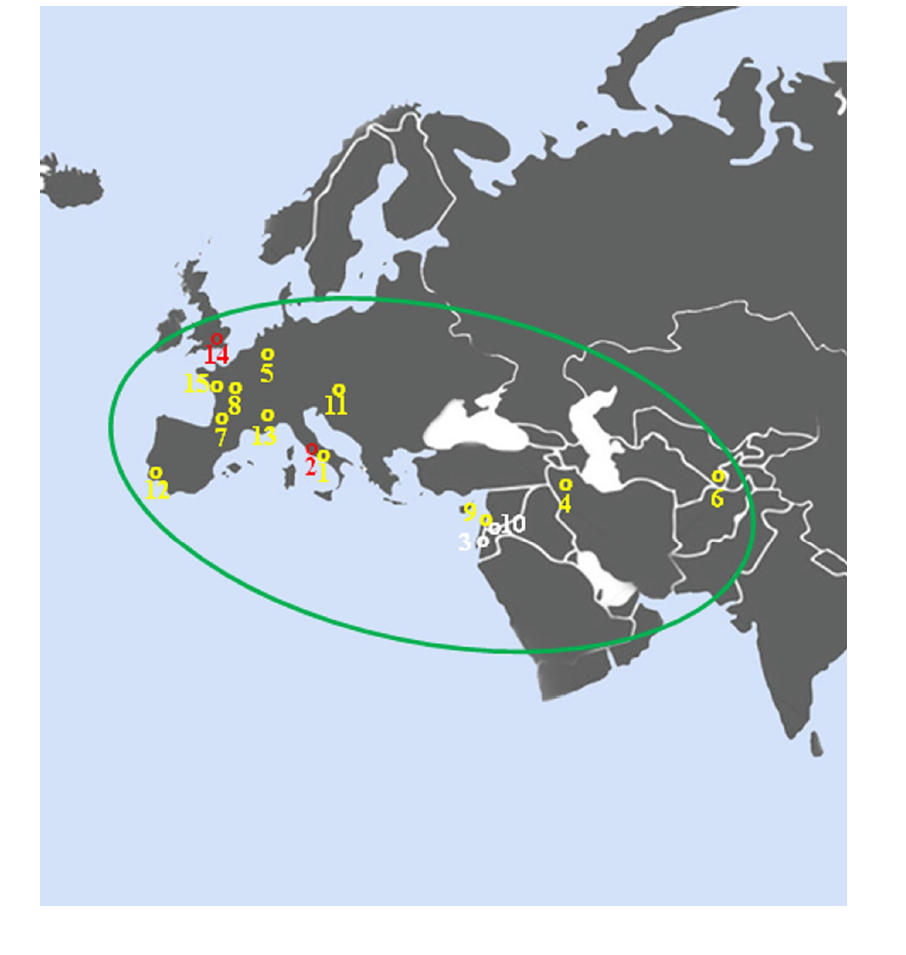
Dummy variables (i.e., traits always present or always absent in all cases) were excluded [20]. The distance between the two samples (dij) is calculated by dividing the number of variables present in the ith individual and absent in the jth and vice versa (scored as 10 or 01), by the total number of variables, including those present or absent in both (11 and 00) [19,21]. A spreadsheet containing binary scores and formulas was used to organize the results into a matrix, which was used for cluster analysis using the WPGMA and Euclidean range squared methods. The traits used are shown in Table 2. The geographic locations of the samples are identified in Figure 1.
Table 1:list of the traits. r=right; l=left.
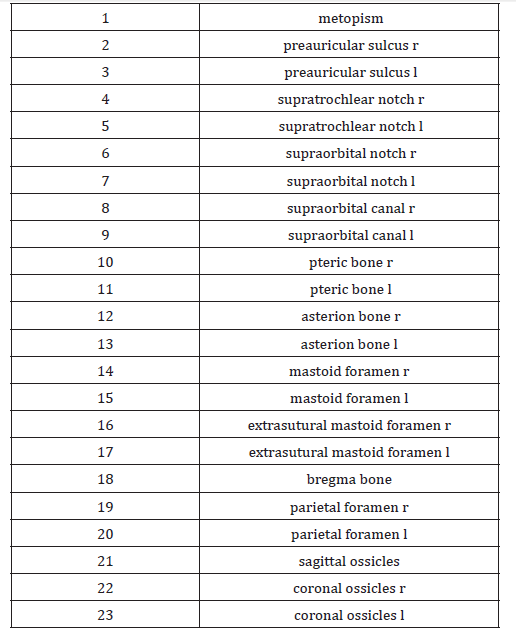
Table 2:Specimens, dating and geographic location. Am - anatomically modern. Ya- years ago. E- Early.
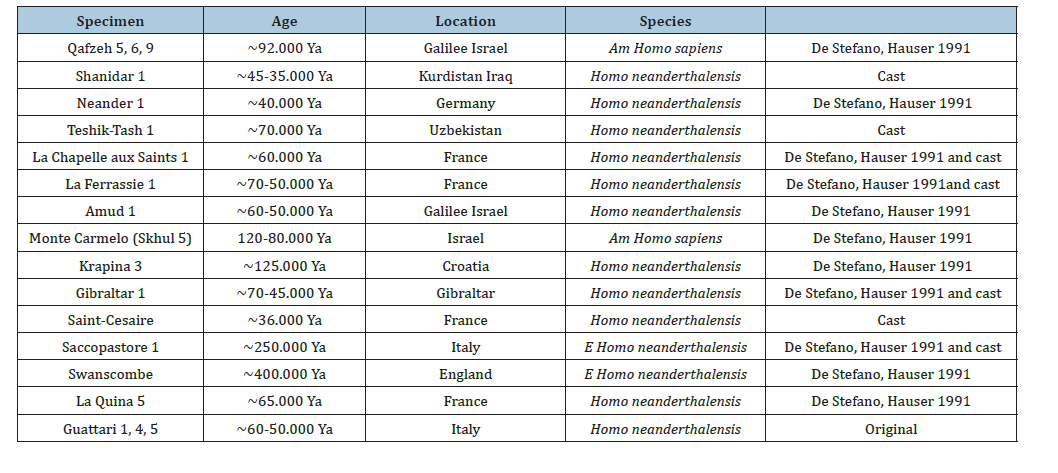
Figure 1: Geographic location of the specimens.
Results and Discussion
The results of the test are presented in Figure 2 and, given the nature of the sample, warrant several observations. The chronological progression from ancient Neanderthals to classical Neanderthals and Anatomically Modern Homo Sapiens (AMH) can be viewed as a temporal continuum. Within a 10% similarity threshold, three clusters-A, B, and C-emerge. Cluster C comprises the ancient Neanderthals from Swanscombe and Saccopastore 1, which is consistent with expectations given their temporal proximity. The high, though not exact, correspondence between them may reflect evolutionary changes over the interval separating these specimens. Clusters A and B are particularly noteworthy. Cluster B, the largest, contains several subclusters that include nearly all classical Neanderthals, except for the three AMH individuals from Qafzeh 5, 6, and Skhul 5. Qafzeh 6 and Skhul 5 form a subcluster with strong similarities, and their inclusion within a larger cluster of classical Neanderthals may reflect phenotypic similarity. This phenomenon could also explain the strong correspondence between Qafzeh 5, Krapina 3, and Guattari 5, as well as the substantial, though less pronounced, similarities with Guattari 4, Gibraltar 1, and Saint- Cesaire.
Figure 2: Geographic location of the specimens.
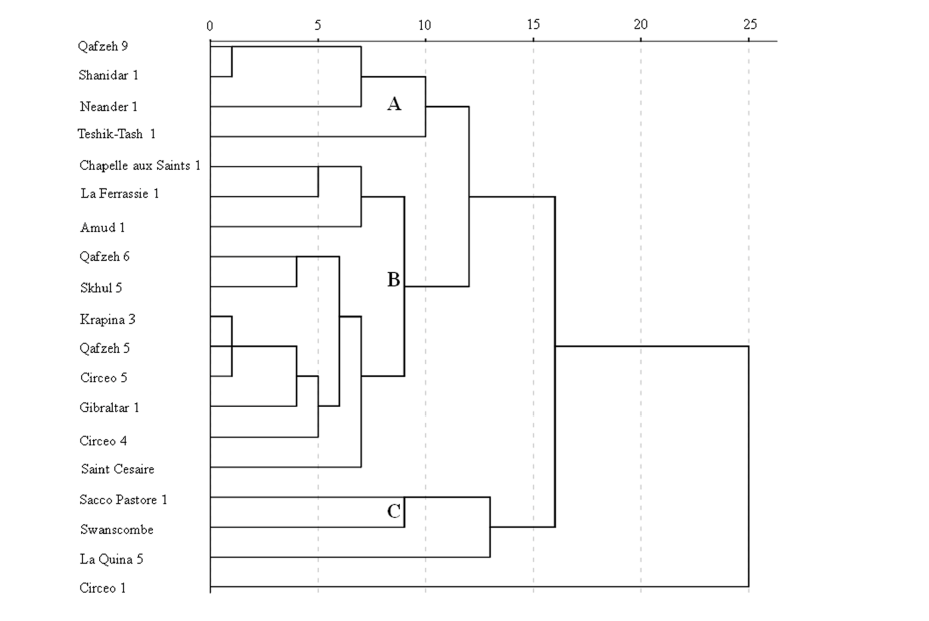
The grouping of Chapelle aux Saints 1, La Ferrassie 1, and Amud 1 aligns with previous morphometric analyses [22]. In Cluster A, the close association of Qafzeh 9 and Shanidar 1 may be attributed to their shared Middle Eastern environment, which could also account for the presence of Neanderthals 1 and Teshik- Tash 1 in this cluster. Overall, the dendrogram reveals a complex mosaic of interrelationships both within Neanderthals and between Neanderthals and sapiens, indicating that patterns of similarity are not straightforward. Notably, Neanderthals do not form a single, low-variability cluster; some individuals, such as La Quina 5 and especially Guattari 1, are positioned at the periphery of the dendrogram, distant from other specimens. Because the traits analyzed are expressed only when certain genetic and environmental thresholds are met, they are particularly susceptible to environmental influences.
While genetic factors play a role, environmental selective pressures may influence trait expression past the threshold. Our sample spans a broad chronological range (Table 2), from MIS 10 to MIS 4, encompassing multiple glacial and interglacial cycles. Although geographically limited to Eurasia, this region experienced significant climatic fluctuations and diverse microclimates, leading to a variety of environmental adaptations that likely contribute to the complex mosaic of trait expression observed in our analysis. According to some geneticists, the Neanderthal genome exhibits low variability attributable to an equally low population density and an evidently high level of inbreeding [23,24]. The situation is different for sapiens, who, according to some authors, exhibit significantly greater variability [24]. The morphology of fossil skeletons, like every aspect of the phenotype, is the product of genetic and environmental influences, and often interactions between the two [25,26]. Genetic influences on skeletal morphology are ultimately the result of adaptive (natural selection) or neutral (mutation, gene flow, genetic drift) evolutionary forces that have shaped allele frequencies in a population or species over the course of multiple generations.
Analyses that combine between-group and within-group variation within a species can identify patterns of covariance not immediately apparent from analyses of individual groups, but these associations must be interpreted with caution, as they may be due to population history or phylogeny rather than genetic, evolutionary, or functional links [26]. The fossil record shows a certain degree of independence for cranial features typically found in Neanderthals. For example, European fossils dating back 130,000 years exhibit some, but not all, Neanderthal features, which is not what would be expected if all Neanderthal features were part of an integrated assemblage. This is illustrated by the Sima de los Huesos fossils from Spain, which display Neanderthal-like prognathic midfaces and some associated features, but lack basal cranial features such as a mastoid tubercle or a large juxtamastoid eminence, and some cranial vault features, while exhibiting others like an incipient supranuchal fossa [27]. Groups of individuals sharing genetic similarities are not the same as those sharing morphological similarities. Neanderthals may have been a highly dynamic population, with the potential for rapid migration and long-distance dispersal, rather than a unitary group that evolved in isolated glacial conditions.
Neanderthal features appear to have appeared among the hominids of Sima de los Huesos around 400,000-350,000 years ago [27-29], while it is widely believed that a coherent morphological pattern defining Neanderthals emerged around 300-250,000 years ago and that the so-called “classical” Neanderthal morphology evolved around 70,000 years ago [30,31]. In parallel, AMH evolved more or less simultaneously in Africa. The earliest evidence for AMH is debated, but fossils from Jebel Iroud, Morocco, dating to 315kya [32,33], Omo Kibish, Ethiopia, dating to approximately 230kya [34], and Florisbad, South Africa, dating to approximately 259kya, all show AMH traits, although the tendency toward skeletal gracilization and globularization of the cranial vault is evident much later in the evolution of our species [35,36]. The first significant European occupations by AMH migrating from Africa date back to approximately 43,000 years ago [37-39] although earlier intermittent occupations are known, e.g., in Mandrin, France: Slimak et al., [40].
Neanderthals became extinct between approximately 40,000– 30,000 years ago [41], leading some to argue for a link between these events [42-45]. This contrast between the early evolutionary environments of Neanderthals (cold/temperate environments) and AMH (subtropical/tropical Africa) likely resulted in fundamental differences in the morphology, physiology and adaptive behaviour of these groups, with geographic isolation and neutral evolutionary processes likely playing a key role [26,30,46]. The phenotypic similarities observed between Neanderthals and Homo sapiens are consistent with the possibility that species can develop similar traits in response to comparable environmental pressures. This pattern also suggests that local populations-referred to as paleodemes, or distinct ancient population groups—may have evolved and diverged more frequently than previously recognized, raising the possibility that some groups (such as the Krapina individuals) may not have a direct phyletic relationship with later Neanderthal populations [8].
Conclusion
The low genetic variability observed in Neanderthal mtDNA studies [24] may reflect a small effective population size throughout much of their evolutionary history, spanning approximately 400,000 years, or it may be characteristic only of late Neanderthals who experienced demographic reductions, possibly due to interactions with Homo sapiens outside Africa. Briggs et al. [24] suggest that Neanderthals maintained small effective population sizes for an extended period. Despite this low genetic variability, the morphological traits we examined showed considerable variability in their expression, similar to the pattern seen in Homo sapiens. This phenotypic variability likely results from multiple factors, including the diverse environments inhabited by different groups. Environmental selective pressures may have influenced trait expression in a geographically uneven and diverse manner. Moreover, the traits analyzed-referred to as epigenetic traits [47,48] are heritable phenotypic changes that do not involve alterations to the underlying DNA sequence, but instead often result from mechanisms such as DNA methylation or chromatin modification. These epigenetic mechanisms allow for reversible phenotypic variability in response to environmental stressors, facilitating short-term adaptation. Our analysis indicates that such epigenetic changes may have played a significant role in enabling both Neanderthals and Homo sapiens to adapt to diverse environmental pressures.
References
- Banks WE, Moncel MH, Raynal JP, Cobos ME, Alvarez DR, et al. (2021) An ecological niche shift for Neanderthal populations in Western Europe 70,000 years ago. Sci Rep 11(1): 5346.
- Zilhão J, Angelucci DE, Igreja MA, Arnold J, Badal E, et al. (2020) Last Interglacial Iberian Neanderthals as fisher-hunter-gatherers. Science 367(6485): eaaz7943.
- Ni X, Ji Q, Wu W, Shao Q, Ji Y, et al. (2021) Massive cranium from Harbin in northeastern China establishes a new Middle Pleistocene human lineage. Innovation (Camb) 2(3): 100-130.
- Ni X (2022) Modeling the origin of modern humans in light of new evidence. Acta Anthropologica Sinica 41(4): 576-592.
- Reich D, Green RE, Kircher M, Krause J, Patterson N, et al. (2010) Genetic history of an archaic hominin group from Denisova Cave in Siberia. Nature 468(7327): 1053-1060.
- Grṻn R, Pike A, McDermott F, Eggins S, Mortimer G, et al. (2020) Dating the skull from Broken Hill, Zambia, and its position in human evolution. Nature 580(7803): 372-375.
- Premo LS, Hublin JJ (2009) Culture, population structure, and low genetic diversity in Pleistocene hominins. Proc Natl Acad Sci U S A 106(1): 33-37.
- Urciuoli A, Martínez I, Quam R, Arsuaga JL, Keeling BA, et al. (2025) Semicircular canals shed light on bottleneck events in the evolution of the Neanderthal clade. Nat Commun 16(1): 972.
- Quinto FS, Fox CL (2015) Almost 20 years of Neanderthal palaeogenetics: Adaptation, admixture, diversity, demography and extinction. Philos Trans R Soc Lond B Biol Sci 370(1660): 20130374.
- Gruneberg H (1952) Genetical studies on the skeleton of the mouse. Journal of Genetics. 52: 441-454.
- Berry AC, Berry RJ (1967) Epigenetic variation in the human cranium. J Anatomy 101(2): 361-379.
- Sjovold T (1984) A report on the heritability of some cranial measurements and non-metric traits. In: Vark GNV, Howells WW (Eds.), Multivariate statistical methods in physical anthropology. D. Reidel Publishing Company, Netherlands, pp: 223-246.
- Saunders SR, Rainey DL (2008) Nonmetric trait varation in the skeleton: Abnormalities, anomalies and atavisms. In: Katzenberg MA, Saunders SR (Eds.), Biological anthropology of the human skeleton, (2nd edn), John Wiley and Sons, Inc, New Jersey, USA, pp: 533-560.
- Sherwood RJ, Duren DL, Demerath EW, Czerwinski SA, Siervogel RM, et al. (2008) Quantitative genetics of modern human cranial variation. Journal of Human Evolution 54(6): 909-914.
- Hanihara T, Ishida H, Dodo Y (2000) Characterization of biological diversity through analysis of discrete traits. Am J Phys Anthropol 121(3): 241-251.
- Hanihara T, Ishida H, Dodo Y (2003) Characterization of biological diversity through analysis of discrete cranial traits. Am J Phys Anthropol 121(3): 241-251.
- Rubini M, Corruccini RS (1999) Human discrete traits. New perspectives in Anthropology. In: Armelagos A, Irish JD, Rubini M (Eds.), Skeletal biology and dental anthropology, Summer school, Tivoli, Denmark.
- Rubini M, Mogliazza S, Corruccini RST (2007) Biological divergence and equality during the first millennium BC in human populations of central Italy. American Journal of Human Biology 19(1): 119-131.
- Rubini M, Libianchi N, Gozzi A, Cerroni V, Cassieri N, et al. (2020) Biological history of an Italian prehistoric community and the population of the central Italy during the 1st millennium BCE. Homo 71(3): 219-244.
- Harris EF, Sjøvold T (2004) Calculation of Smith’s mean measure of divergence for intergroup comparisons using nonmetric data. Dental Anthropol 17(3): 83-93.
- Sneath PHA, Sokal RR (1973) Numerical taxonomy. The principles and pratice of numerical classification. In: Freeman WH (Ed.), (1st edn), San Francisco, USA.
- Thackeray JF, Maureille BB, Vandermeersch B, Braga J, Chaix R (2005) Morphometric comparisons between Neanderthals and ‘anatomically modern’ Homo sapiens from Europe and the Near East. Annals of the Transvaal Museum 42: 47-51.
- Orlando L, Darlu P, Toussaint M, Bonjean D, Otte M, et al. (2006) Revisiting Neandertal diversity with a 100,000year old mtDNA sequence. Curr Biol 16(11): 400-402.
- Briggs AW, Good JM, Green RE, Krause J, Maricic T, et al. (2009) Targeted retrieval and analysis of five Neandertal mtDNA genomes. Science 325(5938): 318-321.
- Lynch M, Walsh B (1998) Genetics and Analysis of Quantitative Traits. Sinauer, Sutherland, South Africa.
- Weaver TD (2009) Out of Africa: Modern human origins special feature: The meaning of neandertal skeletal morphology. Proc Natl Acad Sci U S A 106(38): 16028-16033.
- Arsuaga JL, Martínez I, Arnold LJ, Aranburu A, Téllez AG, et al. (2014) Cranial and chronological evidence from Sima de los Huesos. Science 344(6190): 1358-1363.
- Arsuaga JL, Carretero JM, Lorenzo C, Olivencia AG, Pablos A, et al. (2015) Postcranial morphology of the middle Pleistocene humans from Sima de los Huesos, Spain. Proc Natl Acad Sci U S A 112(37): 11524-11529.
- Quam R, Martínez I, Rak Y, Hylander B, Pantoja A, et al. (2023) The Neandertal nature of the Atapuerca Simade los Huesos mandibles. Anat Rec 307(7): 2343-2393.
- Rosas A, Bastir M, Tabernero AG (2022) Neanderthals: Anatomy, genes, and evolution. In: Updating Neanderthals. Understanding behavioural complexity in the late middle palaeolithic, Academic Press, New York, USA, pp: 71-87.
- Rosas A, Bastir M, Tabernero AG, Alarcon JA (2025) Mosaic evolution in the Neandertal lineage. Spanish Journal of Palaeontology 40(1): 97-114.
- Hublin JJ, Ncer AB, Bailey SE, Freidline SE, Neubauer S, et al. (2017) New fossils from Jebel Irhoud, Morocco and the pan-African origin of Homo sapiens. Nature 546 (7657): 289-292.
- Richter D, Grün R, Boyau RJ, Steele TE, Amani F, et al. (2017) The age of the hominin fossils from Jebel Irhoud, Morocco, and the origins of the Middle Stone Age. Nature 546: 293-296.
- Vidal CM, Lane CS, Asrat A, Barfod DN, Mark DF, et al. (2022) Age of the oldest known Homo sapiens from eastern Africa. Nature 601: 579-583.
- Ruff C, Niskanenb M, Junnob JA, Jamison P (2005) Body mass prediction from stature and bi-iliac breadth in two high latitude populations, with application to earlier higher latitude humans. Journal of Hum Evol 48(4): 381-392.
- Neubauer S, Hublin JJ, Gunz P (2018) The evolution of modern human brain shape. Sci Adv 4(1): 1-8.
- Higham T, Compton T, Stringer C, Jacobi R, Shapiro B, et al. (2011) The earliest evidence for anatomically modern humans in northwestern Europe. Nature 479: 521-524.
- Fewlass H (2020) Refining techni ques for radiocarbon dating small archaeological bone samples. Leiden University, Netherlands.
- Hublin JJ, Sirakov N, Aldeias V, Bailey S, Bard E, et al. (2020) Initial upper palaeolithic homo sapiens from Bacho Kiro Cave, Bulgaria. Nature 581(7808): 299-302.
- Slimak L, Zanolli C, Higham T, Frouin M, Schwenninger JL, et al. (2022) Modern human incursion into Neanderthal territories 54,000 years ago at Mandrin, France. Sci Adv 8(6): eabj9496.
- Higham T, Duka K, Wood R, Ramsey CB, Brock F, et al. (2014) The timing and spatiotemporal patterning of Neanderthal disappearance. Nature 512(7514): 306-309.
- Sørensen B (2011) Demography and the extinction of European Neanderthals. J Anthrop Arch 30(1): 17-29.
- Gilpin W, Feldman MW, Aoki K (2016) An ecocultural model predicts Neanderthal extinction through competition with modern humans. Proc Natl Acad Sci U S A 113(8): 2134-2139.
- Melchionna M, Di Febbraro M, Carotenuto F, Rook L, Mondanaro A, et al. (2018) Fragmentation of Neanderthals' pre-extinction distribution by climate change. Palaeogeography, Palaeoclimatology, Palaeoecology 496: 146-154.
- Timmermann A (2020) Quantifying the potential causes of Neanderthal extinction: Abrupt climate change versus competition and interbreeding. Quaternary Science Reviews 238: 1-14.
- Churchill SE (2014) Thin on the Ground: Neandertal Biology, Archeology and Ecology. John Wiley & Sons Publishers, Oxford, UK.
- Riggs AD, Russo VEA, Martienssen RA (1996) Epigenetic mechanisms of gene regulation. Plainview, N.Y, Cold Spring Harbor Laboratory Press, Plainview, New York, USA.
- Stefano GFD, Hauser G (1991) Epigenetic traits of the Circeo 1 skull. In: Piperno M, Scichilone G (Eds.), The Circeo 1 Neandertal skull. Studies and documentation. Istituto Poligrafico e Zecca dello Stato, Roma, pp: 273-300.
© 2026 Mauro Rubini. This is an open access article distributed under the terms of the Creative Commons Attribution License , which permits unrestricted use, distribution, and build upon your work non-commercially.
Editor In Chief







.jpg)































Signup for Newsletter

Quick Links
 Editorial Board Registrations
 Submit your Article
 Best Paper of the Volume
 Reprints
 Refer a Friend
 Advertise With Us
Our Recent Edition

.jpg)



Top Editors




.jpg)

















.bmp)
.jpg)
.png)
.jpg)













.jpg)






.png)

.png)




.png)




Financial Support

Sponsors

Latest e-Books

Latest Video

 a Creative Commons Attribution 4.0 International License. Based on a work at www.crimsonpublishers.com.
Best viewed in
a Creative Commons Attribution 4.0 International License. Based on a work at www.crimsonpublishers.com.
Best viewed in 
 | Above IE 9.0 version