

- About Us
- Information
-

The Author ensures that the research has been conducted responsibly and ethically with adherence to all relevant regulations. read more..
- For Authors
- For Reviewer
- Manuscript Guidelines
- Membership
- Publication Ethics
-
- Journals
- Reprints
- e-Books
- Videos
- Policies
- Contact Us
 COVID-19
- Submissions



Full Text
Archaeology & Anthropology:Open Access
Continuity or Change? The Syracusan Kingdom before and after the Roman Conquest
Roksana Chowaniec*
Institute of Archaeology, National Institute for the Republic of Serbia, Belgrade, Serbia
*Corresponding author:Roksana Chowaniec, Institute of Archaeology, National institute for the Republic of Serbia, Belgrade, Serbia
Submission: February 25, 2026; Published: March 16, 2026
ISSN: 2577-1949 Volume5 Issue 5
Abstract
This paper examines the dynamics of continuity and change in the cultural identity of Syracusan Kingdom from the late Hellenistic period until their integration into the Roman provincial system. Focusing on the political trajectory from the Agathocles time to the long and stable reign of Hiero II, and culminating in the Roman conquest of 212BC, the paper situates Syracuse within the broader context of Mediterranean power politics and imperial expansion. Particular attention is paid to the strategies that allowed the Syracusan Kingdom to flourish economically and culturally between 263BC and 215BC, followed by the rapid political changes after the death of Hiero II and the subsequent transformation of entire Sicily into Rome’s first province. Rather than treating Roman conquest as a moment of abrupt cultural breakup, an archaeological and material-culture-based approaches allow to assess long-term processes of acculturation. Urbanism, architecture, religious practices, coinage, pottery production, agriculture, and patterns of consumption are analysed to demonstrate that Greek cultural traditions remained deeply embedded in south-eastern Sicily well into the Roman Republican and early Imperial periods. Roman influence is shown to have been selective, gradual, and adaptive, often integrating itself into pre-existing Hellenistic frameworks. The several evidences from Syracuse and its former kingdom territories support an interpretation of ‘cultural ambidexterity’, in which local identities persisted while accommodating new political and administrative realities.
Keywords:Sicily; Syracusan Kingdom; Hiero II; Roman conquest; Cultural ambidexterity; Greek heritage; Roman administration
Introduction
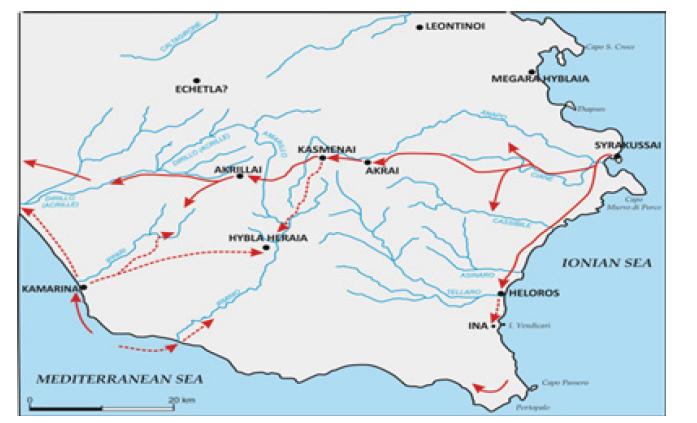
Syracuse, as a colony, was established a year after Naxos, as noted by Thucydides [1,2]. The Greeks began their settlement on the small island Ortigia around 733BC and dynamically expanded into surrounding territories [2]. Rapidly, Syracuse started to grow and by the 5th century BC had become the most beautiful, wealthiest, and most populated town on the island [3], covering an area between 100 and 200 hectares, having three ports (Little Port, Big Port and Plemmirio), and providing control over the south-eastern part of Sicily [1,2,4]. Due to various political factors, a significant part of the island fell under the Syracusan influence (Figure 1). Following numerous changes in the power structure, both within historical context of the town and the broader region, and as it later turned out also of the entire island, on the scene Agathocles appeared. Born w Thermai Himeraiai, moved to Syracuse at the age of eighteen, and at an early in his career, he became involved in politics and made an attempt at overthrowing the ruling elite, which resulted in him being exiled from Syracuse in 330BC. This incident significantly influenced the entire history of the island. During his exile, mainly in southern Italy, Agathocles acquired experience and gathered supporters, including the Mamertines from Campania [5,6].
Figure 1: Syracusan expansion in south-eastern part of Sicily.
Nevertheless, he faced another exile from Syracuse, and in 317BC, he organised a revolt, subsequently becoming stratêgos autokratôr between 316BC and 289BC [7,8,2]. By 311BC, his position had strengthened sufficiently to allow him to ignore existing agreements, prompting him to launch an attack on the western part of Sicily, thereby declaring war on Carthage as well. The quest for dominance culminated in a long conflict that ultimately resulted in Agathocles’ defeat [6,9]. Adapting to the new circumstances, Agathocles proclaimed himself basileus of Sicily, emulating the Macedonian kingdom [7-9]. His military aspirations remained unfulfilled; thus, in 289BC, despite suffering from illness and shortly before his death, he began to devise a new offensive against Carthage, which was supposed to be supported by the Mamertines, whom he invited to the island [6]. Following the death of Agathocles, Syracuse and other Sicilian towns descended into chaos once more. Additionally, the Mamertines, who had been summoned by Agathocles, established a stronghold in Messina and commenced organising pillaging raids on several towns, including Syracuse [10].
In the early months of 278BC, Syracuse sought assistance from Pyrrhus, the king of Epirus, in their efforts to defeat the Mamertines [11]. During a period of turbulent change, Hiero II seised control of Syracuse, declaring himself its tyrant. Due to his wealth and social status, he quickly gained acceptance as a prominent citizen of Syracuse, which led to him being granted the title of supreme general. He solidified his authority by marrying Philistis, the daughter of a Syracusan nobleman [12,13]. His lifelong ambition was to create a kingdom that mirrored the political, economic, and cultural stature of the Antigonids, Seleucids, and Ptolemies [14-16]. Consequently, he fostered close relations with various states around the Mediterranean and viewed himself as a significant player in the politics of his time [17-19]. One of Hiero’s initial strategic moves was to eliminate the Mamertines from Messina and its surrounding areas. Although the victory over the Mamertines was not total and did not eliminate enemies of Syracuse, it enabled Hiero II to proclaim himself king of Syracuse [7,8,11,20,21]. It was also pivotal for another reason.
Polybius records that this defeat, the Mamertines asked Carthage and Rome for help: ‘Some of them appealed to the Carthaginians, proposing to put themselves and the citadel into their hands, while others sent an embassy to Rome, offering to surrender the city and begging for assistance as a kindred people’ [22]. Carthage, unwilling to engage in the conflict, provided only minimal reinforcements; consequently, the Mamertines sought protection from Rome. Rome not only agreed to help the Mamertines in driving out Syracusans but also resolved to declare war on Carthage. This marked the onset the First Punic War (264BC to 241BC), effectively leading to Rome’s somewhat ‘invited’ presence in Sicily.
Balancing kingdom: Syracuse and Hiero II between rival superpowers
When the Romans appeared in Messina, Hiero II initially formed an alliance with the Carthaginians to resist Roman imperial ambitions [23]. At first, the Romans sought to negotiate with Hiero II, possibly even proposing him an alliance. However, the arrival of Roman reinforcements in 263BC and a subsequent offensive against Syracuse compelled the Syracusan ruler to alter his strategy [24]. Recognising the reality of Roman dominance, he broke the alliance with Carthage in the same year [24,25]. Polybius notes that ‘Hiero, observing both the confusion and consternation of the Sicilians, and at the same time the numbers and the powerful nature of the Roman forces’, exhibited remarkable diplomatic skill and foresight by forging an alliance with Rome and opposing Carthage [11]. The Roman Republic imposed quite difficult conditions on Syracuse but readily accepted its independence, as this was advantageous and convenient for them at that moment [25].
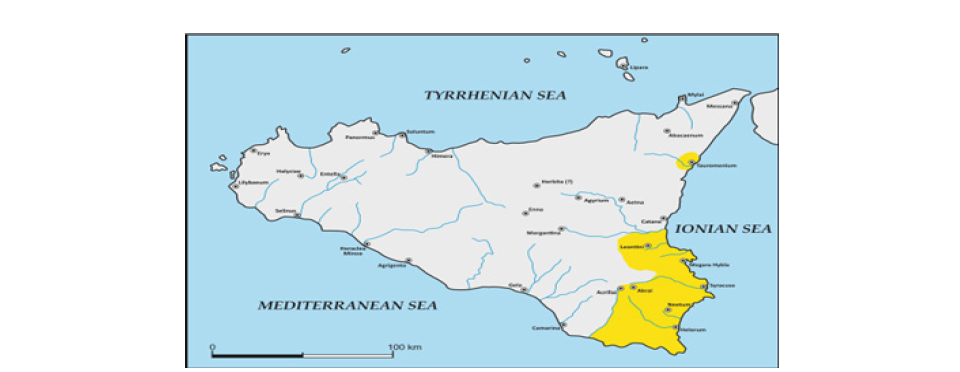
This type of peace treaty established with the Syracusan ruler was a unique indication that even at this early stage, the Romans planned to continue the war on the island and secured their territorial interest through alliances. Under the new agreement, Hiero II was obligated to supply food and military equipment, pay a tribute, and remise control over numerous Greek towns, retaining only the south-eastern part of his former kingdom. As a consequence, Hiero II forfeited fertile territories in eastern Sicily between the Dittaino and Simeto rivers, and his kingdom was diminished to only few towns: Acrae, Leontini, Mégara Hyblaea, Helorum, Neetum, Tauromenium [26], Morgantina, Kamarina, Echetla, Menai, Hybla Magna, Mutyka, Euboia, and Herbessos (Figure 2). The agreement also required him to free prisoners who were likely captured during the siege of Messina and to cede the northeastern corner of the island to Rome. Diodorus Siculus observes that the Romans ‘readily consented and concluded a fifteen-year peace’; however, the treaty remained in force until the death of Hiero II in 215BC [7].
Figure 2: Syracusan Kingdom territories after the agreement with Rome in 263BC.
His efforts to stabilise the situation and ensure peace for the Syracusan Kingdom can be regarded as a remarkable display of great erudition and shrewdness. The dynamics of the relationships between Hiero II and Rome have been extensively discussed [7,15,25]. In fact, it is still largely unclear how these relationships evolved and whether they were founded on a friendship as defined by the agreement, or if the kingdom of Hiero II was simply regarded as a ‘client state’ of Rome. Nevertheless, it is certain that Hiero II made a visit to Rome in 237BC. Upon his arrival, he gifted its inhabitants with ducenta milia modiorum tritici [27]. The visit can be interpreted as a gesture of gratitude towards Rome for its generous assistance during the First Punic War. Hiero II’s position was undeniably very strong, particularly in the initial years of the Second Punic War, when, due to his allegiance the Romans began to refer him as their truest friend [28].
The amicable nature of these relations is further evidence by the fact that following his death, the rule over the Syracusan Kingdom was not taken over by Rome, but was instead passed on to Hieronimus, the grandson of Hiero II. The treaty established with Rome should not be interpreted as a manifestation of Hiero II’s weakness; instead, it reflects his exceptional diplomatic instinct and a tendency toward conformity. Thus, while the rest of the island, populated by Greek and Carthaginian towns, suffered devastation due to warfare, resulting in the scattering or death of its inhabitants, Hiero II’s kingdom experienced tranquillity alongside economic and cultural advancement. Syracuse and its subordinate towns entered a phase of exceptional rapid development [29,30], while the kingdom itself emerged as a significant Hellenistic state [30,31]. Polybius notes that the Romans embraced the alliance with Hiero with enthusiasm, stating, ‘Having made a treaty by which the king bound himself to give up his prisoners to the Romans without ransom, and, in addition to this, to pay them a hundred talents, the Romans henceforth treated the Syracusans as allies and friends. King Hiero having placed himself under the protection of the Romans, continued to furnish them with the resources of which they stood in urgent need, and ruled over Syracuse henceforth in security, treating the Greeks in such a way as to win from them crowns and other honours.
We may, indeed, regard him as the most illustrious of princes and the one who reaped longest the fruits of his own wisdom in particular cases and in general policy’ [22]. Through this agreement, Syracuse gained access to numerous markets for its products, both on the island and in the western Mediterranean region [30,32]. The meticulously crafted strategy of Hiero II facilitated a longterm internal stabilisation, economic growth, and comprehensive development of the realm. The consistent vision underlying his rule is evidenced by his encouragement of activity across various spheres of life, including those related to culture and technology. Hiero II transformed Syracuse into an important cultural centre characterised by evident royal patronage. He welcomed scholars and artists to the town, among whom Archimedes and Theocritus are the most renowned [16,30,31,33]. The strength of the Syracusan Kingdom was founded on a vast hinterland of fertile land, advanced production and trade system, and well-organised mechanism for the transfer and storage of goods, which were exported to various regions of the Mediterranean.
Hiero II restructured breeding and agricultural practices within his kingdom and implemented the lex Hieronica. Nevertheless, the taxes were not excessively heavy, especially since the taxpaying towns received new, adequate urban infrastructure and innovative solutions, as well as enhancements to their defensive architecture, e.g. in Morgantina, Akrai, Neetum, Tauromenium, Mégara Hyblaea, and Syracuse itself [21,30, 34-37]. The range of merits ascribed to Hiero II was wide and included, for instance, innovative waterworks, advancement in agriculture, a new technique for roofing, and exquisite jewellery [30,37,38]. The reign of Hiero II marked the last period during which Syracuse and its subservient colonies flourished and enjoyed independence. Following his death, Syracuse, along with other towns of south-eastern Sicily, initiated economic, culture and political processes and long transformation into a Roman province.
From alliance to province: The fall of Syracuse and the rise of roman sicily
Following the death of Hiero II at the beginning of 215BC, the relationship between Rome and the Syracusan Kingdom worsened until they became utterly broken due to political decisions. Hiero II was succeeded by his young grandson Hieronymus, who was merely fifteen years old and lacked experience. He quickly became surrounded by a group of self-interested supporters, many of whom were advocates of Carthage, who relentlessly urged him to gain total control over the governance of Syracuse [39]. With little resistance, Hieronymus was convinced to dispatch Syracusan diplomats to Hannibal, who returned the gesture by delegating his diplomatic and military representatives. Hieronymus exhibited a blatant disregard for the Romans, and as a consequence of their negotiations, the alliance between Rome and Syracuse collapsed, leading to a new agreement with Carthage. Events unfolded rapidly, and by 214BC, war had reached Sicily [40]. It seems that it might have been inconvenient for the Romans, as their army was already engaged in a conflict against Hannibal, and was not in need of an additional conflict in Sicily. Conversely, the renunciation of the treaty by Syracuse created a potential possibility to seize control over the entire island, including its fertile south-eastern territories. Hieronymus left Rome out of options. However, the young tyrant Hieronymus was swiftly assassinated, leading the assembly in Syracuse to transfer power to the citizens.
The subsequent events unfolded rapidly. In late 214BC, Marcellus, Roman consul, first directed his army against Leontini, which he successfully captured. Then, he turned toward Syracuse, but the town was very well-prepared for defence, not only due to its strategic location and great fortifications but also thanks to various defensive techniques employed. During the siege, Marcellus took Mégara Hyblaea, while the towns of Helorum and Herbessos surrendered freely [23,40]. Realising that his forces were insufficient to accomplish his initial goals in these circumstances, Marcellus pulled back and unexpectedly confronted Hippocrates and his Syracusan forces at Akrillai, located southwest of Akrai, where a battle took place. Following his victory, Marcellus continued the siege of Syracuse, which he did not capture until 212BC. He tried subterfuge, persuasion, and infiltration tactics. Eventually, after breaching the Epipolai Plateau from the northwest, he forced troops defending the fortress at Euryalos to capitulate. Ultimately, exhausted by domestic strife, Syracuse sent envoys to Marcellus and opened its gates to his army. The metropolis, which had previously been excluded from the province, lost its autonomy along with all subservient territories.
The fall of Syracuse proved to be a significant turning point in the Second Punic War, as Rome, having removed one opponent, could now focus on the remaining fronts and send their essential reinforcements. After the fall of Syracuse, the Romans confiscated all lands belonged to the Syracusan Kingdom and annexed those towns allied with Syracuse that had not yet declare their allegiance. ‘They had not much difficulty in coming to an agreement, that all the parts of the island which had been under the dominion of their kings should be ceded to the Romans (…)’ [41], through which the Republic came into possession of exceptionally fertile lands, including the ager Leontinus [42]. However, the true consequences only emerged after the end of the Second Punic War. Disloyal allies of Rome faced severe repercussions, Italy was covered with a network of colonies, and Roman authority expanded across Sicily as a whole. In accordance with Livy’s account and the Roman tradition, those who made significant contributions during the conflict were awarded land and residences, not only in Syracuse but throughout the former Syracusan Kingdom.
Various ancient authors provide incompatible information regarding what and under which regulations happened with towns of the conquered Syracusan Kingdom. Livy states that the towns which did not capitulate during the conflict between 214BC and 212BC were compelled to accept the terms imposed by Rome. However, Tauromenium and Neetum, which switched sides and supported the Romans only after the fall of the metropolis, were twith remarkable leniency and signed the foedus, which conferred upon them considerable privileges. These towns became civitates foederate and, as autonomous urban centres, yet united through their alliance with Rome, were able to enjoy certain benefits [43]. Appian states that Tauromenium may have belonged to consul Marcellus based on an agreement ratified with an oath [44]. Conversely, Neetum may have had an analogous treaty and thus received preferential treatment [45]. Both towns were obligated to provide assistance to Rome at war. In return, they were permitted to issue their own coins and, theoretically, were exempt from any Roman administrative oversight. The fertile public lands of the then Syracusan Kingdom, i.e. the area around Leontini, were incorporated into the group of the ager publicus populi Romani and all collected taxes were sent directly to Rome [43]. The remaining, i.e. Mégara Hyblaea, Helorum, and Acrae belonged among the group of civitates decumanae [36].
Beyond conquest: Continuity and change in material culture of former Syracusan kingdom
In order to explain the complexity of the problem of the Syracusan lands after the Roman conquest, it is necessary to mention questions related to permeating, substituting, or mixing of Hellenistic and Roman elements, alongside processes linked to globalisation, acculturation, and the Roman concept of the province [46-48]. Given that ancient written sources do not yield clear answers, Miguel J. Versluys suggests that to address the issues concerning the transformations occurring after Rome’s conquest of the territories, one must examine material culture [49,50]. By analysing the territory of the former Syracusan Kingdom, one can observe a perfect illustration that the process of so called Romanisation is not synonymous with Roman conquest. After 212BC, the towns of the Syracusan Kingdom remained a part of the Hellenistic world, steeped in Sicilian-Greek heritage for nearly two centuries, until the end of the Republic [37,43,46,47]. The process of acculturation unfolded in this region gradually, very slowly, as local Greco-Sicilian traditions remained strong, which actually did not pose a significant inconvenience for the Romans [51].
As a matter of fact, the Romans had already been profoundly influenced by Greek culture, thus accepting it as normal aspect of their society [52]. The status of the Greeks was not a result of any perceived inferiority complex that the Romans might have felt toward them, but rather stemmed from the intrinsic familiarity of Hellenic culture to the Romans [53], particularly during a time when Rome was not the dominant power on the island. As Andrew Wallace-Hadrill aptly stated, this situation exemplified ‘cultural ambidexterity’ [54]. Through the gradual conquest of Magna Graecia, then Sicily, and ultimately the other territories rich in Greek culture, the Romans established closed relations with the Hellenistic world. They were aware of the existence of great, highly-developed towns as well as the variety and complexity of the cultures that had formed them. By the 1st century AD, Roman elites had fully accepted the Hellenistic heritage. This cultural dualism might have persisted there until the Octavian’s rise to power, when his aggressive and expansive policy and propaganda resulted in the allocation of land to veterans, the proliferation of Latin inscriptions, the construction of Roman buildings, and the inundation of the market with ‘authentic’ Roman, standardised, mass-produced goods, such as red-gloss terra sigillata, gems, and brooches [46,47].
However, these changes did not erase the Greek heritage on the island [55,56]. As noted by Oskar Belvedere, for example the decrease and changes in pottery production in Sicilian workshops since the 1st century AD, does not suggest a total culture assimilation with Rome; but rather it provides evidence of a clear economic decline attributed to market competition and the influence of Sicily’s connection to the wider Roman world [56]. In numerous urban centres and rural territories, the continuity of settlement endured following the fall of Syracuse in 212BC, extending through both the pre-Augustan and post-Augustan periods [56-60]. Undoubtedly, various changes have occurred since Augustus’s reign, including transformations in the layout and grid of conquered towns. Nonetheless, it appears that the interrelations among urban planning, Roman influence, and acculturation were neither superficial nor unequivocal, particularly in regions such as the south-eastern part of Sicily. This area of the island represented a profound Hellenistic heritage, as evidenced by a diverse range of public and private buildings associated with a highly developed culture and art, as well as the self-confidence exhibited by its inhabitants.
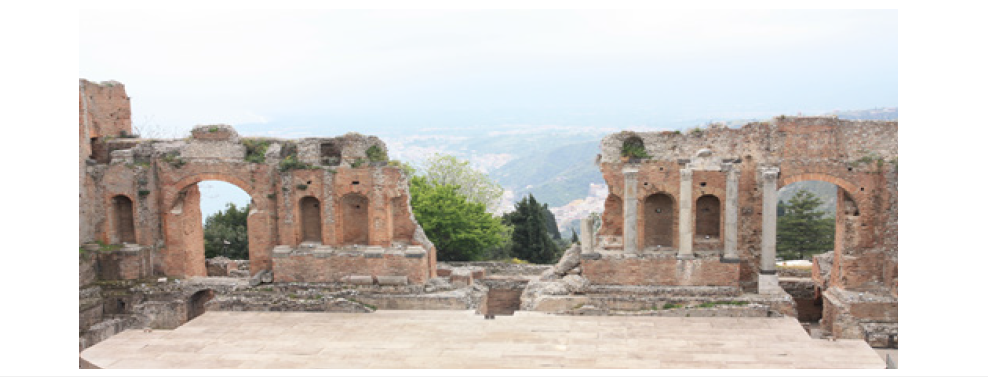
The best exemplification of this is the amphitheatre in Syracuse, located in the Hellenistic quarter of Neapolis, which underwent significant redevelopment during Augustan period (Figure 3). The amphitheatre was constructed to the east of the monumental Altar of Hiero II, skilfully incorporated into the urban layout of Neapolis, however, its construction required a number of modifications and destructions [61]. The amphitheatre is a great example of easy adaptation of new trends, including such as ways to spend free time, typical for Romans [62]. Tacitus reports that the Roman Senate gave permission to Syracuse to increase the number of gladiators in 58 AD: ‘I should not record a commonplace decree of the Senate which authorised the town of Syracuse to exceed the numbers prescribed for gladiatorial exhibitions (…)’ [63]. Besides that, the Romans did similarly extensive works in Greek theatres, aiming to modify them for own spectacles or even naval battles. As a result, the most significant theatres, including those located in Tauromenium (Figure 4) and Syracuse, along with the smaller ones like the one in Akrai, were remodelled [64-66]. Challenging topic can be forum in Sicily. Typically, the Romans revitalised agoras, transforming them into fora; however, determining the precise period of these changes is very often difficult.
Figure 3: Amphitheatre built in the quarter of Neapolis, Syracuse.
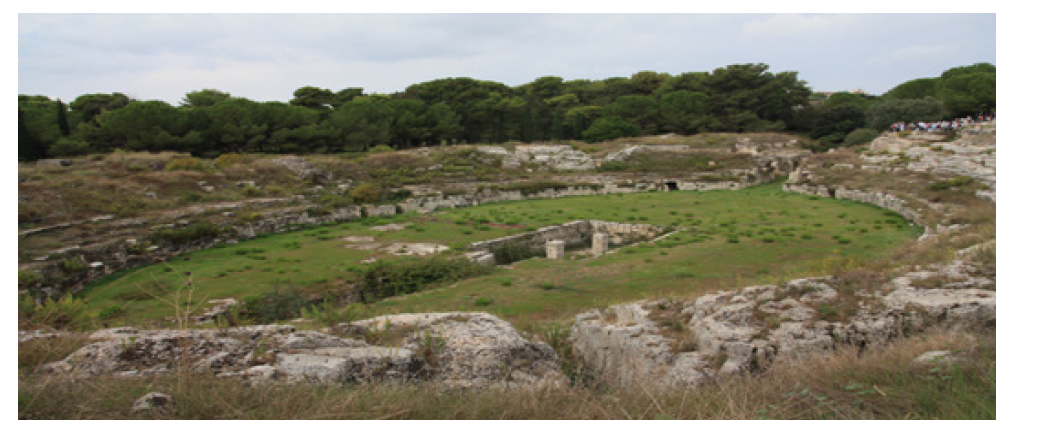
Figure 4: Scaenae frons at Tauromenium theatre remodelled by Roman with the use of new materials.
It is commonly known that fora, integrated into the preexisting urban framework, were established in colonies founded by Augustus [67,68]. Among the towns which previously belonged to the Syracusan Kingdom, fora were registered in Syracuse (Figure 5) and Tauromenium, where also an odeon and a small temple dedicated to Isis and Serapis were founded [69]. A growing number of the Romans coming from Italian Peninsula to Sicily made it necessary to implement some changes also in water-supply systems. Obviously, Sicilian towns had their own systems of aqueducts supplying them with water, including mostly underground constructions, but the ongoing Roman culture increased the water requirements [70]. A vivid illustration of the integration of Greek and Roman elements can be observed in the religion. Greek traditions lingering in the reality of Roman Sicily were especially emphasised in the cult of Demeter, which was really deeply rooted in the south-eastern part of the island [71]. The most convincing evidence for this cult is temples in the Neapolis and the Achradina quarters in Syracuse. Since the beginning of the 3rd century BC, worshipping Ceres became increasingly popular among Roman women and attributes of Demeter were adopted in the iconography of Ceres [72].
Figure 5:Part of the forum at Piazza Foro Siracusano, Syracuse.

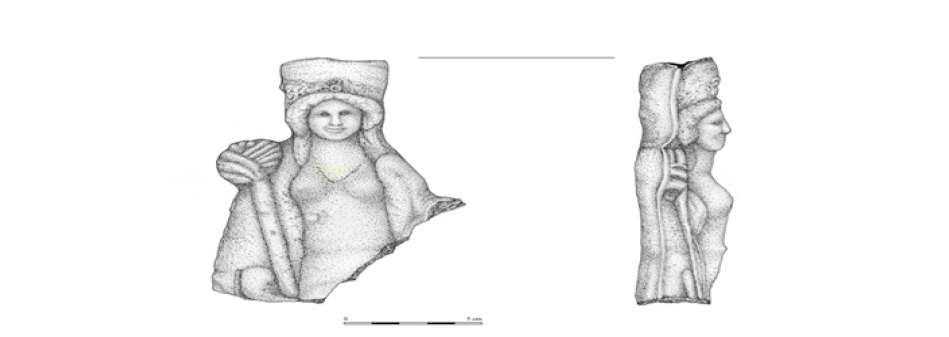
In Contrada Borgellusa (Avola), closed to the Roman villa, a statue of Demeter with inscribed base, dated between 200BC and 101BC, was found. The Latin/Roman names on the base attest that Roman settlers were engaged in local cults of Demeter as prostatai together with the natives [73]. Identifying representations of Demeter within Sicilian contexts post-Roman conquest is quite common. For instance, a statue of Demeter was unearthed in Contrada Granieri-Contrada Olia (Alia)-Contrada Sbriulia, closed to modern town Noto (Figure 6). This terracotta was located among an assemblage of pottery that dates back to the 3rd to 4th century AD. Consequently, it is plausible that it was part of a domestic shrine and either remained in use for an extended period or functioned as a type of cultic memento [74]. Archaeological and archaeometric research has facilitated the identification of different aspects of life that continued regularly to operate after the Roman conquest, including production of pottery and coins minting. In the early 3rd century BC, pottery production in Syracuse, Catania, and Leontinoi, was predominantly small-scale and oriented towards local market. This situation gradually changed from the 2nd century BC onwards [75]. What’s more, the Sicilian production centres not only remained operational, but also did not alter their technology and materials upon the arrival of the Romans on the island [75].
Figure 6:The terracotta figurine of Demeter found in Contrada Granieri-Contrada Olia (Alia)-Contrada Sbriulia, closed to Noto.
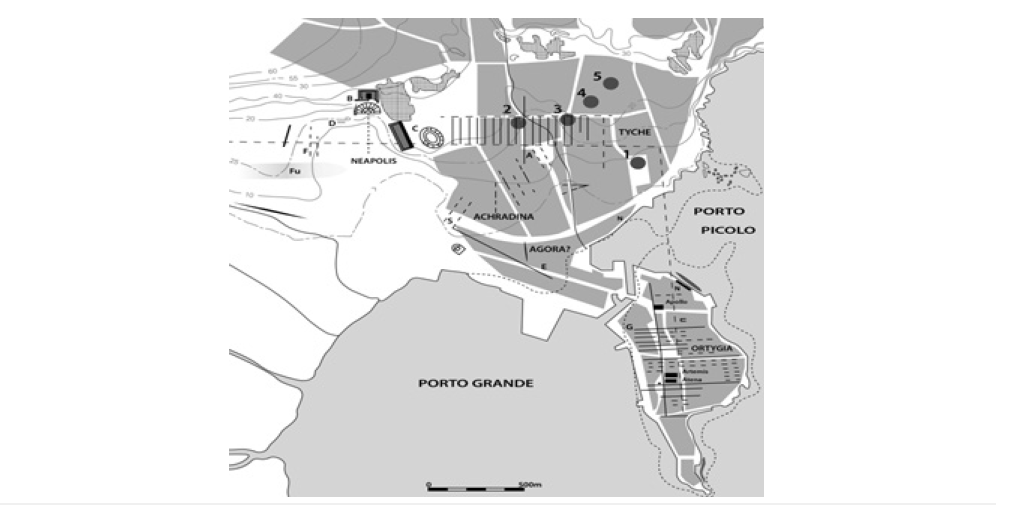
A notable example of this continuity is the pottery workshops situated on the northern fringes of the Achradina district, Syracuse. To date, five such locations have been identified and designated as: ‘Santa Lucia’, ‘Casa del Pellegrino’, ‘Villa Maria’, ‘Vigna Cassia’, and ‘Predio Maltese’ [76] (Figure 7). These workshops remained operational, and following the conclusion of the Second Punic War, they began the production of black-glazed Campana C pottery (known in Italian as ‘a pasta grigia’). Subsequently, the manufacturing of this pottery expanded to additional centres, including Centuripae, Leontinoi, and Morgantina, ultimately inundating not only the eastern region of the island but also parts of Italy, the western Mediterranean, and northern Africa [35]. By the 1st century AD, the production of Campana C pottery was replaced by thin-walled vessels and the so-called ‘ceramica di San Giuliano’ [77]. During the 2nd and the 3rd centuries AD, the ‘Villa Maria’ workshop was also in operation, producing olive lamps and, until the 5th century AD, cooking ware. Certain pottery workshops in Syracuse ceased operations by the 3rd century AD, coinciding with the emergence of vast catacombs and hypogea in the area.
Figure 7:Syracuse in the Hellenistic and Early Republican Periods with pottery production workshops: 1. Santa Lucia; 2. Casa del Pellegrino; 3. Villa Maria; 4. Vigna Cassia; 5. Predio Maltese (imagine source: Malfitana et al. [76]: 230, Figure 2, redrawn).
Others continued their production until the early Byzantine period, extending into the 6th century AD or even the early 7th century AD [78]. After the fall of Syracuse, a local mint was reactivated, but the Romans gave permission for coining bronze denominations only. New types of coins were introduced and they bore images of Dioscuroi, Egyptian motifs (Isis, Serapis, uraeus), or an apex. All were inscribed with a legend Syracuse announcing allegiance to the Syracusans, which should be interpreted as a sign of respect toward the local population, not only due to the use of the name of the town, but also the Greek language. In addition, it has to be emphasised that no coins from the Syracusan mint with a Latin legend or a name of a Roman magistrati have been found so far. It should be remembered that the Romans had to ensure peace in Syracuse, as the majority of their troops were being moved to the west part of the island at the time in order to fight the Carthaginians. Simultaneously, since all the coins circulated locally, their message was clear for the users. Also, the town Akrai, for the first time in its history, begun to issue own coin, with the Greek legend and name of the town ΑΚΡ-Α-ΙΩΝ around the second half of the 1st century BC. The circumstances were different than in Syracuse [79]. A continuation of local tradition in the area of former Syracusan Kingdom can be also observed in agriculture and breeding, and consequently also in diet.
From the 3rd century BC to the 1st-3rd century AD, the cultivation of olives and grapes was predominant, although the farming of leguminous plants and cereals is also documented. The agricultural practices of the Hellenistic period, based on the production of the so-called ‘Mediterranean triad’ (olive, grapevine, and grains), appear to be characteristic of the Roman Imperial age as well, during which these crops and fruit trees underwent further advancements. In terms of breeding, during the Late Hellenistic and Early Imperial periods, pigs were the most numerous among the four livestock species, followed by sheep and goat, and cattle. It was only during the Middle Imperial period that the percentages of these animals shifted – the number of pigs declined, while that of cattle increased, with sheep and goats maintaining their position in third place. Additionally, hunting continued to be a favored activity. The number of wild animals remained stable from the Hellenistic to the Early Imperial periods. It was only in the Late Antiquity period that a significant reduction in the presence of wild animal bones within zooarchaeological material began to occur. This decline, however, can be attributed to environmental changes, deforestation, and the decline of wild species, rather than a shift in dietary preferences or practices [80].
Conclusion
It should be assumed that decline of the Hellenistic factor and emergence of the Roman one was a long-term cultural process, influenced by many factors, including human mobilities and unlimited circulation of goods, and that Roman culture in Sicily had to evolved within the existing conditions. When affected by political and administrative changes, a Greek town as territorial and political unit, survived and even very often developed under the new Roman administration [56,60]. It is worth noting that the history of each settlement and area was shaped individually and each of them followed individual path, determined by their previous status, strategic importance, and economic potential. Consequently, change was neither uniform nor predetermined, but rather selective and context-dependent. The situation in south-eastern part of Sicily, or precisely in territories within the Syracusan Kingdom, illustrates that the Roman conquest in 212BC did not result in an immediate cultural break; rather, it marked the beginning of a lengthy and complex process of transformations. The official decline of Hellenistic autonomy and the rise of Roman authority occurred slowly, shaped by local traditions, economic structures, demographic continuity, and long-standing patterns of cultural exchange within the central Mediterranean. Roman culture in Sicily did not replace existing framework; instead, it developed within existing systems. The architectural and infrastructural interventions of the Romans were slowly introduced, often through adaptation rather than replacement.
The buildings show a negotiation between inherited Hellenistic style and the functional or ideological demands of Roman culture. The presence of Roman-style architecture should therefore not be interpreted as cultural submission, but as pragmatic acceptance of new administrative frameworks and social practices within resilient local communities. Material culture provides particularly compelling evidence for continuity. The production of pottery, coinage, agricultural and husbandry practices, religious customs, and dietary habits exhibit long-term persistence that extends well beyond the political fall of Syracuse. Local workshops remained active, many of technological traditions persisted, and the Greek language, iconography, and cults continued to be a part of daily life. Even as Roman elements became increasingly visible during the Imperial period, especially from the August’s reign, they did not erase the deep-rooted Hellenistic heritage of the region. Ultimately, the evolution of towns from Hellenistic into Roman illustrates the limitations of linear models of so-called Romanisation. The archaeological material instead supports an interpretation grounded in gradual acculturation, cultural coexistence, and selective integration. The former Syracusan Kingdom remained firmly entrenched in the Hellenistic world for generations following the Roman conquest, contributing to a complex, hybrid cultural landscape that was neither purely Greek nor fully Roman, but distinctly Sicilian in character.
References
- Evans R (2016) Ancient Syracuse: From Foundation to Fourth-Century Collapse. Routledge Publishers, UK.
- De Angelis F (2016) Archaic and Classical Greek Sicily. A social and economic history. Oxford University Press, Oxford, USA, pp. 69, 95-96, 98-101, 120, 122-123, 124-129, 283-290.
- Kulesza R (1998) Polis Apolis: Displacements, resettlement, and escapes in the Greek empire in the 5th and 4th Centuries BC, institute of history, University of Warsaw, Warsaw, Poland.
- Dummett J (2020) Syracuse, city of legend. A glory of Sicily. Tauris Parke Publishers, UK, pp: 89-104.
- Langher SNC (2000) Agathocles. From party leader to founding monarch of a Hellenistic kingdom between Carthage and the Diadochi. Department of ancient and modern civilizations, University of Messina, Messina, Italy.
- Lisle de Ch (2021) Agathokles of Syracuse: Sicilian Tyrant and Hellenistic king. Oxford University Press, Oxford, UK.
- Karlsson L (1993) Did the Romans allow the Sicilian Greeks to fortify their cities in the third century BC? In: Billed PG, Nielsen I, Nielsen M (Eds.), Aspects of Hellenism in Italy: towards a cultural unity? Museum Tusculanum Press, University of Copenhagen, Copenhagen, Denmark, pp: 31-51.
- Zambon E (2006) From Agathocles to Hieron II: The birth and development of Basileia in Hellenistic Sicily. In: Lewis S (Ed.), Ancient Tyranny. Edinburgh University Press, Edinburgh, UK, pp: 77-92.
- Carroccio B (2004) From basileus Agathocles to Rome. Sicilian coins of the Hellenistic age (chronology-iconography -metrology). Department of ancient and modern civilizations, University of Messina, Messina, Italy.
- Mafodda G (1979) Aspects and problems of Sicilian history from the death of Agathocles to the Mameritian settlement in Messana. Kokalos 25: 197-204.
- Errington RM (2008) History of the Hellenistic world 323-30BC. Jagiellonian University Publishing House, Kraków, Poland.
- Hoyos BD (1985) The rise of Hiero II: Chronology and campaigns 275-264B.C. Antichthon 19: 32-56.
- Chamoux F (2002) Hellenistic civilization. Blackwell Publishing, USA.
- Caltabiano MC, Carroccio B, Oteri E (1997) Hellenistic Syracuse: The 'royal' coins of Hiero II, his family and the Syracusans. Department of ancient and modern civilizations, University of Messina, Messina, Italy.
- Serrati J (2000) Garrisons and grain. Sicily between the Punic Wars. In: Smith Ch, Serrati J (Eds.), Sicily from Aeneas to Augustus. New approaches in archaeology and history, Edinburgh University Press, Edinburgh, UK, pp: 115-133.
- Walbank FW (2003) The Hellenistic World. Prószyński and Co, Warsaw, Italy.
- Caltabiano MC (Ed.) (1995) Sicily between Egypt and Rome. Syracusan coinage during the time of Hiero II. Proceedings of the study seminar. Peloritana Academy of the Pericolanti, Messina, Italy.
- Bonacasa N (1999) For a review of Hellenistic figurative culture in Sicily. In: Bagnasco MB, Miro ED, Pinzone A (Eds.), Magna Graecia and Sicily: Current Studies and Research Prospects. Proceedings of the study meeting. Department of ancient and modern civilizations, University of Messina, Messina, Italy, pp: 259-273.
- Carroccio B (2001) Sicily and the Ptolemaic Kingdom in Monetary Documents. In: Basile C, Natale AD (Eds.), Ancient Sicily and its relations with Egypt. Proceedings of the international conference (Syracuse, September 1999), International papyrus institute, Syracuse, Italy, pp: 181-205.
- Prestianni Giallombardo AM (2004) Fortified walls, granaries and other problems in Sicily during the time of Hiero II. In: Caltabiano MC, Campagna L, Pinzone A (Eds.), New perspectives on research on Sicily in the 3rd century BC: archaeology, numismatics, History. Proceedings of the study meeting. Department of ancient and modern civilizations, University of Messina, Messina, Italy, pp: 100-123.
- Karlsson L (1992) Fortification towers and masonry techniques in the hegemony of Syracuse, 405-211B.C. Paul Aström's Publishing House, Sweden.
- Polybius (2010) The Histories. Books 1-2. In: Paton WR (trans.), Wallbank FW (revisted), Loeb Classical Library 128, Harvard University Press, Cambridge, UK, Volume1, Chapter 10, pp: 1-2.
- Hoyos D (Ed.) (2011) A Companion to the Punic wars. Wiley-Blackwell, Malden-Oxford, USA.
- Lazenby JF (1996) The first Punic war: A military history. Routledge Publishers, UK, P. 205.
- Burton PJ (2011) Friendship and empire. Roman diplomacy and imperialism in the middle Republic (353-146BC), Cambridge University Press, Cambridge, UK, p. 409.
- Diodorus Siculus, The Library of History. Fragments of Books 21-32, Walton FR (trans.), Loeb Classical Library 409, Harvard University Press, Cambridge 1957, 23.4.1
- Eutropius, The Breviarium ab Urbe condita, Bird HW (trans.), Liverpool University Press, Liverpool 1993, 3.1-2.
- Soraci C (2011) Sicily, grain-growing region. Sicilian wheat and the Annona in Rome 5th century BC-5th century AD, The Herm of Bretschneider, Rome, Italy.
- De Sensi Sestito (1975-1976) Trade relations and financial policy of Hiero II. Helicon 15(16): 187-252.
- Walthall AD (2024) Sicily and the Hellenistic Mediterranean world. Cambridge University Press, Cambridge, UK.
- Lehmler C (2005) Syracuse under Agathocles and Hieron II. The connection between culture and power in a Hellenistic metropolis, Verlag Antike, Frankfurt am Main, Germany.
- Sirago AV (1995) Roman agricultural history. Ascension Phase, Liguori Editore, Naples, Italy, 1.
- Dunham L (2005) Archimedes and the scientific revolution. In: Sardo EL (Ed.), Eureka! The genius of the ancients, Electa, Naples, Italy, pp: 217-222.
- Portale ECH (2015) Sicily and Egypt in the Hellenistic Age: Reflections on the Artistic and cultural relations between Syracuse and Alexandria. In: Famà ML, Inferrera I, Militello P (Eds.), The Magic of Egypt. Archaeological exhibitions and conferences in Sicily, Sicily Region, Palermo-Trapani, Italy, pp: 159-174.
- Stone SC (2014) Morgantina studies. The Hellenistic and Roman fine pottery, Princeton University Press, Princeton, USA, 6.
- Chowaniec R (2015) Comments on the history and topography of Akrai/Acrae in the light of new research. In: Chowaniec R (Ed.) Unveiling the past of an ancient town. Akrai/Acrea in south-eastern Sicily, University of Warsaw, Warsaw, Poland, pp: 43-78.
- Wilson RJA (2013) Hellenistic Sicily, c. 270-100BC. In: Prag JRW, Quinn JC (Eds.), The Hellenistic west, Rethinking the ancient mediterranean. Cambridge University Press, Cambridge-New York, USA, pp: 79-99.
- Brancato R (2022) From periphery to core: Rural settlement and economy under hieron II. In: Santagati E (Ed.) Kingdoms of Sicily. Kingdoms in the central mediterranean between Hyblon and sextus pompeius, Quasar Editions, Rome, Italy, pp: 186-231.
- Livy, History of Rome, Volume VI: Books 23-25, Moore FG (Trans.), Loeb Classical Library 355, Harvard University Press, Cambridge 1949, 25.28.3.
- Fronda MP, Gauthier F (2017) Italy and Sicily in the 2nd Punic war: Multipolarity, minor powers, and local military entrepreneurialism. In: Hoyo TND, Sánchez FL (Eds.), war, warlords, and interstate relations in the ancient mediterranean. Brill Publishers, Leiden-Boston, USA, pp: 308-325.
- Livy, History of Rome, Volume VI: Books 23-25, Moore FG (Trans.), Loeb Classical Library 355, Harvard University Press, Cambridge 1949, 25.28.3.
- Cicero, Orations. Philippics, Shackleton Bailey DR, (Trans. and Ed.), Loeb Classical Library 189, Harvard University Press, Cambridge 2010, II.39.101.
- Prag JRW (2014) Cities and civic life in late Hellenistic Roman Sicily. Notebooks of the Gustave Glotz Center 25: 165-208.
- Appian of Alexandria, Roman history, McGing B (Trans. and Ed.), Loeb Classical Library 2, Harvard University Press-William Heinemann Ltd., Cambridge–London 1912, V. 5.
- Patanè A (2001) The territory of Noto in Roman times. In: Balsamo F, La Rosa V (Eds.), Contributions to the historical geography of the Agro Netino. Proceedings of the Study Days, Noto, Palazzo Trigona, May 29-31, 1998, I.S.V.N.A., Rosolini, Italy, pp: 111-123.
- Chowaniec R (2018) Articulating the Roman culture in Hellenistic Sicily. The small finds illustrate the local history. In: Chowaniec R (Ed.), On the borders of Syracuse: Multidisciplinary studies on the ancient town of Akrai/Acrae, Sicily, University of Warsaw, Warsaw, Poland, pp: 33-68.
- Chowaniec R (2023) The Heritage of eastern mediterranean cultures in Greco-Roman town of Akrai/Acrae, SE Sicily. In: Lopes MHT, Pereira RGG (Eds.), Antiquity - Including the “East” As “Western Identity”, Intech Open Publishers, UK, pp: 1-17.
- Prag JRW (2012) Sicily and Sardinia-Corsica: the first provinces. In: Hoyos D (Ed.), A Companion to Roman Imperialism, Brill Publishers, Leiden, Netherlands, pp: 53-65.
- Versluys MJ (2014) Understanding objects in motion. An archaeological dialogue on Romanization. Archaeological Dialogues 21(1): 1-20.
- Prag JRW, Tosques A (2024) I. Sicily as a tool for the study of Roman Sicily: An experiment in institutional annotation. Gerion. Journal of Ancient History 42: 73-91.
- Lomas K (1996) Greeks, Romans, and others. Problems of colonialism and ethnicity in Southern Italy. In: Webster J, Cooper N (Eds.), Roman imperialism. Post-colonial perspectives, University of Leicester, Leicester, UK, pp: 135-144.
- Gruen ES (2010) Romans and others. In: Rosenstein N, Marx RM (Eds.), A companion to the Roman republic. Blackwell Publishing, Malden-Oxford, UK, pp: 459-477.
- MacMullen R (2000) Romanization in the time of Augustus, Yale University Press, New Haven-London, UK.
- Wallace-Hadrill A (2008) Rome’s Cultural Revolution, Cambridge University Press, Cambridge, UK - New York, USA..
- Korhonen K (2012) Sicily in the Roman Imperial period. In: Tribulato O (Ed.), Language and linguistic contact in ancient Sicily. Cambridge University Press, Cambridge, UK, pp: 326-369.
- Belvedere O (2021) Sicily from the Augustan period to the Middle Empire: what ‘romanization’? In: Belvedere O, Bergemann J (Eds.), Imperium Romanum: Romanization between Colonization and Globalization. Palermo University Press, Palermo, Italy, pp: 333-345.
- Chowaniec R, Fituła M, Matera M, Więcek T (2018) Integrated approach to study the vicinity of ancient Akrai. Survey perspective. In: Chowaniec R (Ed.), On the borders of Syracuse: Multidisciplinary studies on the ancient town of Akrai/Acrae, Sicily. University of Warsaw, Warsaw, Poland, pp: 85-111.
- Pfuntner L (2019) Urbanism and empire in Roman Sicily. University of Texas Press, Austin, USA, p. 320.
- Chowaniec R, Fituła M (2022) The landscape of the Acra area after the Roman conquest in light of interdisciplinary research at Akrai/Acrae. In: Cugno SA, Mastroianni D (Eds.), Man and the Environment in the Sicilian Landscape. Il Sileno Edizioni, Lago (CS), pp: 31-46.
- Chowaniec R (2024) The cultural landscape of the Hyblaean Mountains between the 3rd century BC and the 2nd century AD in the light of multidisciplinary research. Gerion. Journal of Ancient History 42(2): 33-51.
- Vita AD (1985) Urban planning. In: Caratelli GP (Ed.), Sikanie. History and Civilization of Greek Sicily. UTET, Milan, Italy, pp: 359-414.
- Korhonen K (2011) Language and Identity in the Roman colonies of Sicily. In: Sweetman RJ (Ed.), Roman colonies in the first century of their foundation. Oxbow Books, Oxford, UK, pp: 7-31.
- Tacitus, Annals, Jackson J (Trans.), Loeb Classical Library 312, Harvard University Press-William Heinemann Ltd., Cambridge–London 1937, 13.49.1-3.
- Marconi C (2012) Between performance and identity. The social context of stone theaters in late classical and Hellenistic Sicily. In: Bother K (Ed.), Theater outside Athens. Drama in Greek Sicily and South Italy. Cambridge University Press, New York, USA, pp: 175-208.
- Katz Ph (2000) The coming of the Romans and the Theatres and private homes of Sicily. Washington University Undergraduate Research Digest 6(1): 40-55.
- Aktüre Z (2015) Roman period theatres in sicily: A structuralist approach. In: Militello PM, Öniz H (Eds.), SOMA 2011. Proceedings of the 15th symposium on mediterranean archaeology, held at the University of Catania 3–5 March 2011, Archaeopress, Oxford, pp: 593-601.
- Costanzi M (Ed.) (2023) Halaesa: From Site to City, From City to Site. Fabrizio Serra Publisher, Pisa, Italy.
- Biondi G (2020) Centuripe in the Imperial Age. New Excavations and Discoveries. Chronicles of Archaeology 39: 287-322.
- Buscemi F (2006) Odei and Romanization in Imperial Sicily. Topographical Issues and construction techniques. In: Quilici L, Quilici Gigli S (Eds.), The shape of the city and the territory. The Herm of Bretschneider, Rome, Italy 3: 157-174.
- Wilson RJA (2000) Aqueducts and water supply in Greek and Roman Sicily: the present status quastionis. In: Jansen GCM (Ed.), Cura aquarium in Sicilia. Proceedings of the 10th international congress on the history of water management and hydraulic engineering in the Mediterranean region. Syracuse, May 16-22, 1998, BABesch Foundation, Leiden, Netherlands, pp: 5-36.
- Rizzo R (2024) Cults and myths of ancient and early Christian Sicily. Triskeles, Salvatore Sciascia Publisher, Caltanissetta-Rome, Italy.
- Vassalo R (2008) Demeter in central-southern Sicily: Analysis of archaeological evidence of the cult in the Hellenistic and Roman periods. Unife online annals. Section of History and Ancient Sciences 3: 97-114.
- Prag J, Cummings J, Stoyanova S, Crellin R (2025) ISic003013: Statue of Demeter with inscribed base.
- Chowaniec R, Matera M (2013) New Terracotta Figurine of Demeter/Ceres from The South–Eastern Sicily. Archaeology and Natural Sciences 8: 7-18.
- Barone G, Chowaniec R, Mangioni S, Mazzoleni P, Raneri S (2016) Evaluation of the technological feature of Late Roman Cooking Ware Classes from Akrai (Syracuse, Sicily). Mediterranean Archaeology and Archaeometry 16(3): 171-183.
- Malfitana D, Cacciaguerra G, Branca A, Cannata A, Carilli L, et al. (2015) Archaeology of ceramic production in Hellenistic and Roman Sicily. Heron 4(2): 223-275.
- Malfitana D, Franco C (2011) Archaeological contexts, material culture, and economy of the Priolo area and hinterland during the Roman and Late Roman periods. Data and evidence from the "Roman Sicily project: ceramics and trade”. In: Malfitana D, Cacciaguerra G (Eds.), Roman, Late Roman, and Medieval Priolo. Documents, landscapes, and material culture. Municipality of Priolo Gargallo, Catania, Italy, pp: 111-142.
- Sami D (2013) Sicilian cities between the fourth and fifth centuries AD. In: Gasco RG, Sánchez RG, Fuente DHDL (Eds.), The Theodosian Age (A.D. 379-455). Power, place, belief and learning at the end of the Western Empire, Archaeopress, Oxford, UK, pp: 27-36.
- Więcek T (2018) The Coin of Akrai. Spring. In: Chowaniec R (Ed.), On the borders of Syracuse: Multidisciplinary studies on the ancient town of Akrai/Acrae, Sicily, University of Warsaw, Warsaw, Poland, pp: 271-328.
- Chowaniec R, Fetner R, Fiorentino G, Gręzak A, Stella M (2021) Akrai, south-eastern Sicily. Multidisciplinary study on ancient human impact on the natural landscape. In: Prescott Ch, Karivieri A, Campbell P, Goransson K, Tusa S (Eds.), Trinacria, 'an island outside time’. International archaeology in Sicily, Oxbow Books, Philadelphia, USA, pp: 33-44.
© 2026 Roksana Chowaniec. This is an open access article distributed under the terms of the Creative Commons Attribution License , which permits unrestricted use, distribution, and build upon your work non-commercially.
Editor In Chief







.jpg)































Signup for Newsletter

Quick Links
 Editorial Board Registrations
 Submit your Article
 Best Paper of the Volume
 Reprints
 Refer a Friend
 Advertise With Us
Our Recent Edition

.jpg)



Top Editors




.jpg)

















.bmp)
.jpg)
.png)
.jpg)













.jpg)






.png)

.png)




.png)




Financial Support

Sponsors

Latest e-Books

Latest Video

 a Creative Commons Attribution 4.0 International License. Based on a work at www.crimsonpublishers.com.
Best viewed in
a Creative Commons Attribution 4.0 International License. Based on a work at www.crimsonpublishers.com.
Best viewed in 
 | Above IE 9.0 version